

Facial Lymphatic Drainage: The Missing Link Between Jaw Structure, Chronic Illness and Face Shape

Facial lymphatic drainage is one of the most powerful and most overlooked healing practices available to you and it is reshaping how integrative practitioners think about chronic illness, facial definition, and long term structural health.
If you have been struggling with a puffy jawline, poor facial definition, brain fog, chronic neck tension, or a history of Lyme disease or chronic illness, this is the piece of the puzzle nobody has shown you yet.
Most people think the shape of their face is determined by genetics.
It is not, or at least not entirely.
What is largely driving facial puffiness, poor jaw definition, narrow features, and chronic facial inflammation is a stagnant lymphatic system with nowhere to drain.
And what is driving that stagnation, particularly in people with chronic illness, is far more complex and interesting than most people realize.
In this guide, we are going to walk through everything from the basic anatomy of how facial lymphatic drainage works, to the most effective manual techniques you can do at home, to the herbs and supplements that support lymphatic flow, to the deep connection between facial lymph, the oral cavity, and chronic Lyme disease.
By the end you will understand why facial lymphatic drainage is not a beauty trend.
It is a foundational healing practice.
What Is Facial Lymphatic Drainage and Why Does It Matter
Your lymphatic system is essentially your body’s waste management and immune surveillance network.
It is a vast network of vessels, nodes, and fluid that runs throughout your entire body, including your face and neck, collecting cellular waste, toxins, dead pathogens, and inflammatory byproducts, and moving them toward elimination.
Unlike your circulatory system, which has the heart as its pump, the lymphatic system has no pump of its own.
It depends entirely on movement, muscle contractions, breathing, and manual stimulation to keep fluid moving in the right direction.
This is why sedentary lifestyles, chronic illness, poor posture, and tight jaw muscles all contribute to lymphatic stagnation, and why so many people in the modern world carry chronic facial puffiness and inflammation without ever understanding why.
The facial lymphatic system drains into the cervical lymph nodes in the neck, specifically the superficial and deep cervical chains that run along the sides of the neck toward the clavicle.
When these nodes are congested, infected, or overwhelmed, everything upstream in the face backs up.
The result is chronic facial puffiness, poor jaw definition, inflammatory waste accumulating in facial tissues, and a compromised immune response in the head and neck region.
For people dealing with chronic Lyme disease, co-infections, or any kind of systemic chronic illness, the facial and cervical lymphatics are almost always severely compromised.
Borrelia, Bartonella, and other tick-borne pathogens have a documented affinity for lymphatic tissue and the cervical nervous system.
They create chronic inflammation in exactly the nodes that are responsible for draining the face and the brain , creating a vicious cycle of congestion, immune activation, and stagnation that drives both the chronic illness symptoms and the visible facial changes.

The Neck Is the Gateway — Always Drain Here First
The single most important thing to understand about facial lymphatic drainage is this you must always open and drain the neck before you do any work on the face.
Always. Without exception.
Here is why. The lymph from your face has to drain somewhere.
It all flows downward through the cervical lymph nodes and eventually into the thoracic duct, the main lymphatic drainage vessel in the body, which empties into the left subclavian vein at the base of the neck.
If you do facial massage or gua sha without first clearing the neck, you are essentially trying to push fluid through a blocked drain.
The fluid has nowhere to go, and you will end up feeling more congested, not less.
How to Drain the Neck First
Before any facial work, spend two to three minutes performing gentle downward strokes along both sides of the neck from behind the ears, along the sternocleidomastoid muscle, all the way down toward the clavicle.
Use very light pressure.
The lymphatic vessels sit just beneath the skin and do not require deep pressure to activate.
Think of it as gently coaxing fluid downward rather than forcing it.
Always stroke downward toward the clavicle — this is the direction of lymph flow and anything in the wrong direction will work against the natural current. Perform this on both sides.
Then take a few deep diaphragmatic breaths. The breath creates pressure changes in the thoracic cavity that act as a gentle pump for the thoracic duct and help move lymph through the central drainage pathway.
This neck clearing practice becomes the foundation of every facial lymphatic drainage session you do.
Do it first every single time.
It takes three minutes and it makes everything else you do dramatically more effective.
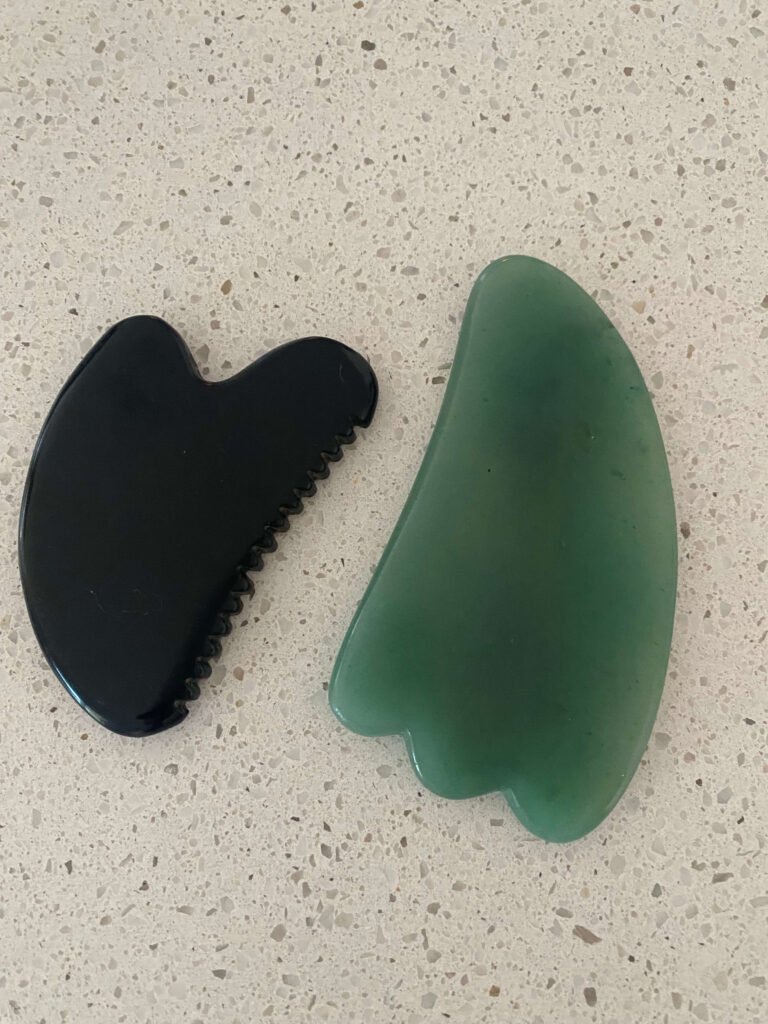
A good gua sha tool is one of the simplest investments you can make in your daily lymphatic drainage practice.
Gua Sha for Facial Lymphatic Drainage — The Right Way
Gua sha has had a massive moment in the beauty and wellness world over the past several years but most people are using it for the wrong reasons and in the wrong way.
It is not primarily a wrinkle treatment or a contouring tool.
It is a lymphatic drainage instrument, and when used correctly, it is one of the most effective tools available for moving stagnant fluid out of facial tissues.
Gua sha works by physically moving lymph and interstitial fluid toward the lymph nodes through gentle scraping strokes. It also releases fascial tension in the jaw and cheek muscles, particularly the masseter, which is chronically tight in people who clench, grind, or breathe through their mouth, creating space for lymph to flow more freely.
Correct Gua Sha Technique for Facial Lymphatic Drainage
Always start with clean skin and a facial oil. The tool needs to glide never drag on dry skin.
A few drops of jojoba, rosehip, or a dedicated gua sha oil is all you need.
After draining the neck, begin at the jawline.
Using the flat or curved edge of your gua sha tool, make long upward and outward strokes from the chin toward the ear along the jawline.
The direction is always upward and outward — moving fluid toward the nodes in front of and below the ear.
Repeat each stroke three to five times on each side.
Move to the cheekbones next. Stroke upward and outward from the nose toward the temples.
Light pressure is enough. You are moving fluid, not sculpting stone.
For the forehead, stroke upward from the eyebrows toward the hairline. Then sweep from the center of the forehead out toward the temples.
After completing the face, return to the neck and do another round of downward strokes to encourage the freshly moved fluid to continue draining. Finish with a few deep breaths.
Consistency is more important than duration.
Five minutes of gua sha every morning is far more effective than a long session once a week.
Over weeks and months of consistent practice many people notice visible changes in jaw definition, reduced facial puffiness, and improvement in chronic tension headaches because you are addressing the underlying lymphatic congestion that drives all of these symptoms.
Buccal Massage — The Deeper Release for Facial Lymphatic Drainage
Buccal massage is the practice of massaging the inside of the cheeks and jaw muscles with a gloved finger.
It sounds unusual but it is one of the most profoundly effective techniques available for facial lymphatic drainage, particularly for people with chronic jaw tension, TMJ issues, or who have been told they have poor jaw definition or prominent buccal corridors.
The masseter muscle, the large chewing muscle that runs along the jaw, is one of the strongest muscles in the body relative to its size.
In people who clench, mouth breathe, or carry chronic stress, this muscle becomes chronically hypertonic and fascially restricted.
This creates a physical compression of the lymphatic vessels and fascia in the jaw region that no amount of external gua sha can fully reach.
Buccal massage addresses this from the inside out.
How to Perform Buccal Massage
Wash your hands thoroughly and put on a clean disposable glove.
Using your index finger, gently insert it inside your cheek and locate the masseter muscle — you will feel it contract if you clench your teeth.
With very gentle circular or kneading pressure, work along the inner surface of the cheek from the molars toward the front of the mouth.
You may encounter areas of significant tenderness or tightness, these are fascial adhesions.
Hold gentle sustained pressure on these points for fifteen to thirty seconds and breathe through them.
You are not trying to force the release, you are creating a safe sustained input that allows the nervous system to let go.
Work both sides for two to three minutes each.
After buccal massage you may notice an immediate sense of facial relaxation and a feeling of more space in the jaw.
This is the fascia releasing and the lymphatic vessels decompressing.
Follow immediately with neck drainage strokes to encourage the released fluid to move toward the exit pathways.
Buccal massage performed two to three times per week alongside regular gua sha and neck drainage creates a synergistic effect that addresses facial lymphatic congestion from multiple angles simultaneously.
Many practitioners in the orthotropics and facial structure world consider it an essential companion to tongue posture correction for anyone serious about improving facial definition naturally.

Lymphatic Herbs and Supplements That Support Facial Lymphatic Drainage
Manual techniques are the foundation but the right herbs and supplements can significantly amplify the results of your facial lymphatic drainage practice by supporting lymph flow from the inside out.
Cleavers — The Premier Lymphatic Herb
Cleavers (Galium aparine) is one of the most specific and effective lymphatic herbs in the Western herbal tradition. It has a particular affinity for the cervical lymph nodes — the exact nodes responsible for facial and cranial drainage.
Cleavers helps decongest swollen and stagnant lymph nodes, supports the movement of lymph through the vessels, and has a mild cleansing action on the lymphatic fluid itself. It is best used as a fresh plant tincture or cold infusion.
Red Clover — Blood and Lymph Purifier
Red clover is a classic blood and lymph purifying herb with a long history of use in Western herbal medicine. It supports the movement of lymph through the vessels, reduces lymphatic congestion, and has anti-inflammatory properties that are particularly useful in the context of chronic illness driven lymphatic stagnation.
Hawthorn — Vascular and Lymphatic Integrity
Hawthorn supports cardiovascular and vascular integrity throughout the body. In the context of facial lymphatic drainage it is particularly useful because it strengthens the walls of the lymphatic vessels themselves — helping them move fluid more efficiently and reducing permeability that contributes to tissue edema.
Ginger — Warming Circulation Support
Ginger is a warming circulatory herb that stimulates blood and lymph flow throughout the body. It is particularly useful for people with cold, stagnant constitutions where the lymph moves sluggishly. Ginger tea daily or ginger in cooking supports overall lymphatic movement.
Castor Oil Packs for Deep Lymphatic Support
Castor oil packs applied over the liver and the neck region are one of the most deeply penetrating lymphatic support tools available.
Castor oil contains ricinoleic acid which has a unique ability to penetrate deeply into tissue and stimulate lymphatic flow. Placed over the liver, castor oil packs support liver function and bile production — both of which are essential for lymphatic health. Placed over the neck and cervical nodes, they directly stimulate drainage of the facial lymphatic system.

Rebounding and Dry Brushing — Systemic Lymphatic Activation
Facial lymphatic drainage does not happen in isolation.
The facial lymph connects to the cervical lymph, which connects to the thoracic duct, which is part of the entire systemic lymphatic network.
You cannot fully clear the facial lymphatics without also supporting the whole body lymphatic system.
Rebounding on a mini trampoline is one of the most effective whole-body lymphatic activation practices available.
The gentle bouncing creates a rhythmic compression and decompression of the lymphatic vessels throughout the entire body, essentially acting as the pump the lymphatic system lacks.
Even five to ten minutes of gentle bouncing daily creates significant systemic lymphatic movement, reducing the overall burden on the facial and cervical nodes.
Dry brushing before a shower activates the superficial lymphatic vessels that run just beneath the skin.
Using a natural bristle brush and always stroking toward the heart and toward the lymph node clusters in the armpits, groin, and behind the knees, you stimulate lymph flow throughout the entire body.
This systemic activation reduces the load on the cervical nodes and creates a more receptive environment for your facial drainage practice.
The Oral Cavity Connection — Why Teeth, Tonsils and Sinuses Matter for Facial Lymphatic Drainage
One of the most important and least discussed factors in facial lymphatic drainage is the state of the oral cavity, specifically the teeth, tonsils, and sinuses.
These three structures sit directly upstream of the cervical lymph nodes and when any of them are harboring chronic infection or inflammation they create a constant upstream burden on the lymphatic system that no amount of gua sha can overcome.

Root Canals and Cavitations as Lymphatic Disruptors.
Root canal treated teeth are essentially dead teeth without a blood supply.
Without circulation, they become anaerobic environments where harmful bacteria, mycotoxins, and viruses accumulate.
These toxins continuously leak into the surrounding jawbone, periodontal ligament, and bloodstream — and they drain directly through the cervical lymphatics into the body.
This is a constant upstream infection source that chronically overwhelms the cervical lymph nodes and makes facial lymphatic drainage an uphill battle.
Cavitations — areas of dead or poorly healed bone in the jaw present the same problem.
They are invisible on standard dental X-rays, often entirely painless, and yet represent significant focal infection sources that drive systemic inflammation and lymphatic congestion.
A biological dentist using cone beam CT imaging can identify both root canals and cavitations and address them as part of a comprehensive healing approach.
Tonsils — Upstream Poisoning Downstream
Cryptic tonsils — tonsils with deep crypts that harbor chronic bacterial and viral reservoirs- are another major source of upstream lymphatic burden.
The tonsils sit directly at the entry point of the lymphatic highway into the neck, and when they are chronically infected or inflamed, they continuously feed pathogens and inflammatory signals into exactly the nodes responsible for facial drainage.
Supporting tonsil health with propolis, cistus tea, and probiotic oil pulling can significantly reduce this upstream burden.
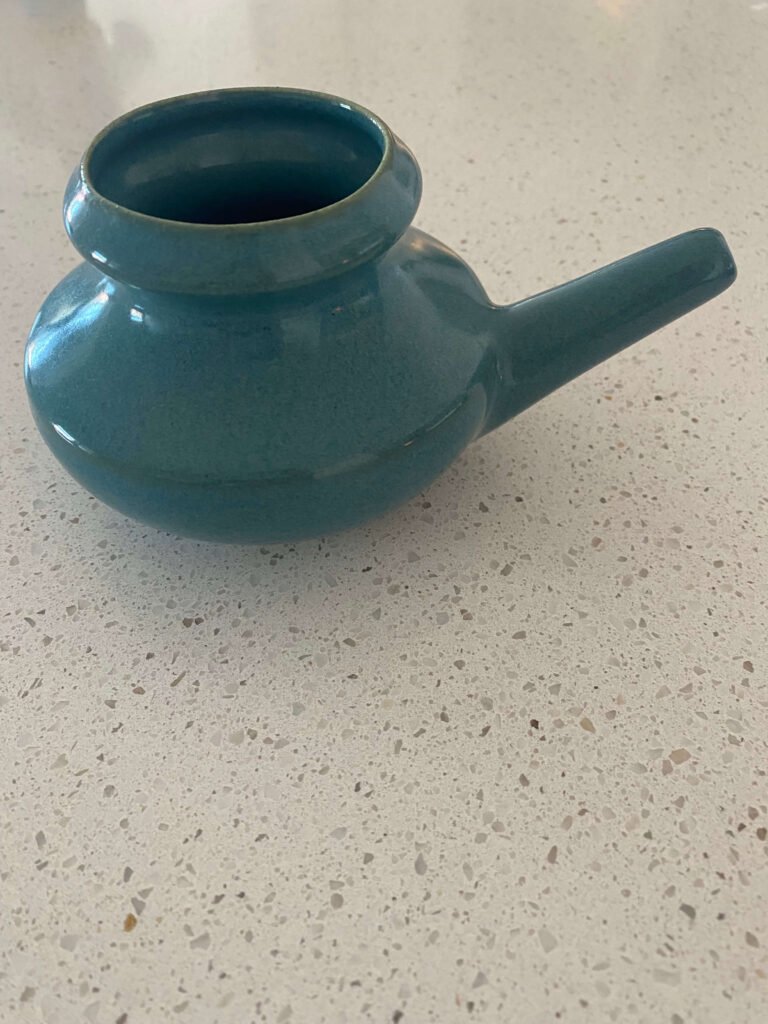
Clear the upstream — your cervical lymph nodes will thank you.
Nasal rinsing daily is one of the most underrated lymphatic drainage practices available.
Sinuses and Biofilm
The sinuses connect directly to the oral cavity and have their own lymphatic drainage into the cervical nodes.
Chronic sinus infections and biofilm in the sinuses , particularly common in people with Lyme disease and mold exposure, create another constant source of upstream lymphatic burden.
Daily nasal rinsing with salt water supports sinus health and reduces this contribution to cervical lymph congestion.
NOTE: You must not use tap water. It must be sterile, distilled water and metal free salt.
Facial Lymphatic Drainage and Chronic Lyme Disease — The Deep Connection
For anyone dealing with chronic Lyme disease, Bartonella, Babesia, or other tick-borne infections, facial lymphatic drainage is not optional, it is foundational.
Here is why.
Borrelia spirochetes have a documented affinity for the nervous system and the lymphatic tissue of the neck and head.
They colonize the cervical lymph nodes, create biofilm in lymphatic vessels, and drive chronic inflammation in exactly the region responsible for draining the face and the brain.
This is why so many Lyme patients experience chronic facial puffiness, swollen cervical nodes, jaw pain, and the characteristic stiff neck that is considered a hallmark symptom of the infection.
Bartonella, which is endotheliotropic, meaning it lives inside the endothelial cells lining blood and lymphatic vessels, creates an additional layer of disruption.
By infecting and inflaming the endothelial lining of the lymphatic vessels themselves, Bartonella directly impairs the mechanical function of lymphatic drainage in a way that compounds the Borrelia-driven congestion.
The glymphatic system, the brain’s own overnight detoxification network that clears metabolic waste, toxins, and inflammatory proteins during deep sleep, drains into the cervical lymphatic system.
When the cervical lymphatics are congested, the glymphatic system cannot drain properly, brain waste accumulates, and the neurological symptoms of chronic Lyme, brain fog, cognitive impairment, and mood dysregulation are amplified.
This is one of the most important and least discussed reasons why supporting facial and cervical lymphatic drainage is a critical part of any Lyme healing protocol.
The protocol order matters enormously here.
Opening the drainage pathways , including facial and cervical lymphatic drainage, must happen before or alongside any antimicrobial treatment.
If you start killing pathogens with your lymphatics congested, you are creating a toxic traffic jam.
The drainage has to flow first.
Want to learn more about Lyme and a Holistic Protocol? Check out our Lyme article here
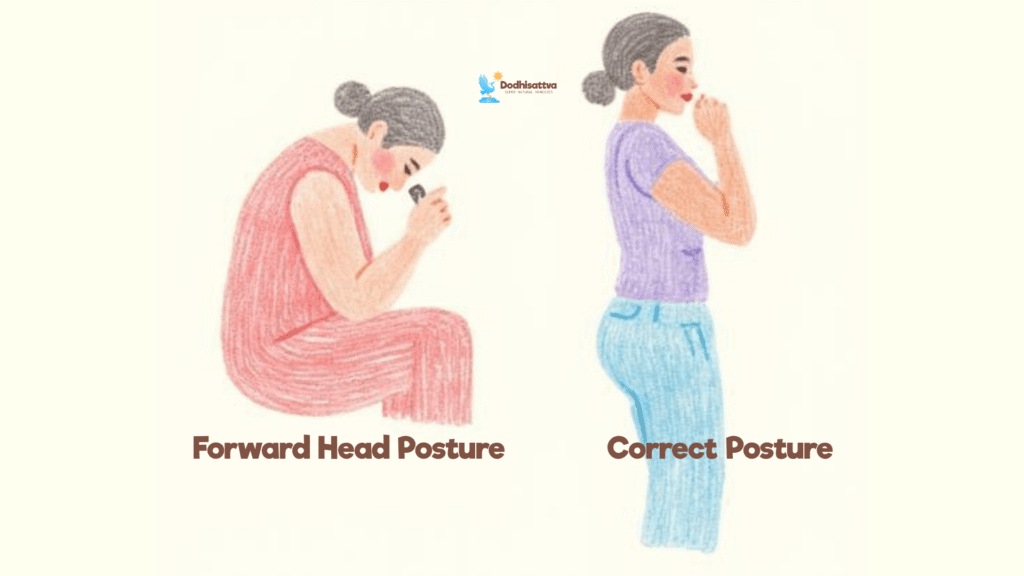
Posture and Facial Lymphatic Drainage | The Whole Body Connection
No discussion of facial lymphatic drainage is complete without addressing posture, specifically forward head posture which is epidemic in the modern world and which directly compresses the cervical lymphatic pathways.
When the head sits forward of the shoulders, as it does in almost everyone who uses a phone or computer for extended periods, the cervical spine compresses, the hyoid bone drops, and the fascial and lymphatic structures of the neck are placed under chronic mechanical tension.
This compression directly impairs lymph flow through the cervical nodes and the thoracic duct, essentially creating a partial blockage in the main drainage pathway of the face and brain.
Correcting forward head posture is therefore a prerequisite for optimal facial lymphatic drainage.
Chin tucks gently, drawing the chin back to stack the head over the shoulders, performed ten to fifteen times throughout the day, begin to retrain the cervical spine into proper alignment.
Wall angels, thoracic extension over a foam roller, and strengthening the deep neck flexors all support this correction over time.
Your Daily Facial Lymphatic Drainage Routine
Here is a simple daily and weekly routine that incorporates all of the facial lymphatic drainage practices covered in this guide.
Every Morning
Begin with two to three minutes of gentle downward neck drainage strokes on both sides.
Follow with five minutes of gua sha jawline, cheekbones, and forehead — always upward and outward, finishing with another round of neck drainage.
Take five deep diaphragmatic breaths to activate the thoracic duct.
This entire morning routine takes eight to ten minutes and sets the stage for reduced facial puffiness throughout the day.
Two to Three Times Per Week
Add buccal massage before your gua sha session.
After buccal massage, follow with neck drainage and gua sha as normal.
Also, incorporate dry brushing before your shower on these days, body brushing always toward the heart and lymph node clusters, then neck brushing downward toward the clavicle.
Daily Throughout the Day
Rebound for five to ten minutes.
Cleavers tincture or tea.
Chin tucks ten to fifteen times to correct forward head posture.
Herbal lymphatic tea — cleavers, red clover, hawthorn, ginger.
Weekly
Castor oil pack over the neck and liver one to two times per week.
This provides the deepest level of lymphatic activation and is particularly valuable for anyone dealing with chronic illness, Lyme disease, or significant lymphatic congestion.
Facial Lymphatic Drainage Is Where Your Healing Begins
If you have been struggling with facial puffiness, poor jaw definition, chronic neck tension, brain fog, or any form of chronic illness, particularly Lyme disease or tick-borne infections, the missing piece in your healing protocol is very likely facial lymphatic drainage.
This is not a beauty practice.
This is a foundational healing practice that addresses one of the root drivers of chronic inflammation, immune dysfunction, and structural facial changes.
The cervical lymph nodes are the drainage point for your brain, your face, and your oral cavity.
When they are congested, everything suffers — your immune function, your neurological health, your facial structure, and your overall sense of vitality.
Start with the neck. Add gua sha. Add buccal massage.
Support the system with herbs and whole body lymphatic activation.
Address the oral cavity upstream sources.
And if you are on a Lyme healing journey, understand that clearing your facial and cervical lymphatics is not supplementary to your protocol; it is the foundation on which everything else is built.
Facial lymphatic drainage done consistently is one of the most powerful investments you can make in your long term health, your structural facial development, and your healing from chronic illness.
Sources
Louveau A, et al. Structural and functional features of central nervous system lymphatic vessels. Nature. 2015.
Iliff JJ, et al. A Paravascular Pathway Facilitates CSF Flow Through the Brain Parenchyma. Science Translational Medicine. 2012.
Bhatt DL, et al. Lymphatic Function in Chronic Inflammatory Disease. Journal of Lymphology. 2019.
Sapi E, et al. Characterization of Biofilm Formation by Borrelia burgdorferi In Vitro. PLOS ONE. 2012.
Magni R, et al. Bartonella as an endotheliotropic pathogen. Frontiers in Microbiology. 2018.
Wormser GP, et al. The Clinical Assessment, Treatment, and Prevention of Lyme Disease. Clinical Infectious Diseases. 2006.
POPULAR POSTS