
Babesia symptoms are some of the most misunderstood and misdiagnosed of any tick-borne illness, and if you have been navigating chronic illness without clear answers, this article provides an educational framework to help you understand the common patterns associated with this co-infection.
Babesia is a parasitic co-infection transmitted through the same tick bite that delivers Lyme disease.
It operates very differently from Lyme, and understanding how it works inside your body is the first step toward understanding why you feel the way you do.
What Is Babesia and How Does It Work?
In biological research, Babesia is an intracellular organism that infects red blood cells, which transport oxygen throughout the body.
This is what makes babesia symptoms so distinct from other tick-borne infections.
Where Bartonella is observed to have an affinity for endothelial cells and nervous tissue, Babesia’s relationship with red blood cells creates a completely different physiological picture.
The mechanism is similar to malaria.
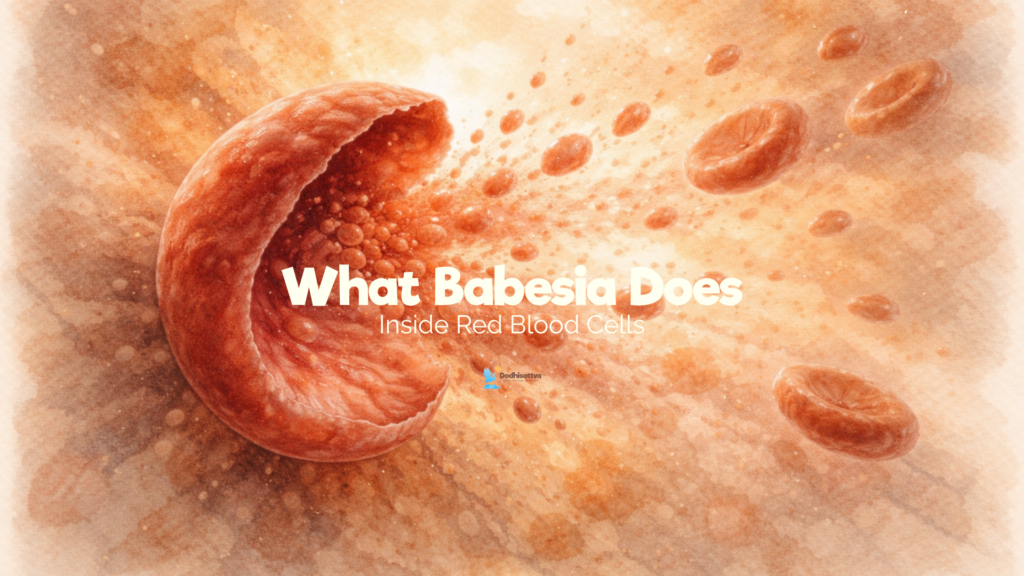
Once inside a red blood cell, Babesia replicates until the cell ruptures, spilling debris and inflammatory compounds into the bloodstream.
Your body then has to manage both the oxygen deprivation caused by the loss of red blood cells and the systemic inflammatory response triggered by everything those cells release when they break open.
This is why babesia symptoms so often involve a sense of physical collapse that goes beyond ordinary fatigue.
Your cells are not getting the oxygen they need.
Your immune system is managing debris it was never designed to handle at this volume.
And the infection can recur years after what seemed like a complete recovery because Babesia knows how to hide inside red blood cells and wait.
The Most Recognizable Babesia Symptoms
Babesia symptoms differ from Lyme and Bartonella in ways that can help you and your practitioner identify what you are dealing with.
While there is significant overlap across all three co-infections, Babesia produces a distinct cluster of experiences that point directly to its mechanism of action.
The signature symptom of Babesia is air hunger.
This is not shortness of breath in the conventional sense.
It is a feeling of not being able to take in enough air even when your breathing appears normal.
Many people describe it as a need to sigh deeply and repeatedly, a sense that no breath is ever quite satisfying.
This happens because Babesia reduces your red blood cell count and compromises your body’s ability to deliver oxygen efficiently.
Drenching night sweats are another hallmark.
People with active Babesia often cycle through waves of fever, chills, and profuse sweating that can soak sheets and clothing.
This cyclical pattern reflects the replication cycle of the parasite inside red blood cells and is one of the clearest distinguishing features of babesia symptoms versus other tick-borne illness.
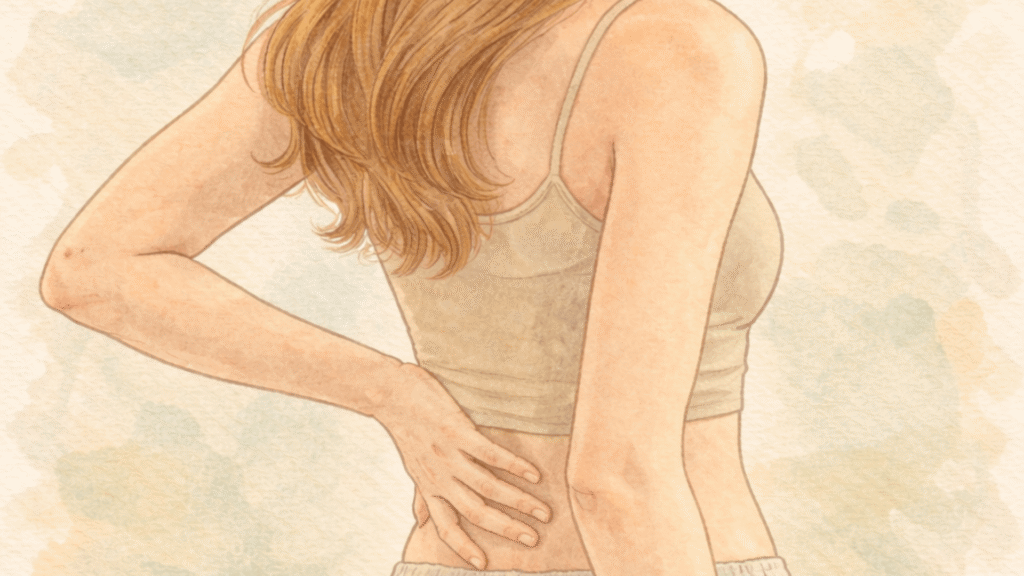
Lower back pain is a symptom that does not always get connected to Babesia but shows up consistently in people with this infection.
The spleen and kidneys are heavily involved in clearing the cellular debris Babesia produces, and the stress on these organs can manifest as a deep, persistent ache in the lower back and flank area that does not respond to the usual musculoskeletal approaches.
Other babesia symptoms include profound fatigue that goes beyond tiredness into a bone-deep exhaustion, headaches that feel like pressure in the upper neck and head, dizziness and a feeling of being spacey or disconnected from your surroundings, anxiety and panic episodes, depression, swollen lymph nodes, and nausea.
In clinical literature, certain patterns in blood work such as lower-range platelets or white blood cells are often noted by practitioners as part of the broader clinical picture when evaluating someone with suspected tick-borne co-infections.
Why Babesia and Lyme Are So Difficult to Clear Together
To understand why babesia symptoms persist even when people are doing everything right, you need to understand something about the organism that almost always accompanies Babesia in a tick bite: Borrelia burgdorferi, the bacteria behind Lyme disease.
Borrelia exists in two distinct forms in the body.
The first is the spirochete form, the corkscrew-shaped organism that moves actively through tissues and is biologically active.
The second is the cystic or stationary phase form, sometimes called round body forms, which Borrelia shifts into when it senses a threatening environment.
In this cystic state, the organism becomes biologically dormant, dramatically reduces its metabolism, and becomes significantly more resistant to treatment approaches that work against the active spirochete form.
Research published in peer-reviewed literature has shown that these stationary phase forms can be found in the brain tissue of patients with chronic Lyme neuroborreliosis and that they are capable of reverting back to active spirochetes when conditions become favorable again.
This is a key reason why so many people feel better for a period and then relapse.
The cystic forms were waiting.
When Babesia is present alongside Borrelia, this dynamic becomes even more complex.
Babesia is suppressing immune function by destroying red blood cells and creating systemic inflammation.
This compromised immune environment gives Borrelia more opportunity to persist in its cystic form without being cleared.
The two infections protect each other in a way that makes addressing either one in isolation far less effective than addressing the terrain they are both living in.
The Role of Viral Burden and Immune Suppression
One of the most important and least discussed aspects of chronic babesia symptoms is the role of viral burden in keeping people stuck.
When the immune system is chronically activated managing tick-borne infections, it becomes exhausted.
This immune exhaustion creates a permissive environment where opportunistic infections, including reactivated viruses and parasitic organisms, are able to gain and maintain a foothold.
Research has shown that chronic viral infections can suppress key immune pathways, effectively redirecting the immune system’s resources and leaving it less capable of mounting an effective response to parasitic co-infections like Babesia.
This is part of why mold, parasites, and other opportunistic burdens so often accompany a Babesia picture.
The immune suppression is not random.
It is the downstream consequence of a system that has been overwhelmed for too long.
Addressing viral burden as part of a comprehensive approach to babesia symptoms is not optional.
It is part of understanding why the terrain became hospitable to these infections in the first place.
Artemisinin and Supporting the Body Against Babesia
Artemisinin is a compound derived from the plant Artemisia annua, also known as sweet wormwood, and it is a botanical that has been extensively studied for its activity in laboratory settings relative to Babesia.
Research published in peer-reviewed journals including Parasitology International and Frontiers in Veterinary Science has demonstrated that artemisinin derivatives show activity against multiple Babesia species in both laboratory and animal models, with artesunate in particular shown to reduce Babesia microti load and support the restoration of normal red blood cell and platelet counts.
The mechanism by which artemisinin derivatives appear to interfere with Babesia involves disruption of mitochondrial function and the production of reactive oxygen species that are damaging to the parasite.
It is worth noting that Babesia responds differently to artemisinin than malaria does due to differences in how the two parasites process iron and hemoglobin, which is why a slow and steady approach is generally considered more appropriate than aggressive loading doses.
Many integrative practitioners who work with tick-borne illness work with artemisinin around 500 milligrams daily, building gradually to assess tolerance.
Artemisinin is a powerful botanical that should always be used under the guidance of a qualified health practitioner.
The Drainage Foundation: Why Babesia Requires More Than Pathogen Support
Babesia symptoms do not exist in a vacuum.
The debris generated when Babesia causes red blood cells to rupture must be processed somewhere, and that somewhere is your kidneys, liver, and lymphatic system.
When these drainage pathways are already congested from years of chronic infection, heavy metal burden, or mold exposure, the body simply cannot keep up with what Babesia is generating.
This is why supporting drainage pathways is considered foundational in any serious approach to babesia symptoms.
Opening the pathways before aggressively going after the pathogen allows the body to actually move what is being released rather than recirculating it and creating additional inflammatory burden.
Red root is one of the most recognized herbs for lymphatic support in the context of tick-borne illness, showing historical and clinical use for moving stagnation in the lymphatic system and spleen.
Japanese knotweed, high in resveratrol, has shown anti-inflammatory and antimicrobial activity in research and is commonly used alongside Babesia support protocols.
Milk thistle seed supports liver function and helps the body process the cellular debris Babesia produces.
Wormwood has a long history of traditional use against parasitic organisms and shows activity in the digestive system as well.
These herbs are not treatments for Babesia.
They are botanicals with research supporting their role in immune function, inflammation modulation, and drainage support that practitioners working in this field have used as part of broader wellness protocols for people navigating tick-borne illness.
What to Do If You Recognize These Babesia Symptoms
If the babesia symptoms described in this article resonate with your experience, the most important first step is working with a practitioner who understands tick-borne co-infections and who can help you get appropriate testing and build a protocol that addresses your full picture, not just one piece of it.
Standard Lyme testing does not test for Babesia.
Specific testing for Babesia microti and other Babesia species requires separate bloodwork, and even then, false negatives are common because the parasites hide inside red blood cells where standard tests may not detect them.
Clinical presentation matters enormously in this context and an experienced practitioner will know how to read the full picture.
The terrain approach matters as much as the pathogen approach.
Supporting drainage, addressing immune burden, working on sleep quality to support glymphatic clearance, and reducing additional stressors on the system all create conditions in which the body can do more of the work it is designed to do.
Babesia symptoms are real, they are measurable, and they are not in your head.
Understanding what this parasite is doing inside your red blood cells is the beginning of knowing how to build a path forward.
Sources
1. Goo YK et al. Artesunate, a potential drug for treatment of Babesia infection. Parasitology International. 2010;59(4):481-486. https://pubmed.ncbi.nlm.nih.gov/20541037/
2. Frontiers in Veterinary Science. Unrevealing the therapeutic potential of artesunate against emerging zoonotic Babesia microti infection in the murine model. 2024. https://www.frontiersin.org/journals/veterinary-science/articles/10.3389/fvets.2024.1383291/full
3. PMC. Artemisinin and its derivatives in treating protozoan infections beyond malaria. https://pmc.ncbi.nlm.nih.gov/articles/PMC5316320/
4. Miklossy J et al. Persisting atypical and cystic forms of Borrelia burgdorferi and local inflammation in Lyme neuroborreliosis. PMC. https://pmc.ncbi.nlm.nih.gov/articles/PMC2564911/
5. Feng J et al. Stationary Phase Persister/Biofilm Microcolony of Borrelia burgdorferi Causes More Severe Disease in a Mouse Model of Lyme Arthritis. Discovery Medicine. 2019. https://www.discoverymedicine.com/Jie-Feng/2019/03/persister-biofilm-microcolony-borrelia-burgdorferi-causes-severe-lyme-arthritis-in-mouse-model/
6. PMC. Chronic infections with viruses or parasites: breaking bad to make good. https://pmc.ncbi.nlm.nih.gov/articles/PMC5343343/
7. PMC. The immunology of parasite infections in immunocompromised hosts. https://pmc.ncbi.nlm.nih.gov/articles/PMC3109637/