

Wise Mind DBT: How to Access Your Inner Wisdom and Make Better Decisions


A Guided Meditation for Wise Mind
Enjoy This Declaration for Spiritual Power
Wise mind DBT is the most important concept you’ll ever learn about making decisions, and most people have never heard of it.
Here’s what I know: you probably make decisions in one of two ways.
Either you’re completely ruled by your emotions. You feel something intensely and you act on it. You’re angry, so you send the text. You’re anxious, so you cancel the plans. You’re hurt, so you shut down. Your feelings feel like facts, and you react accordingly.
Or you’re the opposite. You’re in your head, analyzing, weighing pros and cons, making lists, thinking your way through everything.
Feelings seem messy, unreliable, and inconvenient. So you ignore them. You logic your way through life, detached and controlled.
Neither works. Not really.
The first leaves you exhausted, reactive, and constantly cleaning up the mess from impulsive choices.
The second leaves you disconnected, going through the motions, wondering why nothing feels meaningful.
There’s a third way. You might be thinking isn’t it just your intuition?
Marsha Linehan, who created Dialectical Behavior Therapy, called it wise mind.
And intuition is a quality of the Wise Mind inherent in each one of us.
And once you understand wise mind DBT teaches, everything changes.
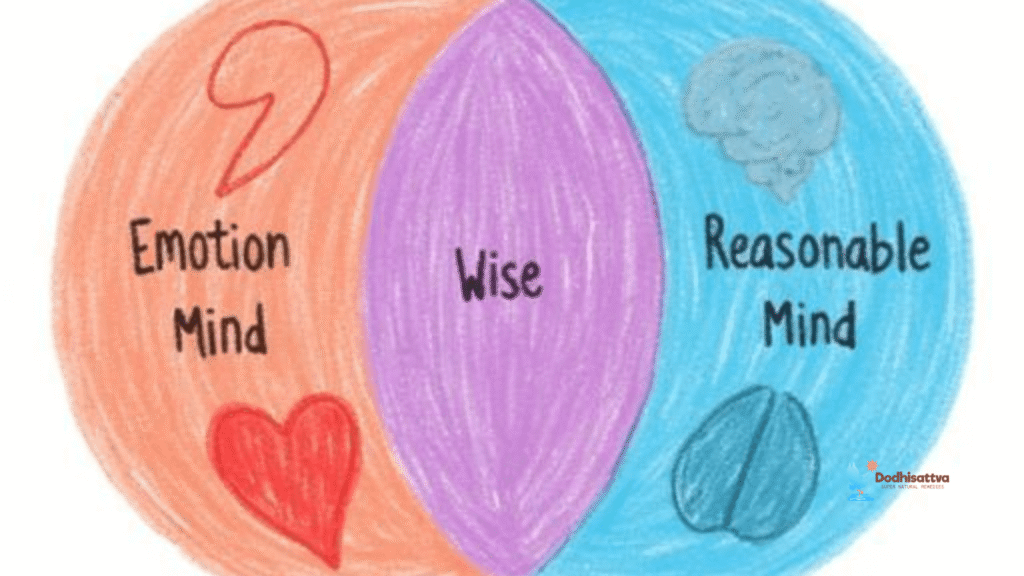
What Is Wise Mind? The DBT Foundation
In DBT, Marsha Linehan identified three states of mind we all move between: emotion mind, reasonable mind, and wise mind.
Most people spend their lives bouncing between the first two. But wise mind is where the magic happens.
Think of it as a Venn diagram.
On the left, you have emotion mind. This is where feelings dominate. Everything is intense, immediate, urgent. You don’t think, you feel. And whatever you feel becomes your entire reality in that moment.
On the right, you have reasonable mind. This is where logic rules. Facts, analysis, rational thought. Feelings are dismissed as irrelevant or unreliable. You think, but you don’t feel.
And in the middle, where these two circles overlap? That’s wise mind.
Wise mind isn’t a compromise between emotion and reason. It’s not “a little bit of feeling, a little bit of thinking.”
It’s a synthesis. An integration. A place where your emotional truth and your logical understanding meet and create something deeper: wisdom.
This is the middle path. This is what wise mind DBT teaches us to access.
Wise mind isn’t something you gain or acquire. You already have it. It’s been there all along. Some people naturally live from this place. For some, it takes practice. This guide shows you how to make wise mind your set point, your default way of navigating life.
The Three States of Mind in DBT

Let’s break down each state so you can recognize them in yourself.
Emotion Mind: When Feelings Are Facts
Emotion mind is hot, reactive, impulsive. When you’re in emotion mind, your feelings ARE reality.
You feel rejected, so you ARE rejected. You feel like a failure, so you ARE a failure. You feel unloved, so you ARE unlovable.
There’s no distance between the feeling and the truth. The feeling IS the truth.
Emotion mind shows up when:
- You send a text you immediately regret
- You make a decision based on fear or anger
- You can’t see past how you’re feeling right now
- You say things you don’t mean
- You act impulsively and deal with consequences later
Emotion mind isn’t bad. Emotions carry important information. But when emotion mind is driving the bus, you’re reactive. You’re not choosing, you’re reacting.
And that rarely ends well.

Reasonable Mind: When Logic Is Everything
Reasonable mind is cool, detached, analytical. When you’re in reasonable mind, only facts matter. Feelings are inconvenient noise to be managed or ignored.
You make pros and cons lists. You weigh options logically. You analyze everything. But you don’t feel anything.
Reasonable mind shows up when:
- You stay in a relationship that “makes sense on paper” but feels wrong
- You ignore your gut because “it’s not logical”
- You can explain everything but connect with nothing
- You dismiss your feelings as “irrational”
- You make decisions that look good but feel empty
Reasonable mind isn’t bad either. Logic and analysis are essential. But when reasonable mind dominates, you’re disconnected. You’re thinking your way through life instead of living it.
You might be making “good decisions,” but you’re not happy. Something’s missing.

Wise Mind: Where Integration Happens
Wise mind is calm, clear, grounded. When you’re in wise mind, you feel AND you think. Your emotions inform you. Your logic guides you. And together, they create clarity.
Wise mind isn’t loud or frantic. It doesn’t shout. It’s the quiet knowing that emerges when you stop forcing an answer.
Wise mind feels like:
- A calm, settled sense of “yes” or “no”
- Clarity without urgency
- Peace even when the answer is hard (It is free of conflict)
- Grounded certainty
- Your gut and your head agreeing
- Not needing to convince yourself
When you’re in wise mind, you trust yourself. You don’t second-guess. You don’t overthink. You just… know.
And that knowing? That’s wisdom.
Wise mind chooses to integrate the emotion and reasonable states of mind, witnessing reality as it is.

How to Recognize Wise Mind
Here’s what wise mind DBT practitioners know: wise mind has a distinct quality. You can learn to recognize it.
Wise mind is:
Quiet, not loud. The frantic voice in your head demanding immediate action? That’s emotion mind. The cold voice dismissing how you feel? That’s reasonable mind. Wise mind is the quiet one underneath. Calm. Patient. Willing to wait.
Grounded in your body. Wise mind doesn’t just live in your head. It lives in your gut, your chest, your whole being. It’s a felt sense, not just a thought.
Peaceful, even when hard. Wise mind might tell you to do something difficult. Leave the relationship. Set the boundary. Have the hard conversation. But even when the answer is challenging, wise mind feels peaceful. Not tormented. Not conflicted. Clear.
Not rushed. Wise mind doesn’t operate on urgency. It waits. It observes. It allows space. If you feel pressured to decide RIGHT NOW, you’re not in wise mind.
Compassionate. Wise mind is kind. To yourself. To others. It doesn’t come from a place of anger, shame, or fear. It comes from truth and compassion together.
Integrative. Wise mind holds complexity. It can say, “I love them AND this relationship isn’t healthy.” “I’m doing my best AND I can do better.” Both/and, not either/or.
That’s the middle path. That’s wise mind.

What Blocks Wise Mind?
If wise mind is so valuable, why don’t we access it more often?
Because a lot gets in the way.
Intense emotions. When you’re flooded with fear, anger, shame, or anxiety, wise mind gets drowned out. You can’t hear it over the noise.
Overthinking. When you’re stuck in analysis paralysis, making endless lists, intellectualizing everything, wise mind can’t emerge. You’re trying to think your way to wisdom. It doesn’t work like that.
External pressure. Other people’s opinions, expectations, demands. When everyone’s telling you what you should do, it’s hard to hear what YOU actually know.
Disconnection from your body. Wise mind speaks through your body. If you’re completely disconnected, living entirely in your head, you can’t access it.
Lack of self-worth. This is big. If you don’t trust yourself, you won’t trust wise mind when it speaks. You’ll second-guess it. Dismiss it. Look outside yourself for the answer.
Learn how to build the self-trust that allows wise mind to emerge.
Not slowing down. Wise mind requires space. Silence. Stillness. If you’re constantly busy, constantly distracted, constantly moving, you’ll never hear it.

How to Access Wise Mind
Marsha Linehan, who created wise mind DBT as a core concept, taught specific practices for accessing it.
These aren’t mystical. They’re practical. And they work.
1. Ask the Question, Then Wait
Don’t force an answer. Don’t frantically search for one.
Ask your question: “What should I do?” “Is this the right choice?” “What does my wise mind say?”
Then wait. Be patient. Let the answer emerge.
Wise mind doesn’t perform on demand. It reveals itself when you stop grasping.
2. Notice Where You Feel the Answer
Wise mind isn’t just a thought. It’s a bodily sense.
Where do you feel it? Your gut? Your chest? Your whole body?
That’s wise mind speaking. Not through words always, but through sensation. Through knowing.
Trust that.
3. Check Both Emotion and Reason
Ask yourself: “What does my emotion mind say?” Notice the feeling.
Then ask: “What does my reasonable mind say?” Notice the logic.
Now ask: “What does my wise mind say?” Notice where they integrate. Where they agree. Where something deeper emerges.
Wise mind doesn’t dismiss emotion or ignore reason. It integrates both.
4. Breathe Into the Space
When you’re trying to access wise mind, slow your breathing. Soften your body.
You can’t access wise mind when you’re tense, rushed, panicked.
Breathe. Create space. Let wise mind have room to speak.
5. Practice Regularly
Wise mind isn’t something you access once and then forget. It’s a practice. A skill you build.
The more you practice asking, waiting, listening, the stronger your connection becomes.

Wise Mind DBT Examples: Real Life Situations
Let’s look at how wise mind actually works in real life.
Example 1: Should I End This Relationship?
Emotion mind says: “I’m so hurt right now. I can’t do this anymore. I need to leave immediately.”
Reasonable mind says: “We’ve been together five years. Breaking up would be complicated. Maybe I should just stay.”
Wise mind says: “I love them. And this relationship isn’t healthy for me. I can honor both truths. Leaving is hard. And it’s right.”
Example 2: Setting a Boundary at Work
Emotion mind says: “I’m so angry they keep asking me to do extra work. I’m going to tell them off.”
Reasonable mind says: “I need this job. I should just say yes and deal with it.”
Wise mind says: “I can calmly say, ‘I’m at capacity right now. I can take this on next week if it’s not urgent.’ I can be professional and honor my limits.”
Example 3: Responding to Criticism
Emotion mind says: “They criticized me. They think I’m terrible. I should defend myself or shut down completely.”
Reasonable mind says: “They’re just giving feedback. I shouldn’t have any emotional reaction.”
Wise mind says: “That criticism hurt. And some of it might be valid. I can feel the hurt and consider if there’s truth here without collapsing or attacking.”
See the pattern? Wise mind holds complexity. It doesn’t choose sides. It integrates.
Wise Mind and the Middle Path
This IS the middle path that DBT teaches.
Not choosing between emotion and reason. Not swinging between acceptance and change. Not deciding if you’re okay as you are or need to transform.
Holding both. Integrating both. Finding the truth that emerges when opposites meet.
Wise mind is the middle path embodied.
You’re doing your best AND you can do better. You accept yourself AND you work on growth. You feel deeply AND you think clearly.
Both. Always both.
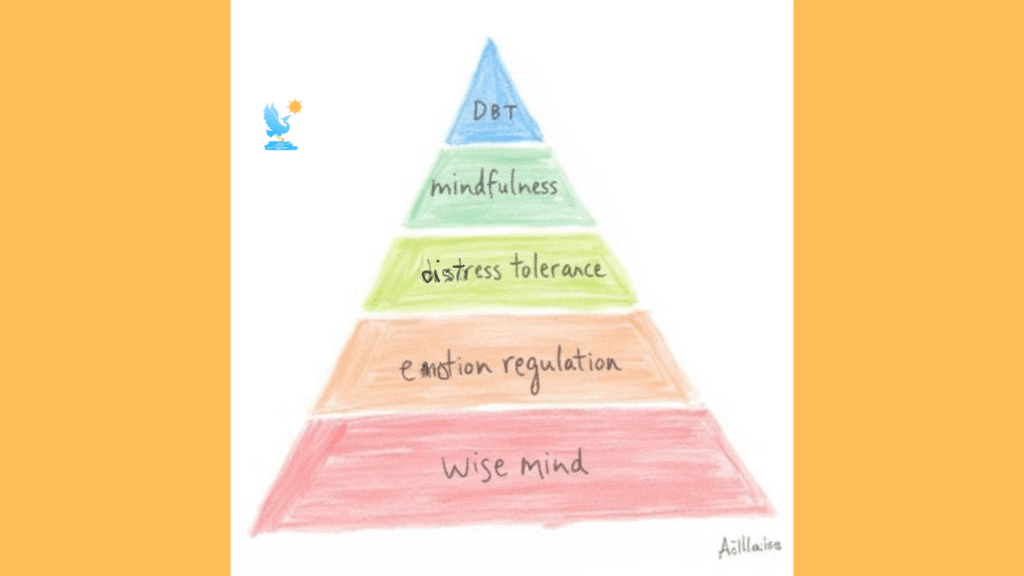
Wise Mind as the Foundation of All DBT Skills
Here’s something most people don’t realize: every DBT skill requires wise mind to use effectively.
Mindfulness? You’re practicing observing from wise mind. Not judging. Not reacting. Just noticing.
Distress tolerance? You’re using wise mind to know when to use which skill. STOP? TIPP? Radical Acceptance? Wise mind knows.
Emotion regulation? Wise mind helps you check the facts, decide if Opposite Action fits, choose PLEASE skills over impulsive reactions.
Interpersonal effectiveness? Wise mind guides you in using DEAR MAN, knowing when to prioritize the relationship versus the outcome, setting boundaries with compassion.
Wise mind isn’t just one skill among many. It’s the foundation. The access point. The place all the other skills flow from.
Without wise mind, the skills become mechanical. With wise mind, they become wisdom.
Practices to Strengthen Your Connection to Wise Mind

Wise mind isn’t something you achieve once and possess forever. It’s something you practice accessing. Again and again.
Here’s how to strengthen your connection:
Daily Check-Ins
Set aside 5 minutes. Ask yourself: “What does my wise mind say about today? About this decision? About how I’m feeling?”
Don’t force an answer. Just ask and listen.
Journaling
Write the question at the top of the page: “What does my wise mind say?”
Then write without editing. Let whatever emerges come through. Don’t analyze it. Just write.
Meditation
Any meditation practice that creates space and silence helps you access wise mind. Sitting meditation. Walking meditation. Stillness.
Wise mind emerges in the quiet.
Ask Your Body
When you’re facing a decision, ask your body: “What does this feel like?”
Notice sensations. Tightness? Expansion? Heaviness? Lightness?
Your body knows. Wise mind speaks through it.
Slow Down
This is simple but essential. You cannot access wise mind when you’re rushing.
Slow down. Create space. Let wisdom have room to emerge.
Practice on Small Things
Don’t wait for big life decisions to practice wise mind. Use it for small choices.
What should I eat for lunch? Which route should I take? Should I call this person back now or later?
The more you practice on small things, the more accessible wise mind becomes for big things.
Wise Mind and Self-Worth
Here’s the truth: you can’t fully access wise mind if you don’t trust yourself.
Wise mind requires self-trust. It requires believing that you have wisdom inside you. That your gut knowing matters. That you can trust what emerges.
If you’re constantly seeking external validation, asking everyone else what you should do, doubting every internal signal, wise mind stays hidden.
Building self-worth is building the trust that allows wise mind to speak, and allows you to listen when it does.
Common Misconceptions About Wise Mind
Misconception 1: Wise mind is always calm and peaceful.
Not exactly. Wise mind can say hard things. It can tell you to do difficult things. But even when the message is challenging, the quality of wise mind is peaceful. Not tormented. Clear.
Misconception 2: Wise mind means ignoring emotions.
No. Wise mind integrates emotions. It listens to them. It just doesn’t let them be the only voice.
Misconception 3: Wise mind is the same as intuition.
They overlap, but they’re not identical. Intuition can be emotion-based. Wise mind is emotion AND reason integrated. It’s intuition backed by wisdom.
Misconception 4: Wise mind always knows the answer immediately.
Sometimes wise mind says “I don’t know yet.” And that’s okay. Wise mind is patient. It waits for clarity.
Misconception 5: Some people don’t have wise mind.
Everyone has wise mind. Everyone. You might be disconnected from it. You might not trust it. But it’s there. It’s always been there.

You Already Have Wise Mind
Here’s what Marsha Linehan understood: wise mind isn’t something you create. It’s something you access.
You already have it. You’ve always had it.
Those moments when you just knew. When something clicked. When the answer was suddenly clear.
That was wise mind.
You don’t need to become someone different to access it. You just need to practice listening. Slowing down. Creating space. Trusting yourself.
Wise mind is there. Waiting. Quiet. Patient.
It’s been there all along.
Related DBT Skills:
POPULAR POSTS