

Interactive Oxalate Food Chart: Based on Sally K. Norton’s Toxic Superfoods
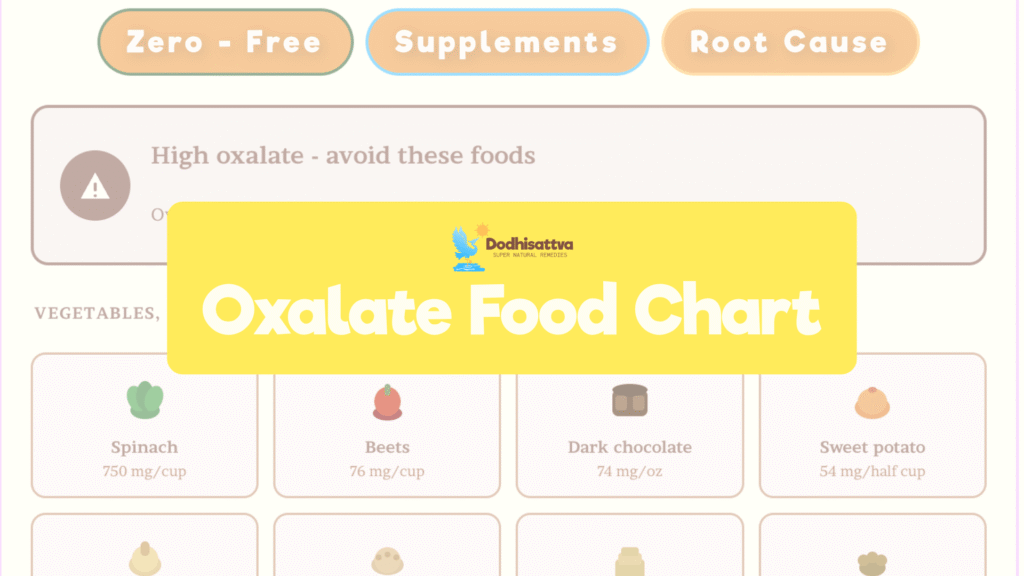
Oxalate Food Chart
Interactive Guide - High, Medium, Low and Zero Oxalate Foods
Based on Sally K. Norton - Toxic Superfoods (2023) | Tap a level to explore
Daily goal
Keep total oxalate under this each day
50 mg
Most people eat 150-500 mg daily
High oxalate - avoid these foods
Over 10 mg per serving. These add up fast and drive inflammation.
Vegetables, nuts and grains
Spinach
750 mg/cup
Beets
76 mg/cup
Dark chocolate
74 mg/oz
Sweet potato
54 mg/half cup
Almonds
122 mg/oz
Peanuts
113 mg/oz
Buckwheat
133 mg/cup
Chia seeds
229 mg/oz
High oxalate fruits - also avoid
Strawberries
10-15 mg/cup
Kiwi
16 mg/fruit
Raspberries
12 mg/cup
Figs dried
very high
Full high oxalate food chart list
Beet greens916 mg/cup
Spinach cooked750 mg/cup
Swiss chard660 mg/cup
Rhubarb541 mg/cup
Chia seeds229 mg/oz
Buckwheat133 mg/cup
Almonds122 mg/oz
Peanuts113 mg/oz
Dark chocolate74 mg/oz
Sweet potato54 mg/half cup
Turmeric powdervery high
Cinnamon powdervery high
Clementines18 mg/fruit
Kiwi16 mg/fruit
Strawberries10-15 mg/cup
Figs driedvery high
"A single green smoothie can contain 8 to 10 times the amount your body is designed to handle in an entire day."
Sally K. Norton MPH, Toxic Superfoods (2023)
Medium oxalate - limit portions
5 to 25 mg per serving. Okay occasionally - watch quantities.
Tomato lover tip: Pair tomatoes with mozzarella or cheese - calcium binds the oxalate before it absorbs. Cooked and drained tomatoes are lower than raw. Avoid sun dried tomatoes.
Vegetables, fruits and grains
Tomatoes raw
5-15 mg/fruit
Cherry tomatoes
lower end
Carrots
15 mg/cup
Potatoes
25 mg/medium
Broccoli
12 mg/cup
Oats
11 mg/cup
Acai plain
under 10 mg
Oranges
10 mg/fruit
Full medium oxalate food chart list
Potatoes boiled25 mg/medium
Celery raw19 mg/cup
Kiwi16 mg/fruit
Strawberries10-15 mg/cup
Tomatoes raw5-15 mg/fruit
Cherry tomatoeslower end - limit
Sun dried tomatoesvery high - avoid
Acai plainunder 10 mg/serving
Carrots raw15 mg/cup
Brown rice13 mg/cup
Broccoli boiled12 mg/cup
Oats cooked11 mg/cup
Oranges10 mg/fruit
Black tea10-50 mg/cup
Figs fresh9 mg/fig
"Boiling high oxalate vegetables and discarding the water significantly reduces oxalate content. Pairing medium oxalate foods with calcium rich foods like cheese helps bind oxalate in the gut."
Sally K. Norton MPH, Toxic Superfoods (2023)
Low oxalate - eat freely
Under 5 mg per serving. Build your daily meals around these.
Low oxalate vegetables and grains
Bok choy
1 mg/cup
Cabbage
2 mg/cup
Cauliflower
2 mg/cup
White rice
3 mg/cup
Winter squash
2 mg/cup
Lettuce
1-3 mg/cup
Cucumber
1 mg/cup
Arugula
very low
Best low oxalate fruits - Norton's top picks
Mango
trace
Papaya
trace
Melon
trace
Pineapple
trace
Blueberries
4 mg/cup
Grapes
1-4 mg/cup
Gala apple
2-5 mg/fruit
Lemon and lime
very low
Full low oxalate food chart list
White rice cooked3 mg/cup
Mangotrace
Papayatrace
Pineappletrace
All melonstrace
Lemon and limevery low
Cherries sweet1 mg/serving
Dateslow - confirmed
Grapes green and red1-4 mg/cup
Apricot fresh2 mg/fruit
Banana3-6 mg/fruit
Avocadovery low
Blueberries4 mg/cup
Gala or Pink Lady apple2-5 mg/fruit
Coconut fleshvery low
"White rice is one of the safest staple grains. The safest healing fruits are mango, papaya, pineapple, melon, blueberries and grapes."
Sally K. Norton MPH, Toxic Superfoods (2023)
Zero oxalate - completely free
No oxalate at all. Eat as much as you want with no concern.
Meat, fish and eggs
Beef
zero mg
Chicken
zero mg
Salmon
zero mg
Eggs
zero mg
Butter
zero mg
Oysters
zero mg
Lamb
zero mg
Bone broth
zero mg
Full zero oxalate food chart list
Beef, lamb, porkzero mg
Chicken, turkeyzero mg
Organ meatszero mg
Salmon, tuna, codzero mg
Shrimp, oysterszero mg
Eggs all typeszero mg
Butter, lard, gheezero mg
Olive oil, coconut oilzero mg
Bone brothzero mg
Coconut milk cannedzero mg
"Meats, dairy, butter, eggs, fish, and shellfish have no oxalate. Building your meals around these foods gives your body the chance to finally clear the oxalate it has been storing for years."
Sally K. Norton MPH, Toxic Superfoods (2023)
Supplements - block oxalate absorption
These help prevent oxalate from stealing minerals in the gut and tissues.
Critical timing rule: Calcium and magnesium must be taken WITH meals to bind oxalate in the gut. Taking them on an empty stomach does nothing for oxalate blocking.
Key supplements
Calcium citrate
Take WITH meals - binds oxalate in gut before absorption
Magnesium glycinate
Take WITH meals - binds oxalate and supports kidney excretion
Vitamin B6 as P5P
Active form only - converts oxalate into harmless compounds
Thiamine B1
Deficiency worsens oxalate sensitivity - supports cellular processing
Probiotics L. acidophilus
Gut bacteria that digest oxalate - depleted by antibiotics and Lyme
Biotin
Supports liver enzyme pathways that process and clear oxalate
Taurine
Protects tissues from crystal deposition and supports bile production
Whole food vitamin C
Camu camu or acerola only - NOT ascorbic acid
Beef liver
Whole food copper and retinol - supports ceruloplasmin and oxalate clearance
Supplement timing guide
Calcium citratewith every meal
Magnesium glycinatewith meals
Vitamin B6 as P5Pwith food
Thiamine B1daily
Probiotics L. acidophiluswith or before meals
Biotindaily with food
Taurinedaily
Whole food vitamin C onlyavoid ascorbic acid
"Calcium binds oxalate in the gut before it reaches the bloodstream - but timing is everything. It must be taken with food containing oxalate, not on an empty stomach."
Sally K. Norton MPH, Toxic Superfoods (2023)
Why are you sensitive to oxalates?
Reducing oxalate intake helps - but healing the root cause is what sets you free.
The root cause answer - it starts with the gut
Oxalate sensitivity is not random. A healthy gut with an intact lining and a thriving microbiome can handle moderate oxalate intake without issue. When the gut is damaged - from Lyme treatment, antibiotics, chronic infection, mold, or toxic burden - oxalates pass directly into the bloodstream instead of being safely excreted. The result is systemic inflammation, mineral theft, and tissue crystal deposits throughout the body. Lowering your oxalate food intake buys you breathing room. But healing and sealing the gut is what creates lasting freedom.
Root causes of oxalate sensitivity
Leaky gut
A damaged intestinal lining allows oxalate molecules to pass directly into the bloodstream where they were never meant to go. This is the single biggest driver of oxalate sensitivity. Causes include antibiotics, Lyme infection, chronic stress, glyphosate exposure, and processed food.
Gut dysbiosis
Beneficial bacteria like Oxalobacter formigenes and Lactobacillus acidophilus literally eat and break down oxalate in the gut. Antibiotics including Lyme treatment protocols wipe these bacteria out. Rebuilding the microbiome is essential.
Candida overgrowth
Candida albicans produces oxalates as a metabolic byproduct. Even if you eat a perfect low oxalate diet, active candida overgrowth is manufacturing oxalates internally. Addressing candida is a non-negotiable part of oxalate healing for anyone with chronic illness.
Liver and bile insufficiency
Bile produced by the liver binds oxalate in the gut and helps escort it safely out of the body. Poor liver function, sluggish bile flow, or gallbladder issues mean oxalate goes unbound and unexcreted. Supporting the liver and bile production is a critical piece of the protocol.
Heavy metals and mold toxins
Heavy metal accumulation and mycotoxins from mold exposure damage the gut lining directly and impair the enzymatic pathways that process oxalate in the liver. Binders like activated charcoal, bentonite clay, and chlorella help pull these toxins out.
Glyphosate exposure
Glyphosate disrupts the gut microbiome, damages intestinal tight junctions, and chelates essential minerals needed to safely process oxalate. Choosing organic food wherever possible and supporting detox pathways is key.
Heal and seal the gut - where to start
Heal and seal protocol
- Bone broth daily - collagen and gelatin repair the gut lining directly
- L-glutamine - the primary fuel for intestinal cells, rebuilds tight junctions
- Zinc carnosine - clinically shown to heal and protect the gut lining
- Collagen peptides - supports mucosal layer integrity throughout the gut
- Probiotics - specifically Lactobacillus acidophilus and Oxalobacter formigenes strains
- Fermented foods - kefir, sauerkraut, kimchi to rebuild microbiome diversity
- Remove gluten and processed seed oils - the two biggest drivers of gut inflammation
Remove toxins that increase oxalate irritation
Binders and detox support
- Activated charcoal - broad spectrum binder, take away from food and supplements
- Bentonite clay - binds heavy metals, mycotoxins, and oxalate crystals in the gut
- Chlorella - binds heavy metals, supports methylation and liver detox
- Castor oil packs - supports liver and lymphatic drainage which reduces oxalate burden
- Bile support - ox bile, TUDCA, or dandelion root to improve bile flow and oxalate excretion
- Always take binders away from meals and supplements - 2 hours before or after
"Lowering dietary oxalate is the first and most important step. But if your gut is damaged and your microbiome is depleted, you will remain sensitive to oxalate regardless of how carefully you eat. Healing the terrain is the long game."
Dodhisattva - super natural remedies
Dodhisattva - super natural remedies
POPULAR POSTS