

Complete Guide to DBT Skills for Everyday Life: Master the Middle Path
Handle Life’s Hard Moments with Confidence
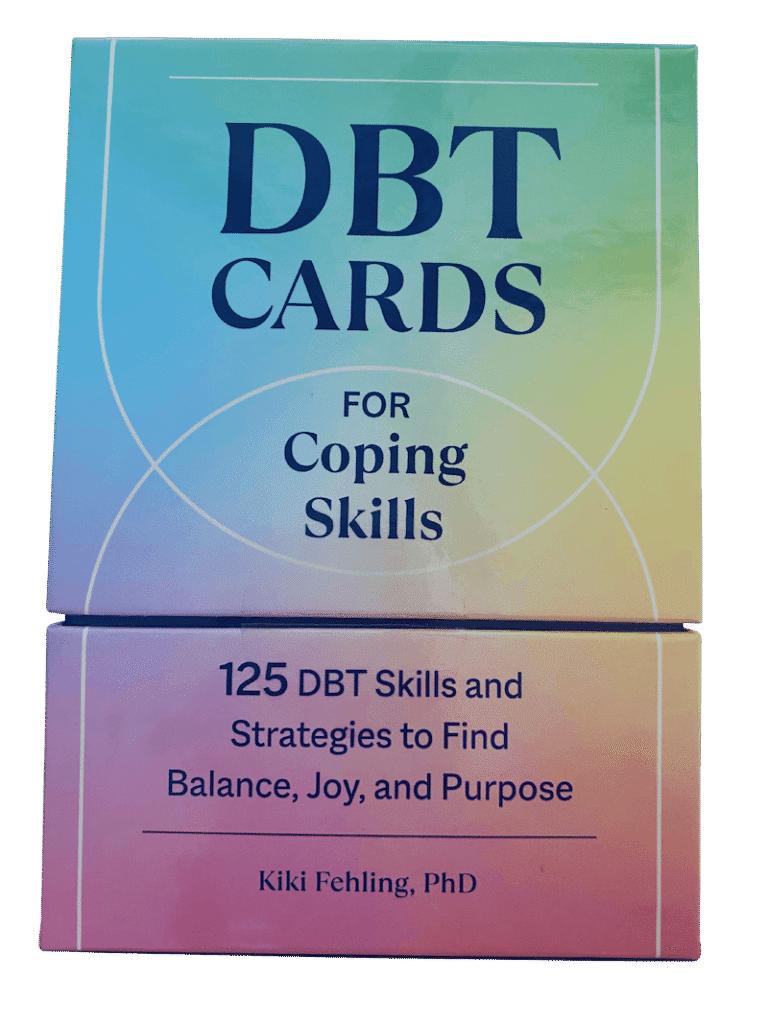
Get 52 DBT Coping Skills Cards
DBT skills are practical tools for handling life’s hardest moments, yet most of us have no idea they exist.
Here’s what nobody tells you: most of us were never taught how to handle the hard stuff.
How to sit with uncomfortable emotions without spiraling.
How to set a boundary without feeling guilty.
How to stay present when your brain wants to catastrophize or ruminate about tomorrow or obsess over yesterday.
We’re just supposed to figure it out.
And when we can’t, we assume something’s wrong with us.
You know that feeling when a situation keeps replaying in your mind, and three days later the thought is playing on autopilot, or when someone says something so mean, but you didn’t have the skills to respond properly in the moment, and now you are upset with yourself, or when you let someone’s comment or behavior influence your self-worth?
What about when anxiety shows up out of nowhere, and you have no idea how to make it stop?
Most people live in their heads more often than they’d like to admit.
But what if you just need better tools and the willingness to use them daily?
That’s what DBT skills for everyday life are.
Not therapy-speak.
Not something reserved for people “worse off” than you.
Just practical, learnable techniques that actually work when life gets messy.
And the best part?
You don’t need to be in therapy to use them.
The Middle Path: DBT’s Core Philosophy
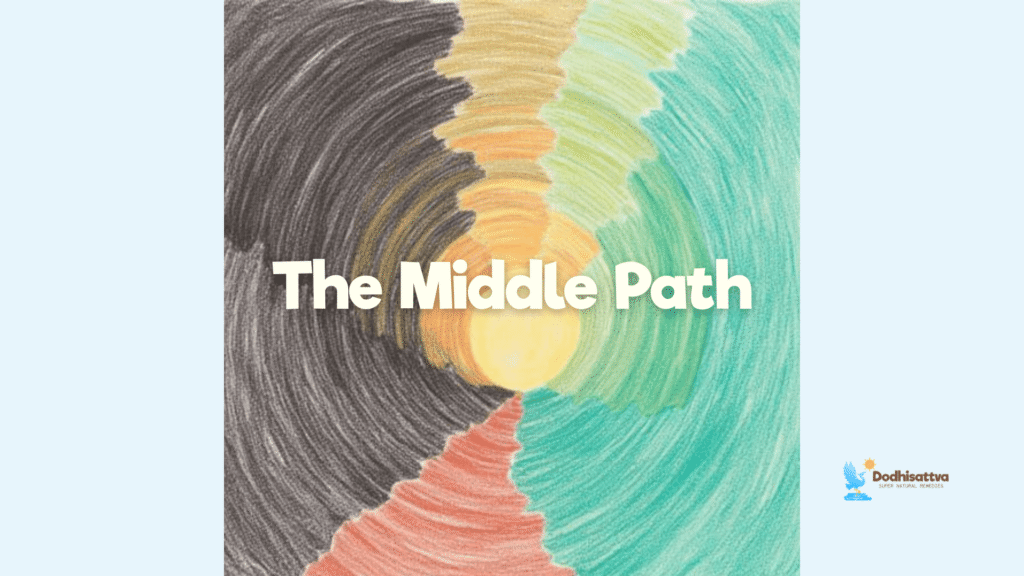
Before we get into specific DBT skills, I need to tell you about the middle path.
Because this is what makes DBT different from everything else.
Most of us live in extremes.
We toggle between perfectionism (relentlessly fixing our flaws) and resignation (accepting we’re fundamentally stuck).
Between being our own harshest judge and our most defensive lawyer.
Between “I should be better by now” and “What’s the point?”
DBT says: what if both are true?
What if you’re doing the best you can AND you can learn to do better?
What if you need to accept yourself exactly as you are AND work on growing?
What if your emotions are completely valid AND you can learn to manage them differently?
This is the middle path.
And it’s not some philosophical concept you nod at and move on.
It’s the foundation of everything.
You stop fighting yourself. You stop demanding perfection.
You hold both truths at once: I’m okay as I am. I’m working on getting better.
That space between the two? That’s where the magic happens.
Self-love is a culmination of loving ourselves as we are, seeing ourselves as capable beings, and owning what we need to do to become better, wiser, and stronger.
In the days when I worked with holistic healer Lou Corona, I remember he was quite good at accepting reality as it was and showing acceptance and love to whoever was in front of him.
These skills are powerful and will be of tremendous value in your life.
What Are DBT Skills, Really?
DBT stands for Dialectical Behavior Therapy.
Dialectical means holding two seemingly opposite truths at the same time and finding the balance between them.
It was developed in the 1980s by psychologist Marsha Linehan, who spent years struggling with her own intense emotions.
Traditional therapy wasn’t helping.
So she created something new, combining cognitive-behavioral techniques with mindfulness and acceptance practices.
What started as treatment for one specific diagnosis became something much bigger.
Because here’s the thing: DBT skills aren’t just for people in crisis.
They’re for anyone who’s ever felt stuck, reactive, or like they’re white-knuckling their way through life.
You don’t need a diagnosis. You just need to be human.
DBT skills are your toolkit.
Concrete techniques for specific situations.
Something’s wrong with your car, you need tools to fix it.
If something’s hard in your life, you need skills to handle it.
Different tools for different moments.
All learnable.
All practical.
All surprisingly effective.
You probably need DBT skills if you:
- Feel things intensely (when it’s good, it’s great, when it’s bad it’s devastating)
- Struggle with anxiety or low moods
- Have a hard time in relationships
- Constantly second-guess yourself
- React before you think when you’re upset
- Seek reassurance or validation from others
- Want to trust yourself more
- Just want to feel more solid, more grounded, more capable
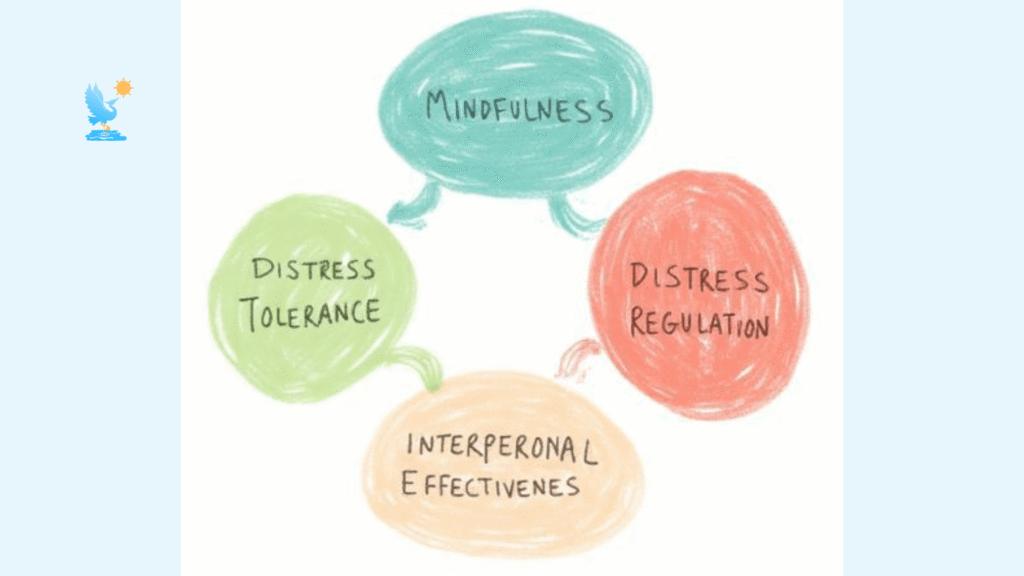
The 4 Core Modules of DBT Skills
DBT skills are organized into four modules.
Each one addresses a different aspect of emotional and interpersonal wellness:
- Mindfulness – Being present instead of lost in your head
- Distress Tolerance – Surviving crisis without making it worse
- Emotion Regulation – Understanding and managing feelings
- Interpersonal Effectiveness – Getting what you need while keeping relationships intact
Let’s break down the DBT skills modules.
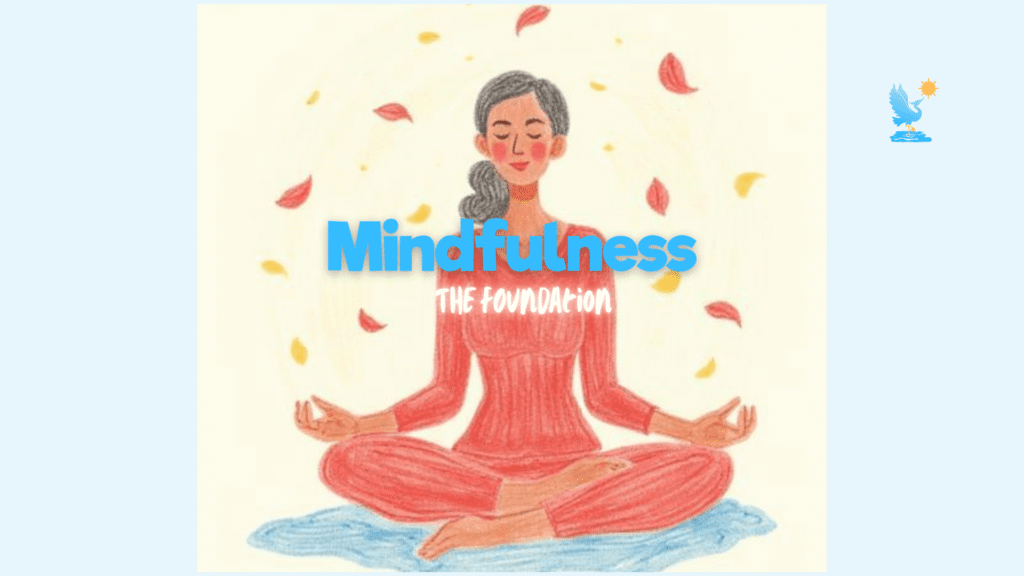
Module 1: Mindfulness – The Foundation of Everything
Mindfulness is where all DBT skills begin.
You can’t regulate emotions you don’t notice.
You can’t tolerate distress if you’re not present with it.
You can’t communicate effectively if you’re lost in reactive thoughts.
Mindfulness means being fully here, right now.
Observing what’s happening without judgment.
Why This Matters More Than You Think
Your brain has something called the Default Mode Network.
It’s the part that activates when you’re not focused on a task.
It’s that constant mental chatter: replaying yesterday’s conversation, worrying about tomorrow’s meeting, criticizing yourself for something you said five years ago.
The Default Mode Network keeps you trapped in “what if” and “if only.”
It’s exhausting.
And it’s a huge reason why anxiety and self-doubt feel so relentless.
Mindfulness quiets that noise.
It brings you back to now, the only moment where you actually have any power.
I have also found breath work to be helpful for mind chatter as well as meditation.
The Core Mindfulness DBT Skills
1. Observe
Just notice. No commentary, no judgment, no fixing.
Notice the tightness in your chest.
The thoughts streaming in your mind.
The sound of birds outside.
Your breath is moving in and out.
You’re not trying to change anything.
You’re just paying attention.
Practice: Set a timer for two minutes.
Close your eyes.
Notice five things you can hear. That’s it.
You just practiced observing.
2. Describe
Put words to what you’re experiencing, but stick to facts, not interpretations.
Not: “I’m a failure.” But: “I notice the thought ‘I’m a failure’ appearing.”
Not: “This is terrible.” But: “I feel tightness in my throat and heat in my face.”
Describing creates distance. You’re not the emotion.
You’re the observer, the witness, the point of light behind it all.

Want to Experience Being the Observer of the Movie You Call Your Life?
Experience being the witness, in this Eternal Home Guided Meditation
3. Participate
Be fully engaged in whatever you’re doing.
Stop multitasking.
Stop half-listening while scrolling.
Stop eating lunch while scrolling your device.
Do one thing. Be all the way in it.
This is how you stop feeling like life is passing you by while you’re stuck in your head.
4. Non-Judgmental Stance
This one’s hard because we judge everything. Good, bad, right, wrong, should, shouldn’t.
Non-judgmental means observing reality as it is. Not as you wish it were. Not as it “should” be.
“My partner is late” vs. “My partner is inconsiderate and doesn’t respect my time.”
The first is a fact.
The second is judgment piled on top, and that’s where suffering multiplies.
5. One-Mindfully
Do one thing at a time.
When you’re eating, eat.
When someone’s talking, listen.
When you’re walking, walk.
Your mind will wander.
That’s what minds do.
When it does, gently bring it back.
This is the antidote to the scattered, half-present way most of us live.
6. Effectiveness
Focus on what works, not on being right.
Let go of “this isn’t fair” and “they should know better” and “I deserve an apology.”
Ask instead: what will be effective here?
What actually moves me toward my goals?
Sometimes effectiveness means letting go.
Sometimes it means speaking up.
But it always means doing what works, not what feels righteous.

Module 2: Distress Tolerance – Surviving Crisis Without Making It Worse
Life includes pain. Rejection.
Loss. Disappointment.
Things you can’t control.
Distress tolerance skills aren’t about making pain go away.
They’re about getting through it without doing something that makes everything worse.
When to Use These DBT Skills
When emotions are so intense, you want to react impulsively, send that text, quit your job, say something you’ll regret, numb out with substances, or self-harm.
When you’re in crisis and can’t think straight.
When solving the problem isn’t possible right now, you just need to survive the next hour.
Distress tolerance means “I can handle this.”
I don’t have to like it.
I don’t have to fix it right now.
But I can tolerate it without making it worse.
Being a capable person is an act of self-love.
The STOP Skill: Your Emergency Brake
This is your first-responder skill.
Use it the moment you feel that impulsive urge rising.
S – Stop Freeze. Don’t move. Don’t speak. Don’t react. Just stop.
T – Take a Step Back. Physically step back if you can. Take a breath. Create space between stimulus and response.
O – Observe What’s happening inside you? Racing heart, tight jaw, thought spiraling. What’s happening outside? What triggered this?
P – Proceed Mindfully. Now choose your action.
Not from impulse. From your wise mind, the place where emotion meets reason.
Real-world example: Your friend says something that feels like criticism.
Every cell in your body wants to defend, attack, shut down.
STOP.
Step back. Observe: “I feel hurt.”
I’m interpreting this as criticism.
“Is that what they meant?”
Proceed: “Can you help me understand what you meant by that?”
The TIPP Skill: Fast-Acting Reset
When emotions are at crisis level, panic attack territory, rage boiling over, you need to change your body’s physiology fast.
T – Temperature Splash cold water on your face. Hold an ice cube. Take a cold shower. Cold temperature activates your dive reflex—your heart rate drops, your nervous system shifts.
I – Intense Exercise Run. Do jumping jacks. Sprint up stairs.
Intense physical activity burns off the adrenaline flooding your system.
P – Paced Breathing Breathe in for 4, out for 6. Longer exhales activate your parasympathetic nervous system, your body’s brake pedal.
P – Paired Muscle Relaxation: Tense every muscle while breathing in. Release while breathing out.
Your body can’t be tense and relaxed at the same time.
These aren’t long-term solutions.
They’re crisis interventions.
Use them to bring yourself down from 10 to 6, so you can think clearly enough to use other skills.

Radical Acceptance: The Skill That Changes Everything
This may be the hardest for some and the most powerful of all DBT skills.
Radical acceptance means accepting reality exactly as it is, not because you like it, not because it’s fair, but because it’s real.
Fighting reality creates suffering.
“This shouldn’t be happening.”
“They shouldn’t have done that.”
“It’s not fair.”
All true. And all irrelevant.
Reality doesn’t care about should.
It just is.
Radical acceptance says: This happened.
I don’t like it.
I didn’t want it.
But it’s real. So what now?
It’s not a resignation.
It’s not approval.
It’s acknowledging what’s true so you can stop wasting energy fighting it and start responding effectively.
What radical acceptance looks like:
- The relationship ended. I accept that it ended.
- I didn’t get the job. I accept that I didn’t get the job.
- My body has this chronic condition. I accept that this is my reality.
From there, you can grieve. You can make a plan. You can move forward.
But you can’t do any of that while you’re still arguing with reality.
DBT Skills: Self-Soothe with the 5 Senses
When you’re overwhelmed, bring yourself back to your body through your senses.
Vision: Look at something beautiful. Art, nature, and photos that bring joy.
Hearing: Music that calms or uplifts. Nature sounds. Silence.
Smell: Essential oils, coffee brewing, bread baking, fresh air.
Taste: Herbal tea. Dark chocolate. Something you savor slowly.
Touch: Soft blanket. Warm bath. Pet your dog. Feel your feet on the ground.
This isn’t avoidance.
It’s giving your nervous system what it needs to regulate.

Module 3: Emotion Regulation – Managing What You Feel
You can’t think your way out of emotions.
But you can accept them.
Work with them.
Change them when they don’t fit the situation.
Emotion regulation skills teach you how.
Why Emotions Spiral
Emotions aren’t the problem.
It’s what happens next:
You feel angry → you feel guilty about feeling angry → you feel ashamed of feeling guilty → you feel hopeless about ever changing.
Or: You feel anxious → you avoid what makes you anxious → avoidance works temporarily → anxiety grows bigger → you avoid more → your world gets smaller.
DBT skills interrupt that spiral.
Identify and Name Your Emotions
You can’t regulate what you can’t name.
“I feel bad” isn’t specific enough. Bad how?
Anxious? Ashamed? Disappointed? Hurt? Angry? Lonely? Overwhelmed?
Each emotion has different causes, different urges, different solutions.
Practice: When emotion hits, pause and ask:
- What am I feeling? (Name it specifically)
- What triggered this?
- What does this emotion want me to do?
- What sensations am I noticing in my body?
Naming it literally calms your nervous system.
There’s neuroscience behind “name it to tame it.”
Check the Facts
Emotions feel like truth.
But they’re not always accurate.
Check the facts means reality-testing your emotional response.
Is this emotion justified by the actual facts?
Or am I reacting to assumptions, interpretations, core beliefs?
Example: Emotion: “I’m furious that my friend didn’t text me back.”
Facts: My friend didn’t respond to my text within 4 hours.
Check: Is it a fact that they’re ignoring me? Or could they be busy, phone died, forgot to hit send?
Often, our emotions respond to the story we’re telling, not to what actually happened.
Opposite Action: Change the Emotion by Changing the Behavior
This is counterintuitive and incredibly powerful.
Emotions create action urges:
- Fear says run away
- Anger says attack
- Shame says hide
- Sadness says withdraw
Sometimes those urges are justified.
But often, acting on them makes things worse.
Opposite action means: when the emotion doesn’t fit the facts, do the opposite of what it’s telling you.
Anxious? Approach what you fear (when there’s no real danger).
Depressed? Get active. Reach out. Do opposite of withdrawing.
Angry? (When anger isn’t justified) Be gentle. Step away. Soften.
Ashamed? Share instead of hiding. Connect instead of isolating.
If shame is a core issue you need to explore, please see our article on How To Deal With Shame here.
Your behavior changes your brain chemistry.
Act opposite, feel opposite.
PLEASE Skills: Reduce Vulnerability
You can’t regulate emotions effectively if your body’s a wreck.
PL – Treat Physical Illness (don’t ignore symptoms, see doctors)
E – Eat Balanced (blood sugar crashes = mood crashes)
A – Avoid Mood-Altering Substances (or use responsibly)
S – Sleep (consistent sleep schedule, enough hours)
E – Exercise (movement regulates emotions)
Basic? Yes. Revolutionary? Also yes.
When you’re sleep-deprived, hungry, and haven’t moved your body in days, everything feels harder.
Your emotional baseline drops.
I remember doing my apprenticeship with Shaman Elder Maggie Wahls, and these were foundational skills.
She did not call them DBT skills, but they were key to experiencing a deeper sense of reality and cultivating power.
PLEASE skills are prevention. They keep you from starting each day already depleted.
Build Mastery
Do something challenging. Something that requires effort and skill.
Cook a new recipe.
Learn a language.
Build something.
Master a yoga pose.
Why? Accomplishment builds self-worth.
And self-worth is the foundation for emotional resilience.
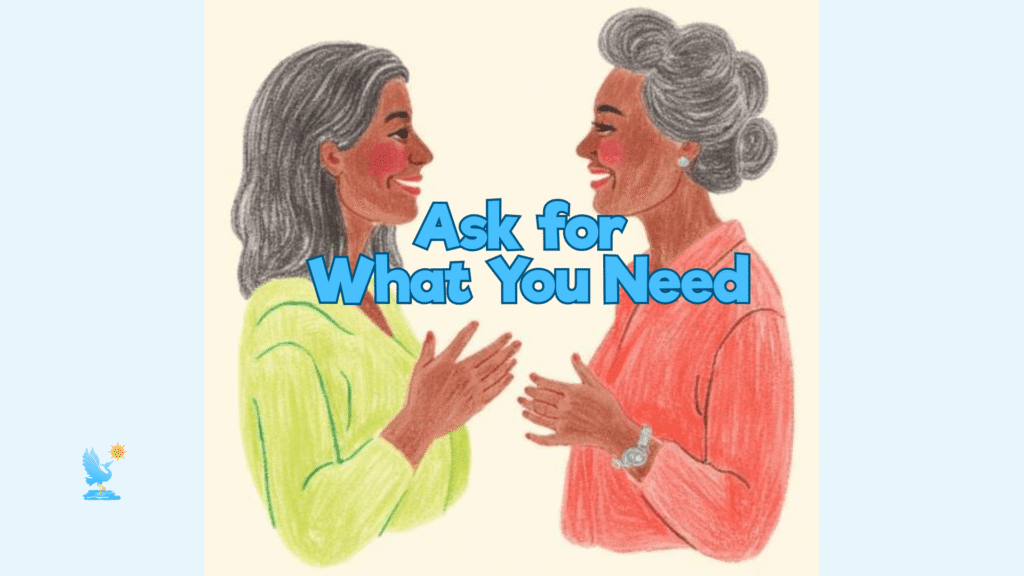
Module 4: Interpersonal Effectiveness – Getting What You Need
You can regulate your emotions beautifully.
But if you can’t communicate your needs, set boundaries, or navigate relationships, you’ll still struggle.
Interpersonal effectiveness skills teach you how to ask for what you want, say no when you need to, and maintain self-respect in relationships.
The Three Goals
Every interaction has three possible goals:
- Get what you want (objective effectiveness)
- Keep the relationship (relationship effectiveness)
- Keep your self-respect (self-respect effectiveness)
Sometimes you can have all three. Often you have to prioritize. DBT gives you skills for each.

DEAR MAN: Ask for What You Need
Most of us either don’t ask (and resent people for not reading our minds) or ask poorly (and wonder why it doesn’t work).
DEAR MAN is your script for asking effectively.
D – Describe the situation (facts only, no blame) “You’ve been late to our last three meetups.”
E – Express your feelings “I feel frustrated and like my time isn’t valued.”
A – Assert what you need clearly “I need you to be on time or let me know if you’re running late.”
R – Reinforce (why it matters, what’s in it for them) “That way we both get the full time we planned together.”
M – Mindful (stay focused, don’t get derailed, broken record if needed) Keep bringing it back to your request.
A – Appear confident (even if you don’t feel it) Body language, tone, eye contact matter.
N – Negotiate (be willing to compromise) “If you can’t commit to being on time, can we meet later in the day when your schedule’s clearer?”
GIVE: Maintain the Relationship
Sometimes the relationship matters more than getting your way.
G – Gentle No attacks. No sarcasm. No passive aggression.
I – Interested Actually listen. Ask questions. Show you care about their perspective.
V – Validate Acknowledge their feelings even if you disagree. “I can see why you’d feel that way.”
E – Easy manner Use humor when appropriate. Lighten the mood. Don’t make it heavy if it doesn’t need to be.
FAST: Keep Your Self-Respect
Don’t sacrifice yourself to keep the peace.
F – Fair Be fair to yourself AND others. Don’t always give in. Don’t always demand your way.
A – Apologies (no unnecessary) Stop over-apologizing. “Sorry” for actual wrongs, not for existing.
S – Stick to values Don’t compromise your integrity to please someone.
T – Truthful Be honest. Don’t lie, don’t exaggerate, don’t minimize.
When you use FAST, you walk away from interactions feeling like you honored yourself—even if you didn’t get everything you wanted.
How to Actually Start Using DBT Skills
Reading about DBT skills is one thing. Using them is another.
Here’s how to make them stick:
Start with One Skill
Don’t try to master all of this at once. Pick one skill. Practice it for a week.
Suggested order:
- Week 1: Observe (mindfulness).
Just notice your emotions throughout the day - Week 2: STOP skill
Use it when triggered - Week 3: Self-soothe with senses – One sense per day
- Week 4: Opposite action – Try it once when emotion doesn’t fit facts
- Week 5: DEAR MAN – Plan one conversation where you ask for what you need
Track What Works
Keep notes. “Used STOP skill when my boss criticized me.
Didn’t react defensively. Felt proud.”
Notice patterns.
Which skills work best for you?
Which situations trip you up?
Be Patient with Yourself
You’re rewiring decades of patterns.
Your brain will default to old ways.
That’s normal.
The goal isn’t perfection. It’s practice.
Each time you use a skill, even imperfectly—, you’re building new neural pathways.
You’re teaching yourself a different way.
What I find interesting is that sometimes you start dreaming about a new way of being, which is a great sign!
Get Support
DBT skills are more effective with support.
Find a DBT therapist or group if you can.
Practice skills with a friend.
Join online communities where people share what’s working.
You don’t have to do this alone.
DBT Skills and Self-Worth: The Foundation
Here’s something I’ve learned: you can’t fully master DBT skills without self-worth.
And using DBT skills builds self-worth.
When you use mindfulness, you’re saying:
“I’m worth paying attention to.”
When you tolerate distress without making it worse, you’re proving:
“I can trust myself in hard moments.”
When you regulate emotions instead of being controlled by them, you’re learning:
“I have power here.”
When you set boundaries, you’re declaring: “My needs matter.”
Self-worth is the foundation. Everything else builds on it.
If you’re struggling with feeling worthy, start there:
How to Build Self-Worth: Complete Guide
Then come back and layer DBT skills on top. They work together. They strengthen each other.
The Middle Path, Again
We started with the middle path.
Let’s end there, too.
DBT skills aren’t about fixing yourself.
They’re about finding balance.
Balance between acceptance and change.
Between honoring your emotions and not being ruled by them.
Between meeting your needs and respecting others.
Between self-compassion and accountability.
You don’t have to choose extremes.
DBT skills teach us that we can walk the middle path.
And on that path? You’re not broken. You’re not too much. You’re not beyond help.
You’re learning.
Growing.
Building a toolkit that lets you show up for your life, even the hard parts, with presence, resilience, and self-respect.
That’s what mastering DBT skills looks like.
Not perfection. Balance.
Your Next DBT Skills Steps
- Pick one skill from this guide to practice this week
- Bookmark this page—come back when you need a specific tool
- Explore the deep-dive guides below for skills you want to master
Related DBT Guides:
Distress Tolerance:
- Radical Acceptance: The Skill That Changes Everything
- STOP Skill: DBT’s Emergency Brake
- TIPP Skill: Fast-Acting Emotion Reset
Emotion Regulation:
- Opposite Action: Change Emotions Through Behavior
- DBT for Shame: Stop Shame Spirals
- How to Build Self-Worth
Mindfulness:
Interpersonal Effectiveness:
You’ve got the DBT skills now it’s about practice. One skill at a time.
POPULAR POSTS