Dodee is a Certified Holistic Health Practitioner, certified in Dr. Klinghardt's Autonomic Response Testing, and is an educator of the Living Biofield as an integral part of health, with nearly two decades of experience in detox strategies, holistic healing, and long-standing chronic illness. Dodhisattva.com, est. 2009
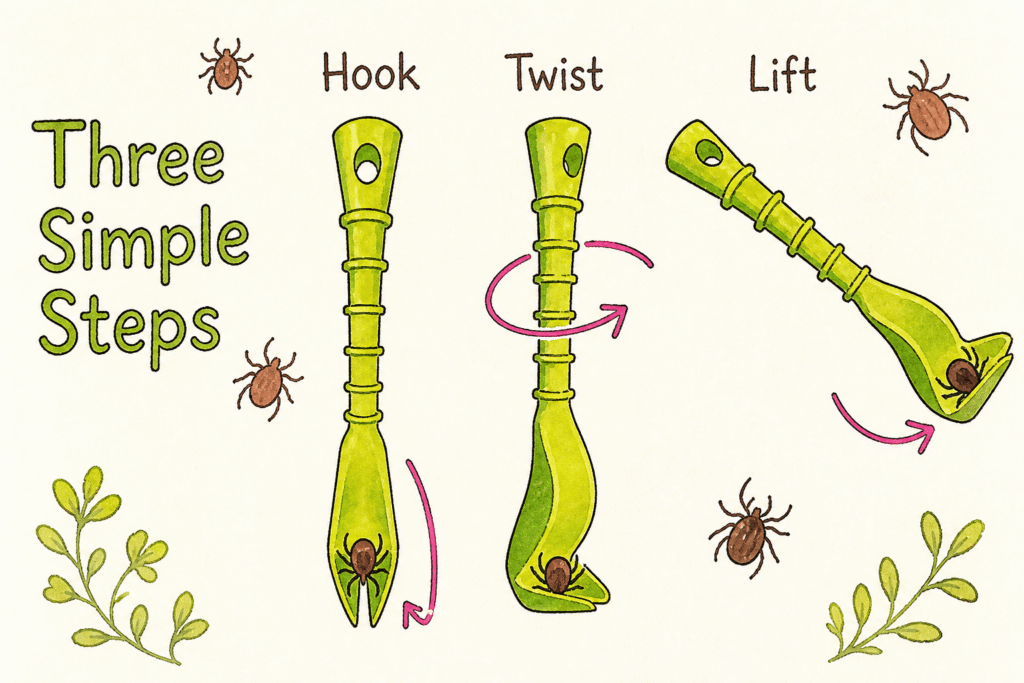
The Tick Tornado is one of the safest & effective tick removal tools. Designed to remove ticks without squeezing the body, reducing the risk of fluid transmission.
You are outside enjoying your garden, a hike, or an afternoon in the yard and you find a tick attached to your skin.
Your heart rate goes up a little.
You wonder how long it has been there.
You wonder if you should be worried.
What you do in the next few hours matters more than most people realize.
This guide walks you through exactly what to do after a tick bite, from the moment you find it through the days and weeks that follow.
The steps are clear, well documented, and based on guidance from sources including the CDC, Johns Hopkins Lyme Disease Research Center, and the American Academy of Family Physicians.
Not every tick bite leads to infection.
But every tick bite deserves to be taken seriously.
The window between exposure and potential infection is short, and what you do in that window matters enormously.
Step 1: Remove the Tick Immediately and Correctly
The single most important thing on what to do after a tick bite is remove the tick as calmly, quickly, and as cleanly as possible.
Do not panic and do not wait.
Do not go to urgent care first.
Remove it yourself immediately.
Time matters because the longer a tick remains attached, the greater the opportunity for pathogen transmission.
Research suggests that Borrelia burgdorferi, the spirochete responsible for Lyme disease, is typically transmitted after 24 to 36 hours of attachment in most cases.
However, not all tick-borne pathogens follow the same timeline.
Powassan virus can be transmitted within 15 minutes of attachment.
The bacteria that cause anaplasmosis can be transferred within the first 24 hours.
Prompt removal is always the right move, regardless of how long you think the tick has been attached.
How To Remove A Tick Correctly
Use fine-tipped tweezers or a dedicated tick removal tool such as a Tick Tornado or Sawyer Tick Pliers.
See the section below for using the Tick Tornado.
What To Do After A Tick Bite
If using regular tweezers, grasp the tick as close to the skin’s surface as possible, at the mouthparts where it meets the skin.
Pull upward with steady, even pressure without twisting or jerking.
Twisting can cause the mouthparts to break off and remain in the skin.
Do not squeeze the body of the tick.
Squeezing can force fluid from the tick into the bite site.
After removing the tick, clean the bite area thoroughly with rubbing alcohol or soap and water.
Clean your hands as well.
If the mouthparts break off and remain in the skin, do not panic.
The mouthparts alone cannot transmit Lyme disease as the infective body of the tick is no longer attached.
They will typically dry up and fall out on their own within a few days.
Using a Tick Tornado?
Place the forked end of the tool alongside the tick as close to the skin as possible. Rotate gently without pulling until the tick releases naturally. Do not yank upward. The rotating motion allows the tick to disengage without squeezing.
What Not to Do: The Myths That Can Make Things Worse
There is a lot of folklore around tick removal and most of it is wrong and potentially harmful.
You may have heard that you should burn the tick with a hot match, coat it with petroleum jelly, cover it with nail polish, douse it with alcohol, or apply essential oils to make it release.
Do not do any of these things.
Applying alcohol, nail polish remover, petroleum jelly, or a hot match can irritate a tick and cause it to regurgitate its gut contents into your skin.
The gut contents of a tick can contain the very pathogens you are trying to avoid.
Research has confirmed that petroleum jelly, fingernail polish, isopropyl alcohol, and hot matches do not cause ticks to detach, whether they have been attached for 12 hours or several days.
What these irritants do is stress the tick.
When agitated, a tick may regurgitate its stomach contents back into your skin, which is the opposite of what you want.
Johns Hopkins Lyme Disease Research Center specifically advises against applying any substances to the tick while it is attached, noting they may agitate the tick and force more infected fluid into the skin.
The American Academy of Family Physicians echoes this, noting that these methods may induce the tick to salivate and regurgitate into the attachment site.
The other critical point is that waiting for the tick to release on its own after applying any of these substances is also dangerous.
Every hour the tick remains attached is additional time for potential pathogen transmission.
The Only Safe Method
The safe and effective method is prompt mechanical removal with fine-tipped tweezers or a dedicated tick removal tool. Do not use petroleum jelly, nail polish, alcohol, or heat. These methods agitate the tick and can cause it to release fluid into the bite site. Remove it cleanly and quickly.
Step 2: Save the Tick and Document Everything
What To Do After a Tick Bite?
Once the tick is removed do not throw it away.
Place it in a sealed zip lock bag or small container with a damp piece of paper towel.
Sending the tick for testing can tell you what pathogens it was carrying, which is genuinely useful information for the weeks ahead.
Services like TickCheck and TickEncounter offer tick testing for a modest fee and can test for multiple pathogens including Borrelia, Babesia, Anaplasmosis, Ehrlichia, and Bartonella.
Note the date, where on your body the tick was attached, and where you were when you believe you may have been bitten.
Take a photograph of the tick itself if possible.
Take a photograph of the bite site immediately after removal and continue photographing it every day for the next two weeks.
This visual record becomes valuable if a rash develops and you need to show a healthcare provider how it has changed over time.
Step 3: Watch Carefully in the Days and Weeks Following
After removing the tick your next responsibility is careful and consistent observation of the bite site and your overall health over the following days and weeks.
Most tick-borne infections, if they are going to produce symptoms, will do so within one to four weeks of the bite.
Healing Localized Poultice
Garlic Poultice for Tick Bite Sites
Dodhisattva
Super Natural Remedies
🧄 Garlic Poultice for Tick Bite Sites
One of the most powerful local treatments after a tick bite is a fresh garlic poultice applied directly over the wound. Allicin, the active compound released when garlic is crushed, creates a potent antimicrobial environment right at the entry point before spirochetes have the opportunity to migrate deeper into the tissue.
This is one of the oldest wound treatments in ancestral and traditional medicine, used across cultures precisely because crushed raw garlic delivers allicin directly to affected tissue without needing to be processed through digestion first.
Why allicin works at the wound site
Potent antimicrobialAntibacterial against BorreliaAnti-inflammatoryAntiparasitic propertiesAntifungalLocal immune activationDisrupts biofilm formation
⚠️ Important before you begin
Garlic must be freshly crushed, not pre-minced, powdered, or from a jar. Allicin is only produced when the cell walls are broken and the alliinase enzyme contacts alliin. It begins to degrade within minutes to hours so fresh application is essential. Raw garlic can cause skin irritation on sensitive skin so always place a thin cloth or gauze between the garlic and bare skin and do not apply longer than 20 to 30 minutes at a time.
What you need
🧄2 to 3 fresh raw organic garlic cloves
🔪Knife or garlic press to crush
🩹Thin gauze or clean cloth
🩹Medical tape or bandage to hold in place
💧Clean water to rinse after
Step by step protocol — tap each step to check it off
1
Tick has been removed — now begin
Once you have removed the tick using the tick tornado method or fine tipped tweezers as described above, clean the bite area with rubbing alcohol or soap and water. You are now ready to apply the garlic poultice directly to the site.
2
Crush fresh garlic immediately before use
Crush 2 to 3 fresh raw organic garlic cloves using a knife, garlic press, or mortar and pestle. The garlic must be freshly crushed right before application. This is when allicin production is at its peak and most potent.
3
Protect the surrounding skin
Place a thin layer of coconut oil or olive oil on the skin surrounding the bite site to protect it from garlic irritation. Do not apply oil directly over the wound site itself.
4
Apply the poultice over the wound
Place the crushed garlic onto a small piece of thin gauze or clean cloth and apply it directly over the tick bite site with the garlic facing the skin. The gauze acts as a barrier to prevent direct skin burns while still allowing allicin to penetrate the tissue.
5
Secure and time it
Tape or bandage the poultice in place and start the timer below. Leave on for 20 to 30 minutes. Check skin underneath after 10 minutes for any redness or burning and remove earlier if needed.
6
Remove and rinse
Remove the poultice after 20 to 30 minutes and rinse the area with clean water. Pat dry gently. You can repeat up to 2 to 3 times per day for the first 48 hours using fresh garlic each time.
7
Monitor the site daily
Photograph the bite site each day for the next two weeks. Look for any expanding redness, rash patterns, or unusual changes. Contact a healthcare provider promptly if any rash, fever, fatigue, or joint pain develops.
Poultice application timer
20:00
Start timer when poultice is applied. Remove when it reaches zero.
💊 Support internally at the same time
While the poultice works locally at the wound site, taking allicin capsules internally provides systemic antimicrobial support throughout the body. Integrative practitioners often recommend beginning allicin supplementation immediately after a tick bite as part of a broader natural first response protocol. The combination of local and systemic allicin gives the body the best chance of addressing any potential infection at multiple levels simultaneously.
🌿 Key Takeaway
A fresh garlic poultice applied directly over a tick bite delivers allicin right where it is needed most. Combined with internal allicin supplementation this is one of the most accessible and powerful natural first responses available immediately after a tick bite.
This widget is for educational purposes only and does not constitute medical advice. Always consult a qualified healthcare practitioner after a tick bite. Seek care promptly if any rash, fever, or neurological symptoms develop.
What to Do After a Tick Bite? Watch for a rash
An expanding red rash at the bite site is the most recognized sign of potential Lyme disease.
This rash, known as erythema migrans, does not always look like the classic bull’s eye that most people picture.
It can appear as a solid expanding red patch, an oval ring without a clear center, or multiple rashes appearing in different locations on the body.
It may not itch or hurt.
It typically appears within three to thirty days of the tick bite.
Photograph it daily if it appears and show those photographs to your healthcare provider.
The absence of a rash does not rule out infection.
A meaningful percentage of people with confirmed Lyme disease never develop the classic rash at all.
Watch for flu-like symptoms
Beyond the rash, watch for flu-like symptoms including fever, chills, fatigue, muscle aches, joint pain, and headache appearing within the first four weeks.
In summer when true flu is uncommon, these symptoms following a tick bite deserve prompt medical attention.
Also note any unusual neurological symptoms, facial drooping, heart palpitations, or significant fatigue that develops in the weeks following the bite.
Symptoms that appear and disappear cyclically, waxing and waning over days or weeks, are particularly worth paying attention to as this pattern is associated with tick-borne illness.
Keep a simple written log of any symptoms you notice, however mild, including their timing and duration.
This documentation becomes valuable if you need to work with a practitioner to piece together the clinical picture.
Step 4: Understand Your Testing Options
Standard Lyme disease testing using the two-tier ELISA and Western Blot protocol has documented sensitivity limitations, particularly in the early days following a bite before the immune system has had time to produce detectable antibodies.
Testing too early can produce a false negative result even in someone who has been exposed.
Johns Hopkins Lyme Disease Research Center recommends observing the bite site for two weeks and consulting with your primary care provider about the most appropriate timing for blood testing.
Sending the tick itself for testing is often more informative in the immediate aftermath of a bite than testing your own blood.
Comprehensive Testing Options
For those who want a fuller picture of what the tick may have been carrying, specialized tick testing laboratories offer panels that go beyond standard Lyme testing to include co-infections like Babesia, Bartonella, Ehrlichia, and Anaplasma.
TickCheck and TickEncounter are two well regarded services for this purpose.
For personal blood testing in the weeks following a bite, expanded Western Blot panels through specialized laboratories offer greater sensitivity than standard two-tier testing, particularly for detecting later stage infection.
Working with a Lyme-literate practitioner who understands the limitations of standard testing is important for anyone in a tick-endemic area who develops symptoms after a bite.
A negative Lyme test in the first few weeks after a bite does not rule out infection.
It takes time for antibodies to develop to detectable levels.
If you develop symptoms, pursue further evaluation regardless of an early negative test result.
When to Seek Medical Care Immediately
Seek medical care promptly if you develop an expanding rash at the bite site.
Seek care if you develop fever, chills, severe headache, or significant fatigue within four weeks of a tick bite.
Seek care if you experience facial drooping, heart palpitations, or neurological symptoms following a tick bite.
Seek care if the tick was engorged when removed, indicating it had been feeding for an extended period.
Early treatment for tick-borne bacterial infections is significantly more effective than delayed treatment.
Do not wait and see if you have any of the above symptoms.
Contact your healthcare provider promptly and be sure to mention the tick bite, the date it occurred, and where you were when you believe you were bitten.
Remove the tick as soon as possible using fine-tipped tweezers or a tick removal tool. Grasp the tick as close to the skin as possible and pull upward with steady even pressure without twisting. Do not squeeze the body of the tick. After removal clean the bite area with rubbing alcohol or soap and water. Save the tick in a sealed bag for potential testing, photograph the bite site, and note the date and circumstances. Prompt removal is the single most important step.
Should I burn the tick or put petroleum jelly on it to make it come out?
No. This is one of the most common and most dangerous myths about tick removal. Applying heat, petroleum jelly, nail polish, alcohol, or any other substance to a tick while it is still attached can agitate it and cause it to regurgitate its gut contents into your skin. Research confirms that none of these methods cause ticks to detach and they can increase the risk of pathogen transmission. The only safe and effective removal method on what to do after a tick bite is prompt mechanical removal with fine-tipped tweezers or a dedicated tick removal tool.
How long does a tick need to be attached to transmit Lyme disease?
Research suggests that Borrelia burgdorferi is typically transmitted after 24 to 36 hours of tick attachment in most cases. However this is not a guarantee that shorter attachment times are always safe. Other tick-borne pathogens can transmit more quickly. Powassan virus can be transmitted within 15 minutes of attachment and the bacteria that causes anaplasmosis can transfer within the first 24 hours. Prompt removal is always the priority regardless of how long you think the tick may have been attached.
Should I go to the doctor after a tick bite?
Seek medical care promptly if you develop an expanding rash, fever, chills, severe headache, significant fatigue, facial drooping, or heart palpitations within four weeks of a tick bite. If the tick was engorged when removed, discussing your options with a doctor is worth doing. If you had a tick attached briefly with no symptoms developing, careful watchful observation over the following two to four weeks is a reasonable approach. Always consult a qualified healthcare practitioner for personal guidance.
What is the best way to test for Lyme disease after a tick bite?
Sending the tick itself for testing through a service like TickCheck or TickEncounter is often the most informative step in the immediate aftermath of a bite. Standard blood testing for Lyme disease has known sensitivity limitations in the early weeks following a bite before antibodies have developed. Waiting at least two to four weeks after the bite before blood testing is generally recommended. For those with ongoing symptoms, expanded panels and comprehensive co-infection testing through specialized laboratories offer a more complete picture than standard two-tier testing.
What does the Lyme disease rash actually look like?
The erythema migrans rash associated with Lyme disease does not always look like the classic bull’s eye pattern. It can appear as a solid expanding red patch, an oval ring without a clear center, or multiple rashes in different locations on the body. It may not itch or hurt. It typically appears within three to thirty days of the tick bite. Photographing any rash daily and showing those photographs to a healthcare provider is recommended. The absence of a rash does not rule out Lyme disease.
What are tick-borne co-infections and should I be concerned about them?
Co-infections are other pathogens carried by the same ticks that transmit Lyme disease. The most clinically significant include Babesia, a protozoan infection that behaves similarly to malaria; Bartonella, a bacterial infection with an affinity for endothelial tissue; Ehrlichia; and Anaplasma. Each produces its own distinct symptom picture and may require different evaluation and care approaches. Standard Lyme testing does not screen for co-infections. If you develop symptoms following a tick bite, asking about comprehensive co-infection evaluation is worth discussing with a Lyme-literate practitioner.
How do I find a Lyme-literate practitioner?
The International Lyme and Associated Diseases Society maintains a practitioner directory at ilads.org. Integrative and functional medicine practitioners with specific Lyme training are also often found through referrals within the Lyme patient community. A Lyme-literate practitioner will typically use expanded testing panels, test comprehensively for co-infections, and take a whole-body approach to evaluation. https://www.sophiahi.com/ is also a top tier health center to get help in this area.
What to Do After a Tick Bite Summary
In this article, we covered what to do after a tick bite and the proven ways to do so effectively without increasing the risk of infection.
Remaining calm and having the tick tool before going out into nature is key.
You also want to thoroughly understand how to remove a tick prior to an incident so you are not panicking if it happens to you, a loved one or a furry family member!