

How to Build Self-Worth: The Secret to Handling Rejection and Thriving in Relationships

Ready to Build Unshakeable Self-Worth?
Get Your Free Self Worth Mini-Course
Learning how to build self-worth is the single most important skill for navigating rejection, failed relationships, and life’s inevitable disappointments, yet most of us were never taught how.
When you’re treated poorly at a gathering, when someone belittles you in front of others, when someone makes a backhanded comment disguised as a joke, these moments can feel crushing.
They often trigger shame. (Learn how to handle shame with DBT skills here.)
Here’s the truth most people miss: their behavior is often about them.
Their wounds. Their struggles. Their unhealed pain.
But the intensity of your pain?
That’s about your ability to learn how to take things for a walk before you choose to let it in.
And this is ultimately about your self-worth.
How much you find yourself capable, how much you feel safe in your body, and how much you truly value and love yourself.
When you lack a solid foundation of self-worth, every rejection, every dismissal, every slight cuts straight to your core.
It confirms the worst things you already believe about yourself.
But when you build genuine self-worth, not from external validation but from within, and question your limiting beliefs, something shifts.
Hence, your outer world shifts.
Rejection still stings, but it doesn’t shatter you.
Criticism still lands, but it doesn’t define you.
Other people’s behavior reflects them, not your values.
And here’s the beautiful part: self-worth isn’t just about surviving rejection.
It’s about thriving.
It’s the foundation for living your purpose, pursuing your dreams, and creating the life you’re meant to live.
Because when you know your worth, you stop waiting for permission. You stop playing small.
You trust yourself enough to take the leap.
The truth is, learning how to build self-worth changes everything.
Your relationships improve because you stop tolerating poor treatment.
Your goals become achievable because you believe you deserve success.
Your entire life expands because you’re no longer contracted in fear of what others think.
So how do you actually build it?

Why Rejection Hurts: Understanding the Default Mode Network vs. Task Positive Network
Our brains operate through two primary systems that work in opposition to each other, and understanding this dynamic is crucial to building self-worth.
The Default Mode Network (DMN) activates when we’re not focused on external tasks.
For example, when we’re daydreaming, ruminating, not mindful, or lost in thought.
This network lights up during self-referential thinking, such as replaying the past, worrying about the future, and creating stories about who we are.
The DMN can be both an angel and a demon: it gives us creativity and imagination, but it also amplifies negative thoughts, constructs dark scenarios, and multiplies regret and worry.
When someone rejects or ignores us, the DMN kicks into overdrive, creating narratives like:
- “I’m not good enough.”
- “There’s something wrong with me.”
- “I’ll always be alone.”
- “I’m unlovable.”
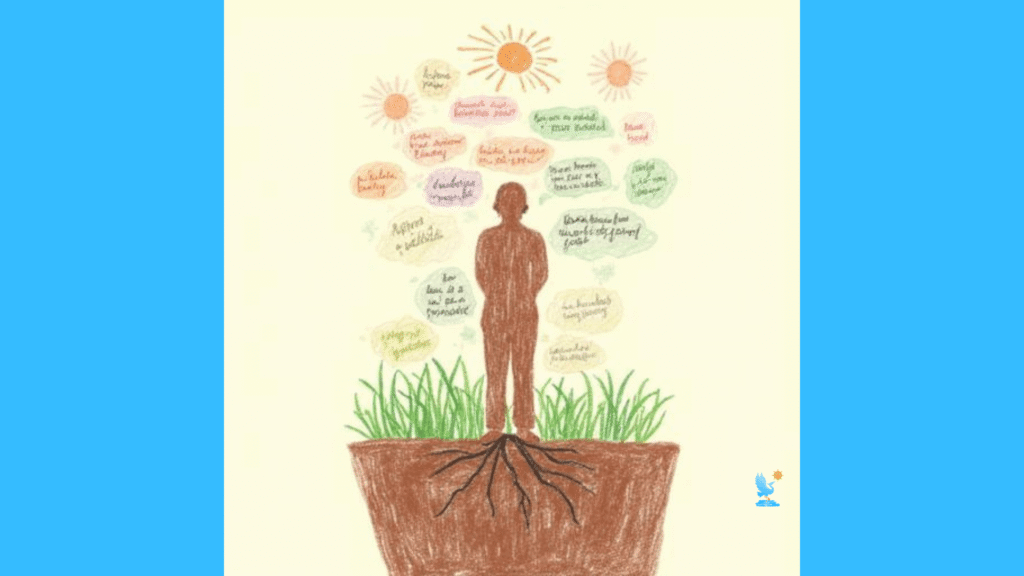
WHERE THESE THOUGHTS COME FROM: Your Core Beliefs
Here’s what’s actually happening: the Default Mode Network isn’t randomly generating criticism, it’s running core beliefs you absorbed in childhood.
Beliefs like “I’m not good enough,” “I have to be perfect to be worthy,” or “My needs are a burden.”
These unconscious programs formed before you could question them, and now they feel like absolute truth.
But they’re not truth, they’re outdated software.
The good news? Core beliefs live in your body and nervous system, which means the body-based practices below can actually rewire them.
You can’t think your way out of these beliefs, but you can feel your way out of them.

Want to Experience Deep Self-Worth?
Enjoy A Guided Self-Worth Meditation with the Nature Spirits?
The Task Positive Network (TPN), on the other hand, activates when we’re engaged in focused, goal-oriented tasks.
Also known as the Central Executive Network, the TPN involves attention, decision-making, problem-solving, and active engagement with the present moment.
When the TPN is active, the DMN quiets down.
Here’s the profound insight: in healthy individuals, these two networks are anti-correlated; when one is active, the other becomes quiet.
But in people struggling with depression, anxiety, or low self-worth, this balance gets disrupted.
The DMN dominates, keeping us trapped in rumination and self-defeating stories.
The key to building self worth is learning to shift from DMN dominance to a healthier balance between these networks.
When we lack a solid foundation of self worth, the DMN runs wild with stories of unworthiness.
When we know our inherent value, we can engage the TPN through present-moment focus, and external validation becomes optional rather than essential.

How To Build Self-Worth: The Foundation of Emotional Freedom
Self-worth isn’t about thinking you’re better than others. It’s about recognizing your inherent value as a human being, independent of achievements, relationships, or other people’s opinions.
True self worth means:
- Accepting all parts of yourself, including the shadow aspects you’re still working on
- Knowing you are capable of growth and change
- Understanding that you are loved by yourself, which is the only love guaranteed to last your entire life
- Respecting yourself enough not to react to every trigger or seek validation from others
This journey isn’t about only surrounding yourself with people who treat you perfectly. It’s about loving yourself so fully that you radiate this energy and can navigate a world full of wounded people without losing your center.

How To Build Self-Worth: The Consciousness Expansion Connection
Self-worth work is intrinsically tied to consciousness expansion.
When we reject parts of ourselves, our mistakes, our darkness, our imperfections, we contract.
We become smaller, more defensive, more reactive.
But when we embrace our wholeness, including the shadow parts that are ours to work on and integrate, we expand.
We grow.
We evolve.
This is the spiritual work of being human: accepting that we are perfectly imperfect beings on a journey of becoming.
Every shadow aspect you courageously face and integrate becomes fuel for your consciousness expansion.
Your wounds become your wisdom.
Your struggles become your strength.
How To Build Self-Worth In Practice
Building self worth isn’t a passive process.
It requires intentional practice.
Here are powerful ways to cultivate unshakeable self-worth:

The Foundation: Feeling Safe in Your Body
Here’s something most people don’t realize about self-worth: You can’t access it when your nervous system thinks you’re in danger.
When your body is in fight-or-flight mode, heart racing, shoulders tense, breath shallow, your brain is focused on one thing: survival.
There’s no bandwidth left for self-compassion, rational thinking, or recognizing your inherent worth.
You’re just trying to make it through.
This is why building self-worth starts with a surprisingly simple question:
“Am I safe right now?”
Pause for a moment and ask yourself that. Really ask it.
Look around the room.
Notice your surroundings.
Feel your feet on the ground, your body in the chair.
In this exact moment, not the meeting you’re worried about tomorrow, not the conversation from last week, right now, are you safe?
Most of the time, the answer is yes. You’re physically safe. There’s no immediate threat.
Your body is okay.
But here’s what happens: Your nervous system doesn’t know the difference between a real threat and a perceived one.
When your boss sends a vague email, when someone doesn’t text back, when you make a mistake at work, your body can respond as if you’re in actual danger.
Your Default Mode Network kicks into overdrive with catastrophic stories: “They hate you. You’re going to get fired. You’re not good enough. You never will be.”
And suddenly, you’re drowning in shame and self-criticism, even though you’re sitting safely at your kitchen table.
You can ask your safe through out the day if you are truly safe in the moment.

1. Mirror Work: Meeting Your Own Eyes
Stand in front of a mirror, look yourself directly in the eyes, and say:
- “I see you”
- “I appreciate you”
- “I am worthy”
- “I’m proud of you”
- “I care for you deeply”
This practice might feel uncomfortable at first.
That discomfort is the gap between where you are and where you’re growing.
Stay with it. You are speaking to the Soul.
The relationship you have with your reflection mirrors the relationship you have with yourself.
Why this works: Mirror work activates the TPN by requiring present-moment focus and attention, pulling you out of the DMN’s rumination spiral and into direct, compassionate engagement with yourself.
The magical thing is, when you do this your outer experience reflects it.
2. Honor Your Body Through Health Practices
Your body is the vessel for your consciousness. How you treat it sends powerful messages about your self worth:
- Nourish yourself with foods that make you feel energized and alive and that make you feel your best
- Move your body in ways that feel joyful, not punishing
- Rest deeply without guilt, knowing that rest is productive
- Tend to your physical needs as acts of self-respect
When you care for your body, you’re saying, “I am worth this effort. I matter.”
Why this works: Physical movement and health practices naturally engage the TPN, pulling you into present-moment awareness and out of the DMN’s rumination patterns.
Exercise, in particular, has been shown to restore the healthy anti-correlation between these networks.

3. Practice Self-Compassion and Self-Validation
Stop outsourcing your validation. Become your own source of approval:
- Celebrate your wins, no matter how small
- Acknowledge your efforts, even when results aren’t visible yet
- Speak to yourself the way you’d speak to someone you deeply love
- Validate your own feelings without needing others to confirm them
Research shows that self-compassion is one of the strongest predictors of psychological wellbeing.
When you treat yourself with kindness during difficulties, you build resilience that no external circumstance can shake.
4. Set and Keep Commitments to Yourself
Nothing builds self worth faster than proving to yourself that you’re trustworthy:
- If you say you’ll meditate, meditate
- If you promise yourself boundaries, enforce them
- If you commit to self-care, prioritize it
- Follow through on promises to yourself as seriously as promises to others
Every kept commitment is a deposit in your self worth bank account.
You can check out my guided meditation to Elevate Your Emotional Bank Account on Insight Timer or you can support my work and grab it here.
Ready to Elevate Your Emotional Bank Account?
Listen to my guided meditation free to elevate your inner bank account.
5. Do the Shadow Work
The parts of yourself you hide, deny, or reject drain your energy and diminish your sense of wholeness. Shadow work involves:
- Identifying traits you judge in yourself and others
- Exploring where these judgments originated
- Accepting these aspects with compassion
- Integrating them into a more complete self-image
Your shadow isn’t your enemy; it’s the misunderstood parts of you asking for acknowledgment and love.
Why this works: Shadow work requires honest self-reflection and present-moment awareness, engaging the TPN while gradually reducing the DMN’s tendency to create negative self-narratives.
As you integrate shadow aspects, you reduce the internal conflict that keeps the DMN stuck in rumination.
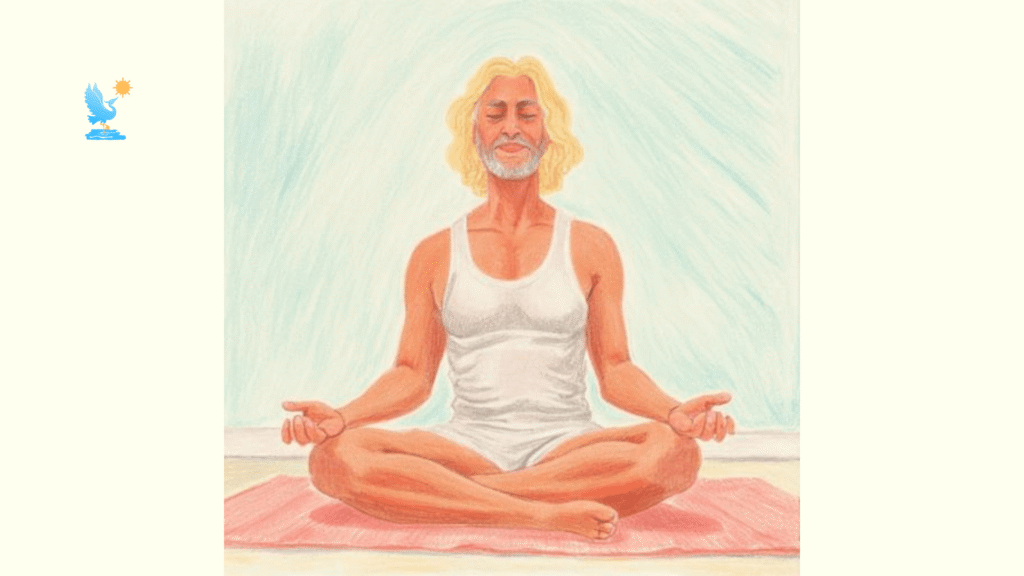
6. Practice Mindfulness and Meditation
Research shows that meditation is one of the most powerful ways to quiet the DMN and restore balance between brain networks. Even experienced meditators show significantly reduced DMN activity, making them less prone to mind-wandering and rumination.
Simple practices include:
- Breath awareness: Focus on the sensation of breathing for 5-10 minutes
- Body scanning: Systematically bring attention to each part of your body
- Present-moment anchoring: When you notice rumination, gently return to what you can see, hear, and feel right now
Why this works: Meditation directly shifts brain activity from the DMN to the TPN, training your brain to spend less time in rumination and more time in present-moment awareness.
Studies show this shift is associated with improved mental health and reduced symptoms of depression and anxiety.
The Liberation of Not Needing Validation
When you’re not desperate for approval:
- You show up authentically, which attracts genuine people
- You set healthy boundaries without fear of abandonment
- You can handle disappointment without it destroying you
- You choose relationships based on mutual respect, not desperate need
This doesn’t mean you become an island.
Humans are wired for connection, and wanting love and belonging is natural.
But there’s a world of difference between wanting connection and needing it to survive emotionally.
The true relationship that matters is the one you form with the Source.

Radiating Self-Worth in a Wounded World
When you do the deep work of building self worth, something magical happens: you begin to radiate a different energy.
People notice. They’re drawn to your groundedness, your peace, your lack of desperation.
Those relationships that did not serve you will either change or fall away.
Self worth allows you to speak with confident, calm, clarity.
Practice slowing down your speech and keeping a steady tone, no matter what the circumstance.
You owe it to yourself to have respect for yourself to remain collected and calm.
What is more, you become able to engage with difficult people and situations without losing yourself.
You can:
- Interact with someone who’s rude without personalizing it
- Experience rejection without questioning your worth
- Witness others’ pain without absorbing it as your own
- Maintain compassion for wounded people while protecting your peace
This is the gift of self-worth.
Not in hiding and running from life’s challenges, but the resilience to move through them without breaking.
And that is the true hero’s journey and you will feel so good because of it.
The Daily Practice of Coming Home to Yourself
Building self-worth is not a destination; it’s a daily practice of coming home to yourself.
Some days will be easier than others.
You’ll have moments of profound self-love and moments of old patterns resurfacing.
This is the work. This is the journey.
When you notice you’re seeking validation, pause and ask:
- “What do I need from myself right now?”
- “How can I give myself what I’m seeking from others?”
- “What would self-love do in this moment?”
When we ask these questions, we are using our Wise Mind as taught in DBT Therapy.
The answers will guide you back to your center, back to your worth, back to yourself.
Want to build your DBT toolkit?
Complete Guide to DBT Skills: Master the Middle Path – Your comprehensive guide to all four DBT modules
Related practices for building self-worth:
- Wise Mind DBT: How to Access Your Inner Wisdom – Learn to trust your inner knowing
- Body Scan Meditation: DBT Mindfulness for Stress Relief – Reconnect with your body and build interoceptive awareness
- [Radical Acceptance: Stop Fighting Reality and Find Peace] – coming soon
- [STOP Skill: DBT’s Emergency Brake for Crisis Moments] – coming soon
Your Inititation
This world is a stage and you are the shining star in the movie you call your life.
You are not broken.
You are not fundamentally flawed.
You are not too much or not enough.
You are a conscious being on a journey of expansion, learning to love yourself through all the seasons of your becoming.
Your worth is inherent, not earned.
It cannot be diminished by rejection, increased by acceptance, or validated by achievement.
It simply is.
The only question that remains is: are you ready to believe it?
Are you ready to stop abandoning yourself every time someone else does?
Are you ready to become the loving, stable presence you’ve been seeking outside of yourself?
The path to unshakeable self-worth begins with a single step: choosing yourself, today and every day after.
Not in a year when you’ve “fixed” everything.
Not when you’ve achieved all your goals.
Not when someone finally sees your value.
No. Right now. Exactly as you are.
This is how you build a life where rejection doesn’t destroy you, where relationships nourish rather than deplete you, and where your sense of worth comes from the only place it can truly live: within.
The journey to self-worth is the most important journey you’ll ever take.
It’s the foundation upon which everything else, every relationship, every dream, every expansion of consciousness, is built.
Start today. Start now. Your future self is waiting for you to finally, fully, come home.
This post was all about how to build self-worth.
Do you need one-on-one guidance?
Please use the contact form so I may serve you.
Or check out the Complete DBT Skills Guide here.
POPULAR POSTS