
Chronic Lyme Disease Symptoms Nobody Talks About: Your Brain, Sleep and the Oral Connection
If you are living with chronic lyme disease symptoms and nothing seems to be working, there is a very good chance the conversation around your illness has been missing three critical pieces: your brain’s ability to detox while you sleep, what is happening inside your mouth, and the health of the blood vessel lining where these infections actually live.
Chronic lyme disease symptoms go far beyond joint pain and fatigue.
When Borrelia and its co-infections reach the nervous system, the brain, and the vascular lining, the symptom picture becomes complex, confusing, and almost impossible to treat unless you understand what is actually driving it.
This is Part 2 of our Lyme disease series.
If you have not yet read Part 1, start here: Is There a Natural Remedy for Lyme Disease? A Holistic Guide
What Are Chronic Lyme Disease Symptoms Really Telling You?
Most people think of chronic lyme disease symptoms as lingering physical complaints after a tick bite.
The reality is far more complex.
When Borrelia burgdorferi enters the central nervous system, which research confirms can happen within just 14 to 18 days of infection, the entire symptom picture shifts.
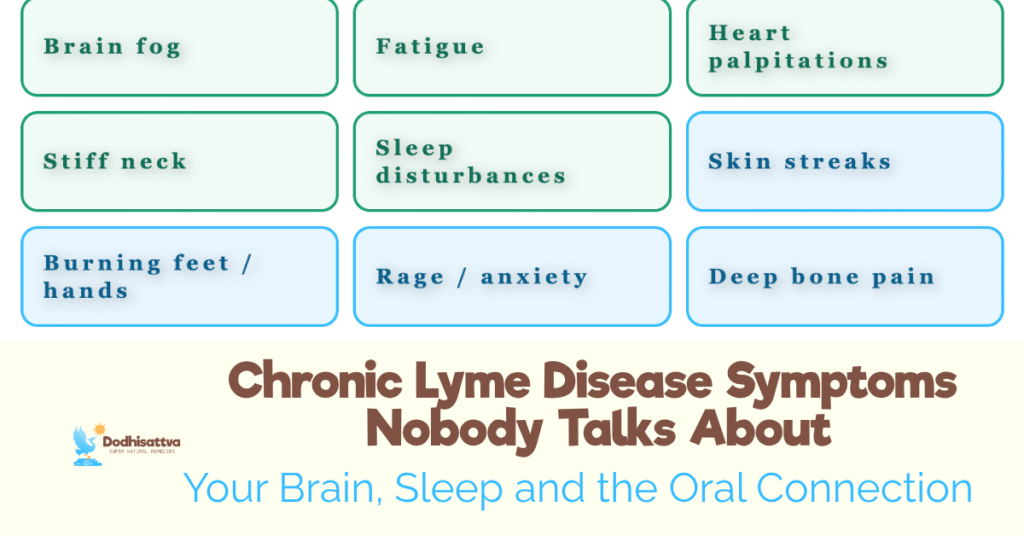
Chronic Lyme disease symptoms affecting the brain and nervous system include:
- Brain fog — difficulty concentrating, word retrieval problems, mental slowness
- Depersonalization and derealization — feeling disconnected from yourself or reality
- Anxiety and rage episodes — often dismissed as psychiatric but driven by neuroinflammation
- Depression — linked to glial cell activation and ongoing neuroinflammation
- Sleep disruption — inability to reach deep restorative sleep stages
- Headaches and pressure — often behind the eyes or at the base of the skull
- Nerve pain and tingling — burning, electric, or crawling sensations in the extremities
- Memory loss — short term memory problems that can be mistaken for early dementia
Research from Tulane National Primate Research Center found that exposure to Borrelia in brain tissue triggers a significant inflammatory response involving tumor necrosis factor alpha, leading to neuronal and glial cell apoptosis — meaning brain cells begin to die.
This is not a mild inconvenience. This is why chronic Lyme disease symptoms so often look like neurological and psychiatric disease.
And critically, research shows that even dead Borrelia fragments continue to trigger neuroinflammation after antibiotic treatment.
This is a key reason why symptoms persist long after treatment ends.
Dodhisattva Wellness Guide
Lyme & Co-Infection Symptom Comparison
Lyme, Bartonella, and Babesia each produce distinct symptom patterns that often overlap. Tap any symptom to learn which infection it points to and why.
For educational purposes only. Not medical advice. Always work with a qualified practitioner for diagnosis and treatment.
What does the lyme disease rash look like? Explore our recent article dedicated to understanding a lyme disease rash here.
It Starts in Your Mouth: The Oral Cavity Connection to Chronic Lyme Disease Symptoms
This is one of the most overlooked pieces of the chronic Lyme puzzle and one of the most important.
The oral cavity is not separate from the rest of your body.
It is the gateway.
Spirochetes, including Borrelia, are well-documented inhabitants of the oral environment.
The oral lymphatic highway connects directly to the neck, the cervical lymph nodes, and from there to the brain.
When the oral cavity is harboring infection, inflammation, or toxic dental materials, it creates a constant upstream burden on the very pathways you are trying to clear.
This is why working with a biological dentist is so important for anyone dealing with chronic lyme disease symptoms.
A biological dentist looks at root canals, cavitations (areas of dead bone in the jaw), heavy metal fillings, and chronic gum infections that standard dentistry often misses entirely.
These focal infections can silently drive systemic inflammation and immune suppression year after year.
The Daily Oral Protocol for Lyme Support
Here is a simple and powerful oral protocol that supports the body’s ability to manage chronic lyme disease symptoms by keeping the oral lymphatic gateway as clean as possible:
Propolis and Cistus Mouth Rinse
Propolis is one of nature’s most powerful antimicrobial substances. Bees produce it to sterilize their hive and it works on bacteria, viruses, and fungi.
You can learn more about Propolis in our post here.
Cistus tea has documented activity against Borrelia biofilm. Together they make a potent mouth rinse.
Learn more about Cistus Tea in our post here.
How to make it:
- Brew a strong cup of cistus tea and let it cool to room temperature
- Add 10 to 15 drops of propolis tincture
- Swish vigorously for 60 seconds after meals
- Spit out — do not swallow
The reason timing after meals matters is important.
Borrelia and other pathogens feed on food particles in the oral cavity.
Swishing after digesting your meal removes the fuel source before the organisms can use it.
Salt Water Rinse After Meals
A simple salt water rinse after every meal is an underrated tool.
Salt creates an alkaline, antimicrobial environment in the mouth that makes it harder for pathogens to thrive.
Use good quality sea salt dissolved in warm water and rinse for 30 seconds after eating.
Coconut Oil Pulling with Probiotics
Oil pulling in the morning before eating or drinking anything draws toxins and bacteria from the oral tissues through a process of mechanical flushing and lipid binding.
Use one tablespoon of cold pressed coconut oil and pull for 10 to 15 minutes.
Open a probiotic capsule and swirl it in the oil before pulling to introduce beneficial bacteria while removing harmful ones.
UPGRADE: Use Ozonated Oil for Oil Pulling, available here.
NOTE: Seek out a Biological Dentist for mouth infections and toxic fillings.
Hydroxyapatite Toothpaste
Switch from fluoride toothpaste to hydroxyapatite toothpaste.
Hydroxyapatite is the mineral that makes up tooth enamel, and it remineralizes teeth naturally without the toxicity concerns associated with fluoride.
For anyone with chronic Lyme disease symptoms, reducing the total toxic burden on the body is essential at every level.
You can find my DIY toothpaste article here.
Gum Infections
If you do not have the means to see a Biological Dentist for whatever reason you may want to get my Hygiene HandBook and learn from its protoocols. Please see below.
But for a gum infection you need to look at tools such as a sulcus syringe.
This way you can work on taking great care of any infections in this area.
Of course, a Weston Price-aligned diet and healing the gut go hand in hand with this information.
The Neck is the Gateway: Why Borrelia Targets This Area
One of the most consistent patterns in chronic lyme disease symptoms is neck stiffness, pressure, and pain at the base of the skull.
This is not random.
The cervical lymph nodes in the neck are a primary drainage site for the brain and the oral cavity.
When they become congested, infected, or inflamed, everything upstream backs up.
Borrelia has a documented affinity for neuropeptides found in brain tissue and the cervical nervous system.
The neck and upper cervical spine become a preferred hiding ground for the infection, particularly in its biofilm form.
Neck Lymph Massage with an Herbal Balm
Daily gentle massage of the cervical lymph nodes is one of the most powerful and underused tools in supporting chronic lyme disease symptoms.
The lymphatic system has no pump of its own and depends on movement and manual stimulation.
Technique: Using gentle downward strokes, massage from behind the ears along the sides of the neck toward the collarbone.
Do this for 5 minutes twice daily. Always stroke downward, toward the collarbone, to encourage lymph flow in the correct direction.
For best results make or use an herbal balm for the massage.
A tallow-based salve is ideal as tallow is extremely biocompatible with human skin.
Infuse it with herbs that support lymphatic circulation and vascular health:
- Hawthorn — supports cardiovascular and vascular integrity
- Cleavers — a premier lymphatic herb, specifically supports cervical lymph drainage
- Red Clover — blood purifying and lymph moving
- Ginger — warming and anti-inflammatory, promotes circulation in the tissues
- Chondroitin Sulfate — supports connective tissue and cartilage integrity in the cervical spine
How to Make a Simple Tallow Neck Balm
- Gently melt grass-fed tallow in a double boiler
- Add dried cleavers, red clover, and ginger (about 2 tablespoons of each per cup of tallow)
- Simmer on very low heat for 2 hours to infuse the herbs
- Strain out the herbs and pour into small glass jars
- Add 10 drops of frankincense or cypress essential oil per ounce before it sets
- Apply to the neck and gently massage twice daily
Your Brain Can Only Detox While You Sleep: The Glymphatic System
This is one of the most important things anyone with chronic lyme disease symptoms needs to understand.
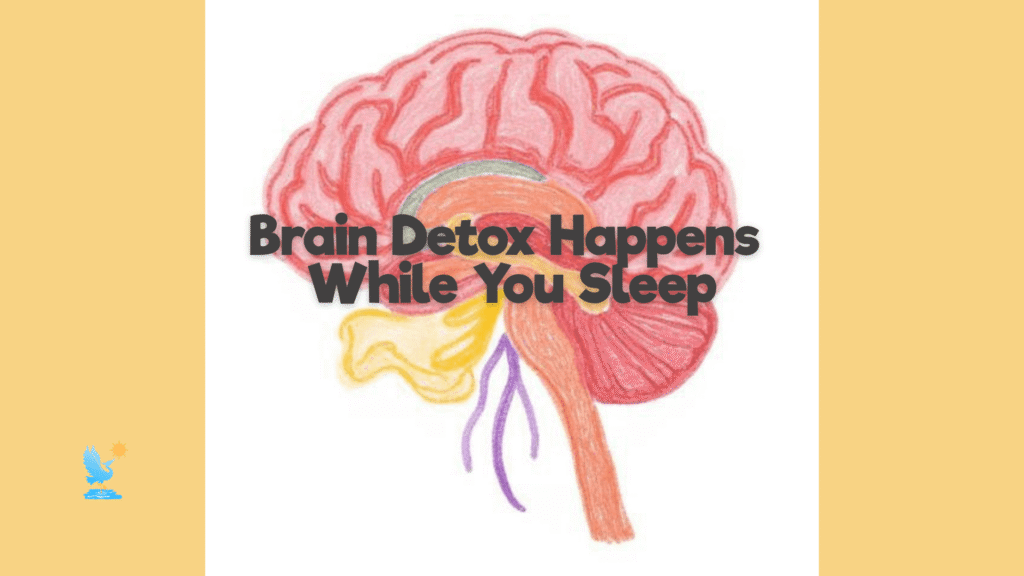
Your brain has its own dedicated detoxification system called the glymphatic system.
It is a network of fluid channels that flush metabolic waste, neurotoxins, and inflammatory proteins from the brain tissue.
And it is almost exclusively active during deep, slow-wave sleep.
Research published in PMC confirms that glymphatic flow is significantly enhanced during sleep, with cerebrospinal fluid moving through the brain, collecting waste products and clearing them into the cervical lymphatic system.
This is your brain taking out the trash every single night.
For someone with chronic lyme disease symptoms, the brain is under a constant inflammatory siege.
Borrelia and its co-infections trigger glial cell activation, neuroinflammation, and a buildup of toxic proteins that the glymphatic system must clear.
If your sleep is disrupted, fragmented, or too shallow, that clearing cannot happen.
The toxins stay. The inflammation compounds.
The chronic lyme disease symptoms worsen.
Seven hours of uninterrupted deep sleep is not optional for anyone navigating this illness.
It is the most powerful healing tool you have access to every single night for free.
Creating Your Sleep Sanctuary
The environment you sleep in directly determines the quality of your glymphatic clearance. Here is what matters most:
- EMF-free environment — Turn off your WiFi router at night. Keep your phone out of the bedroom or at minimum on airplane mode. EMF exposure has been shown to increase the virulence of Borrelia and disrupts the nervous system’s ability to downregulate for deep sleep.
- Cool temperature — The ideal sleep temperature is between 65 and 68 degrees Fahrenheit. A cooler body temperature signals the nervous system to move into deeper sleep stages.
- Complete darkness — Use blackout curtains. Even small amounts of light suppress melatonin and prevent the deepest sleep stages where glymphatic activity is highest.
- Quiet — Sound disruptions cause micro-arousals that pull you out of deep sleep without you realizing it. Use earplugs or a white noise machine if needed.
The Endothelial Lining: Where These Infections Actually Live
Here is something that fundamentally changes how you understand chronic Lyme disease symptoms.
Bartonella, one of the most common Lyme co-infections, does not float freely in the bloodstream.
It lives inside the endothelial cells that line every blood vessel in your body.
Multiple peer-reviewed studies from PubMed confirm that Bartonella henselae has a remarkable capacity to colonize vascular tissues and live inside endothelial cells, triggering abnormal cell proliferation and interfering with normal vascular function.
When the endothelial lining is infected and inflamed, circulation becomes compromised.
Nutrients cannot reach tissues efficiently.
The immune system cannot get to where the infection is hiding.
Detox pathways slow down. Biofilms form more easily on inflamed vessel walls.
This is also why COVID-19 has been such a powerful reactivation trigger for dormant Lyme and co-infections.
The spike protein causes its own form of endothelitis — inflammation of the endothelial cells.
For anyone already carrying Borrelia or Bartonella, COVID essentially throws fuel on a smoldering fire.
Many people who felt they had their Lyme managed found themselves in a full flare after COVID and could not understand why. This is the mechanism.
You cannot detox what you cannot reach.
And if your vascular system is compromised, nothing you take will get where it needs to go.
This is why healing the endothelial lining is a foundational step in addressing chronic lyme disease symptoms.
Enzyme Therapy: Clearing the Vascular Highway
Around 17 years ago I worked with Holistic Healer Lou Corona and it is here where I began to study and practice enzyme therapy.
You can read about Enzyme Therapy here in an article I wrote years ago.
The two most researched systemic enzymes for this purpose are:
- Lumbrokinase — derived from earthworms, lumbrokinase is a potent fibrinolytic enzyme that breaks down fibrin, the sticky protein that forms blood clots and biofilm. It clears the vessel walls, reduces blood viscosity, and helps restore normal circulation. It is considered one of the strongest natural fibrinolytics available.
- Nattokinase — derived from fermented natto, nattokinase also breaks down fibrin and has been shown to support healthy blood flow and reduce the formation of biofilm on blood vessel walls. It is more widely available than lumbrokinase and can be a good starting point.
How to take systemic enzymes:
- Always take on an empty stomach — either upon waking or 2 to 3 hours after your last meal. If taken with food they will be used as digestive enzymes and will not reach the bloodstream systemically.
- Hydration is essential — enzymes require adequate water to work properly in the bloodstream. Drink a full glass of water with them and maintain good hydration throughout the day.
- Start low and go slow — systemic enzymes can cause a detox response as they break down fibrin and biofilm. Start with a low dose and increase gradually.
- Caution with blood thinners — if you are on pharmaceutical blood thinners, work with a knowledgeable practitioner before adding systemic enzymes.
For a full guide to systemic enzyme therapy and how it supports the vascular and lymphatic system, read our dedicated post on enzyme therapy at dodhisattva.com.
Putting It All Together: The Protocol Order That Matters
Chronic Lyme disease symptoms improve when the body is supported in the right order.
Based on everything covered in this article and Part 1, here is how these pieces fit together:
- Clean the oral cavity daily — propolis and cistus rinse, oil pulling, salt water rinse, hydroxyapatite toothpaste. For deeper infections use a sulcus syringe and see a biological dentist. Eat a diet that supports oral/gut health.
- Massage the neck lymph nodes — twice daily with your herbal tallow balm to keep the cervical drainage pathway open
- Prioritize deep sleep in a healing environment — EMF-free, cool, dark, quiet, side sleeping position
- Support the endothelial lining with systemic enzymes — lumbrokinase or nattokinase on an empty stomach with plenty of water
- Continue all drainage support from Part 1 — lymphatic massage, cistus tea, rebounding, infrared sauna, castor oil packs
- Address parasites, metals, and mold before or alongside Lyme treatment — as guided by testing with an experienced integrative practitioner
Chronic lyme disease symptoms are complex but they are not random.
Every symptom is telling you something about where the burden is in the body.
The brain fog is telling you the glymphatic system needs support.
The neck stiffness is telling you the cervical lymph is congested.
The fatigue is telling you the vascular system and mitochondria are under siege.
When you address the root causes in the right order, the body has an extraordinary capacity to respond.
That is what we have seen and that is what this work is about.
Have you read Part 1? Start with the foundation: Is There a Natural Remedy for Lyme Disease?
DISCLAIMER: This article is for educational purposes only and does not constitute medical advice. Always work with a qualified healthcare practitioner, especially one experienced in treating tick-borne illnesses, before beginning any protocol.
Sources and Further Reading
- Ramesh G, et al. Interaction of the Lyme Disease Spirochete Borrelia burgdorferi with Brain Parenchyma Elicits Inflammatory Mediators from Glial Cells as Well as Glial and Neuronal Apoptosis. Tulane National Primate Research Center. PubMed. https://pubmed.ncbi.nlm.nih.gov/18832582/
- Bencurova E, et al. Lyme Neuroborreliosis: Mechanisms of B. burgdorferi Infection of the Nervous System. Brain Sciences, 2021. PMC. https://pmc.ncbi.nlm.nih.gov/articles/PMC8232152/
- Dehio C. Interactions of Bartonella henselae with Vascular Endothelial Cells. PubMed. https://pubmed.ncbi.nlm.nih.gov/10047560/
- Nedergaard M, et al. The Sleeping Brain: Harnessing the Power of the Glymphatic System through Lifestyle Choices. PMC, 2020. https://pmc.ncbi.nlm.nih.gov/articles/PMC7698404/
- Institute for Functional Medicine. Clearing Brain Toxins: The Role of Sleep and Glymphatic Flow. https://www.ifm.org/articles/sleep-and-biotransformation
- Lyme Mexico. Glymphatic System Impacts Neuro Lyme Disease Recovery. https://lymemexico.com/glymphatic-system-impacts-neuro-lyme-disease-recovery/
- Sapi E, et al. Characterization of Biofilm Formation by Borrelia burgdorferi In Vitro. PLoS ONE, 2012. https://pmc.ncbi.nlm.nih.gov/articles/PMC3480481/
- Feng J, et al. Evaluation of Natural and Botanical Medicines for Activity Against Growing and Non-growing Forms of B. burgdorferi. Frontiers in Medicine, 2020. Johns Hopkins Bloomberg School of Public Health.
POPULAR POSTS