

Tongue Posture: Why Where Your Tongue Rests Is Reshaping Your Face Right Now
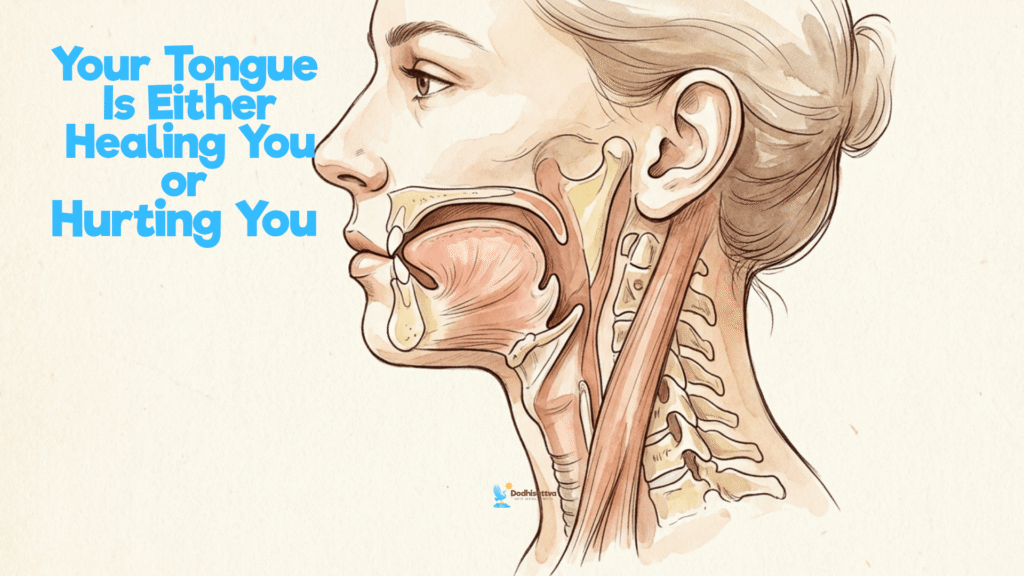
Tongue posture is one of the most powerful and most overlooked forces acting on your facial bones, your airway, your lymphatic system, and your long term structural health right now as you read this.
Where your tongue rests at this very moment is either widening or narrowing your palate, either opening or compressing your cervical lymphatics, either supporting or sabotaging the architecture of your face.
Most people have never thought about where their tongue rests.
It is one of those things that happens automatically in the background of life, like blinking or breathing, and precisely because it is automatic, mosmisposition accumulate silently over years and decades until they manifestt people have no idea that theirs is in entirely the wrong position.
And the consequences of that wrong position accumulate silently over years and decades until they show up as narrow dental arches, crowded teeth, poor jaw definition, chronic neck tension, sleep-disordered breathing, and impaired lymphatic drainage.
This post is going to change the way you think about your face and your health.
By the end, you will understand exactly what correct tongue posture is, why yours is probably wrong, what the consequences have been accumulating over your lifetime, and precisely how to begin correcting it starting today.
What Is Tongue Posture and Why Has Nobody Talked About It

Tongue posture refers to the resting position of your tongue when you are not eating, speaking, or swallowing.
It is where your tongue defaults to when your mouth is closed and your mind is elsewhere.
And it turns out that this resting position exerts a continuous, gentle mechanical force on the bones and tissues of your face that, over months and years, has a measurable and significant effect on facial structure.
Bone is not static.
Bone is living tissue that constantly remodels in response to the mechanical forces placed upon it.
This is the fundamental insight of orthotropics and the life work of Dr. John Mew and his son Dr. Mike Mew, who have spent decades documenting the relationship between tongue posture, facial growth, and the epidemic of narrow arches and crowded teeth in modern populations.
Traditional cultures understood this intuitively without having the science to name it.
Weston A Price documented it photographically when he traveled the world in the 1930s studying populations eating traditional diets who had wide beautiful dental arches, prominent cheekbones, and no need for orthodontics.
Those populations also ate tough fibrous foods that required real chewing, breathed through their noses, and carried their heads properly over their shoulders.
Their tongues rested where tongues are meant to rest.
Modern life has disrupted all of this simultaneously.
Soft processed food requires almost no chewing.
Chronic nasal congestion from allergies and modern diets drives mouth breathing.
Forward head posture from screens drops the tongue away from the palate.
The result is an epidemic of poor tongue posture that is driving narrow arches, crowded teeth, recessed midfaces, and compromised airways at a scale that has no historical precedent.

The book that started it all. Price documented perfect facial arches and nasal airways in traditional cultures eating ancestral diets, and the collapse of both within a single generation of processed food.
Where Your Tongue Should Rest — The Correct Tongue Posture Position
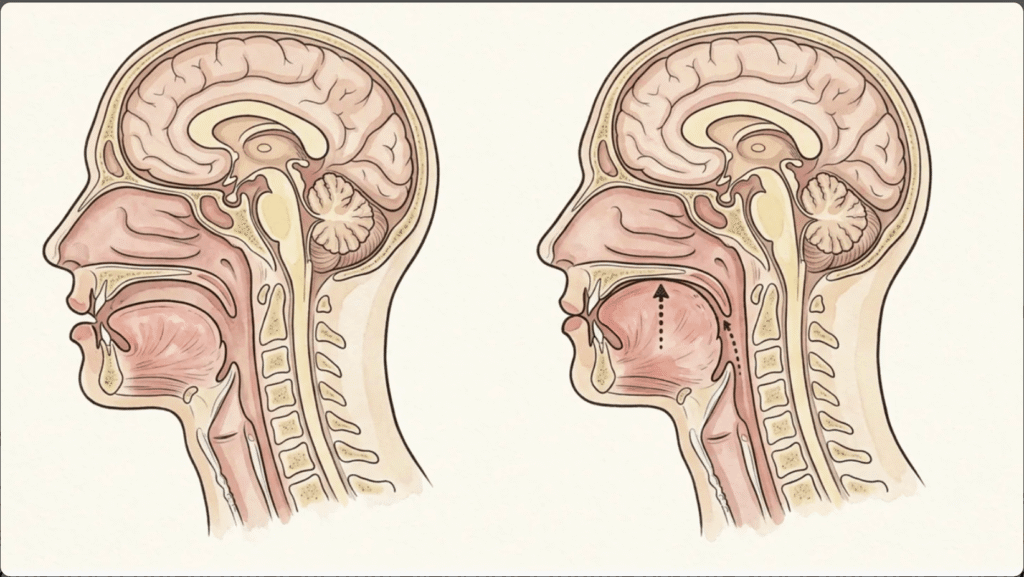
Correct tongue posture means the entire tongue — including and especially the back third — rests flat against the roof of the mouth.
Not just the tip.
Not just the front half.
The entire body of the tongue should make full contact with the palate from the back of the front teeth all the way back toward the soft palate.
This is called the suction hold.
The tongue creates a gentle suction seal against the palate that holds it in position passively without muscular effort.
When the tongue is properly positioned in the suction hold, the upward and forward pressure it exerts on the palate is the primary mechanical stimulus that encourages the maxilla to develop wide and forward rather than narrow and backward.
How to Find the Correct Position
Run the tip of your tongue along the roof of your mouth from just behind your front teeth toward the back.
You will feel a series of ridges just behind the front teeth called the palatal rugae.
The tip of the tongue should rest just behind these ridges — this is your reference point for the front of the tongue.
Now try to make the entire body of your tongue flatten upward against the roof of your mouth all the way to the back.
You should feel a gentle suction — almost like when you pull a suction cup off a surface.
That suction is what correct tongue posture feels like.
The lips should be gently closed.
The teeth can be lightly touching or very slightly apart.
Breathing is through the nose.
If this feels difficult, foreign, or tiring, that is information.
It tells you that your tongue muscles have been in the wrong position for so long that the correct position feels wrong.
This is completely normal and it corrects with consistent practice.
The Back Third — The Most Important and Most Missed Part
Most people who try to correct their tongue posture get the front of the tongue right and completely miss the back third.
This is the single most common mistake and it is the most important part to get right.
The back third of the tongue pressing upward against the soft palate is what creates the most significant mechanical stimulus for palatal width.
Without it you are getting a fraction of the potential benefit.
Consciously focus on lifting the back of the tongue up and back as well as the front and middle.
What Happens When Tongue Posture Is Wrong
When the tongue rests on the floor of the mouth instead of the roof, the consequences are far reaching and they accumulate slowly enough that most people never connect them to their tongue position.
Narrow Dental Arches and Crowded Teeth
The tongue resting on the floor of the mouth removes the upward mechanical stimulus that the palate needs to develop width.
Without this stimulus the maxilla narrows.
The teeth have less space and crowd together.
Wisdom teeth become impacted because the arch is too narrow to accommodate them.
This is not genetics — it is the mechanical consequence of missing the developmental stimulus that a properly positioned tongue provides.
Long Face Syndrome and Recessed Features
Incorrect tongue posture combined with mouth breathing drives a downward and backward facial growth pattern rather than the forward and outward pattern that characterizes well developed faces.
The midface becomes recessed.
The lower jaw drops.
The face grows long and narrow rather than wide and prominent.
Buccal corridors — the dark spaces visible at the corners of the mouth when smiling — appear because the dental arch is too narrow to fill the width of the smile.
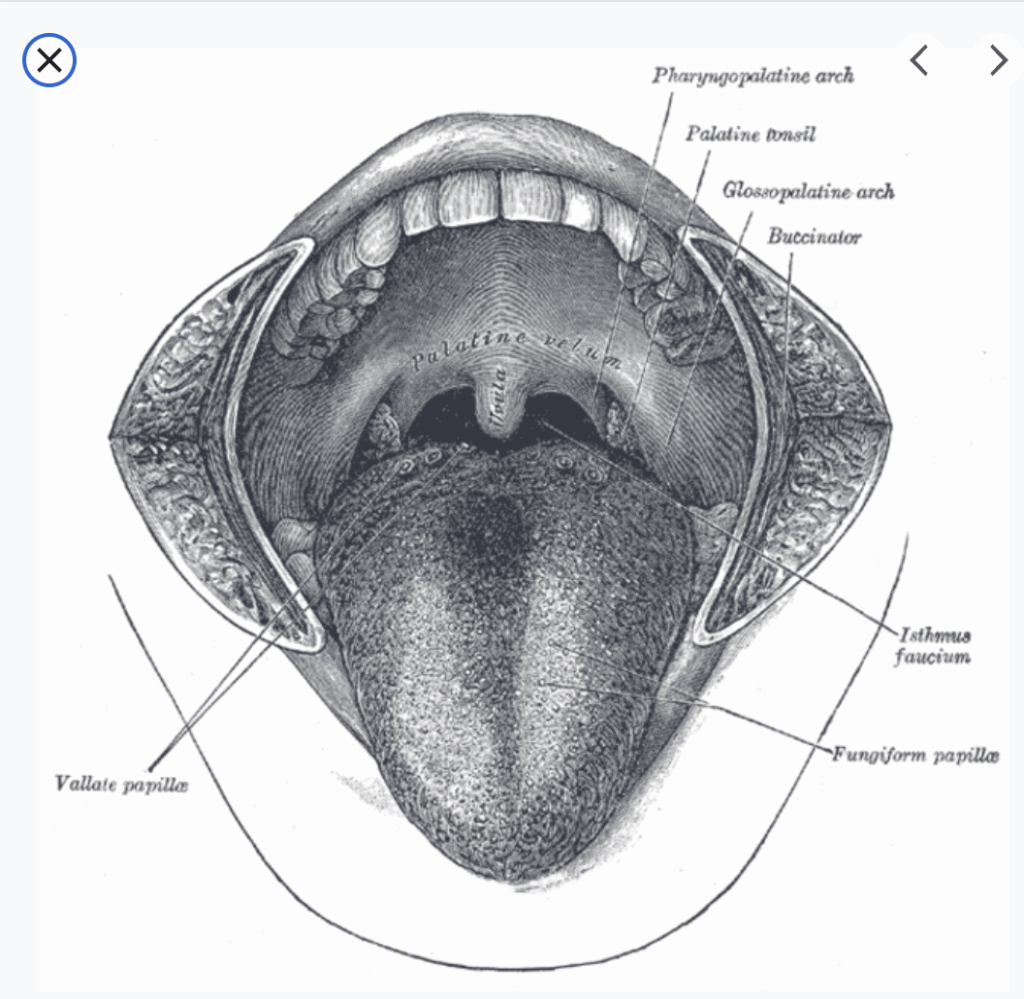
Oral cavity anatomy showing the palatine tonsils and pharyngeal structures. Illustration from Gray’s Anatomy, Henry Gray & Henry Vandyke Carter. Public domain
Airway Narrowing and Sleep Disordered Breathing
When the tongue drops to the floor of the mouth the airway behind it narrows.
During sleep when muscle tone reduces further the tongue can partially or completely obstruct the airway producing snoring, upper airway resistance syndrome, and obstructive sleep apnea.
This is why tongue posture correction is increasingly recognized as a foundational intervention for sleep disordered breathing alongside and often more effective than conventional treatments.
Cervical Lymphatic Compression
The tongue connects to the hyoid bone through a series of muscles.
When the tongue drops the hyoid drops with it.
When the hyoid drops the fascial and muscular structures of the neck are placed under altered tension that compresses the cervical lymphatic vessels — the drainage pathway for the face and the brain.
This is one of the most underappreciated consequences of poor tongue posture and one of the most significant connections between tongue posture and chronic health issues.
If you are working on facial lymphatic drainage and not correcting your tongue posture you are working against yourself.
Tongue Posture in Children — The Most Important Window
If there is one section of this post worth sharing with every parent you know it is this one.
The developmental years of childhood represent the most critical window for the influence of tongue posture on facial architecture.
During this period the bones of the face are growing rapidly and are highly responsive to mechanical forces.
Correct tongue posture during childhood can prevent the entire cascade of narrow arches, crowded teeth, and recessed features that so many adults are now trying to address retroactively.
Weston A Price documented this with extraordinary clarity.
When he photographed siblings in the same family — same genetics, same parents — one raised on traditional food and the other on modern processed food, the difference in facial development was dramatic and visible within a single generation.
The traditionally nourished child had wide arches, straight teeth, prominent cheekbones, and a well developed airway.
The child raised on modern food had narrow arches, crowded teeth, and a recessed midface.
Both children had the same genetic potential.
What differed was the nutritional and mechanical environment during development.
For children the combination of correct tongue posture, nasal breathing, adequate fat soluble vitamins from real food, and the mechanical stimulus of chewing tough whole foods creates the conditions for optimal facial development.
Braces address the symptom of crowded teeth after the fact.
Correct tongue posture during development addresses the cause before the problem arises.
If your child breathes through their mouth, snores, has crowded teeth, or a narrow arch — these are not random misfortunes.
They are signs of a developmental environment that is missing something.
And it is not too late to address it.
Children are far more responsive to tongue-posture correction than adults because their bones are still growing and highly malleable.
Tongue Posture and the Lymphatic System — The Connection Nobody Talks About
The connection between tongue posture and the lymphatic system is one of the most underreported and most significant relationships in this entire field.
When the tongue is correctly positioned against the palate it lifts the hyoid bone and decompresses the fascial and muscular structures of the anterior neck.
This decompression directly opens the cervical lymphatic pathways that drain the face, the oral cavity, and the brain.
When the tongue drops to the floor of the mouth, the opposite happens.
The hyoid descends, the anterior neck structures compress, and the cervical lymphatics are placed under chronic mechanical restriction.
For people dealing with chronic Lyme disease, Bartonella, or any systemic chronic illness this is particularly consequential because the cervical lymph nodes are already inflamed and congested from the infection.
Adding mechanical compression from incorrect tongue posture makes an already compromised drainage system worse.
Correcting tongue posture is therefore one of the most accessible and sustainable things you can do to support cervical lymphatic drainage.
Unlike gua sha which requires a daily practice, correct tongue posture once established works around the clock.
If you are working on your facial lymphatic drainage practice, making tongue posture correction a simultaneous priority will amplify everything else you are doing.
Tongue Posture and Nasal Breathing — Why You Cannot Have One Without the Other
Correct tongue posture and nasal breathing are inseparable.
They are two halves of the same biological system and they reinforce each other in both directions.
When the tongue is correctly positioned against the palate, it naturally holds the lips closed and supports nasal breathing.
When you breathe through your nose, the tongue stays up against the palate.
When you breathe through your mouth, the tongue drops to the floor.
They are mutually dependent.
This is why mouth taping during sleep is such a powerful intervention for tongue posture.
When you tape your mouth closed during sleep your tongue is forced to rest against the palate for eight hours.
Over months this creates a nightly eight hour mechanical stimulus to the maxilla that corrects tongue posture during the one time of day when you cannot consciously override your habits.
It is the single most leveraged tongue posture intervention available.
Nasal breathing also produces nitric oxide in the paranasal sinuses — a vasodilatory, antimicrobial, and oxygen delivery-enhancing molecule that mouth breathing completely bypasses.
The nasal passages filter, humidify, and warm incoming air in ways that protect the airways and lungs.
Nasal breathing activates the parasympathetic nervous system, which promotes calm and recovery.
All of this is lost with mouth breathing and all of it is supported by correct tongue posture.
This is why so many people dealing with jaw tension and mouth breathing also struggle with facial puffiness and stagnant lymph, and why learning to drain the cervical lymph nodes correctly is such a foundational step.
We cover the full protocol in our facial lymphatic drainage guide.
How to Correct Your Tongue Posture — A Step by Step Guide
Correcting tongue posture is not a quick fix.
It is a habit change that requires consistent daily practice for weeks and months before the new position becomes automatic.
The good news is that the practice itself requires no equipment, no appointments, and no money.
It requires only awareness and repetition.
Step One — Find the Position
Using the palatal rugae as your reference point, place the tip of your tongue just behind your front teeth.
Then flatten the entire body of your tongue upward against the palate including the back third.
Create a gentle suction seal.
Close your lips softly.
Breathe through your nose.
This is correct tongue posture.
Step Two — Make It a Habit Not an Exercise
The goal is not to consciously hold your tongue against the palate every moment of every day; that is exhausting and unsustainable.
The goal is to check in regularly throughout the day, notice where your tongue is, and return it to the correct position.
Over time with repetition the correct position begins to feel natural and the checking in becomes less necessary as the habit establishes itself.
Set a gentle reminder on your phone every hour for the first few weeks.
Each time it goes off take one second to check your tongue position and correct it if needed.
This is sufficient to begin building the habit.
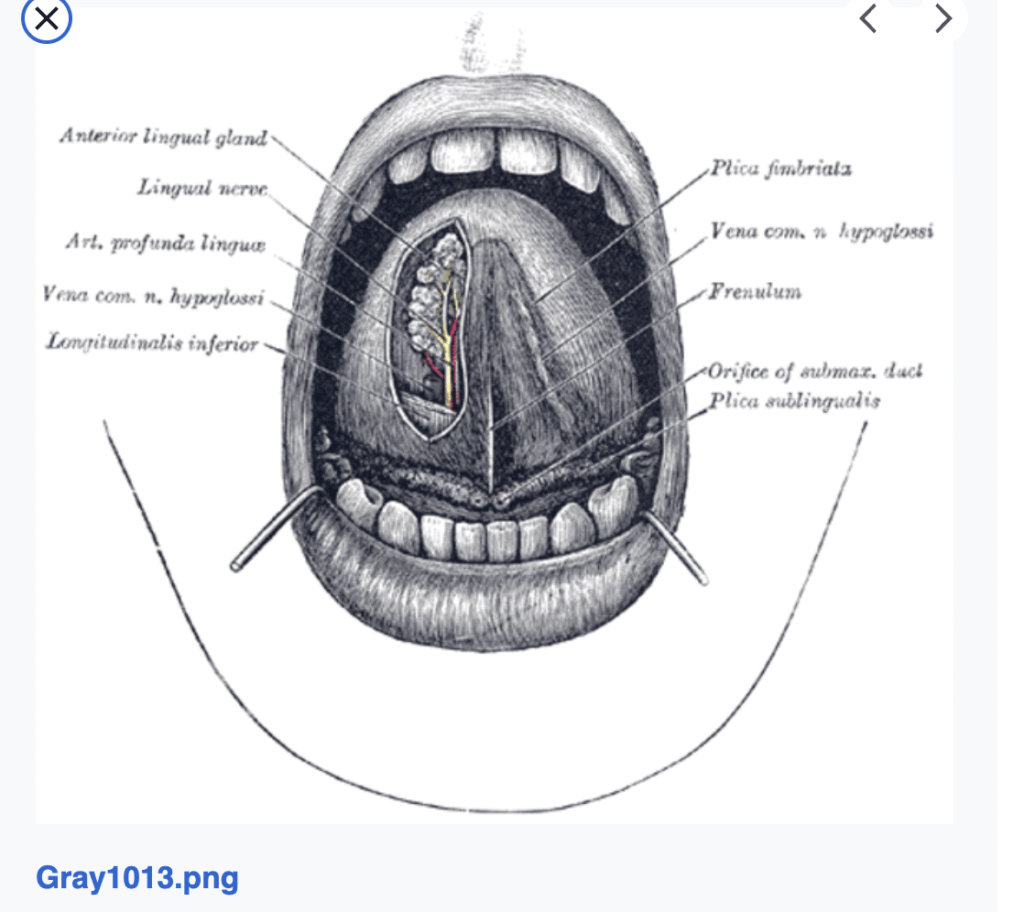
Underside of the tongue showing the frenulum and sublingual structures. Illustration from Gray’s Anatomy, Henry Gray. Public domain.
Step Three — Address the Tongue Tie If Present
A restricted lingual frenulum, commonly called tongue tie, is a physical limitation on the tongue’s range of motion that can make correct tongue posture difficult or impossible to achieve, regardless of how hard you try.
Signs that tongue tie may be limiting you include inability to touch the tip of your tongue to the roof of your mouth with your mouth wide open, a heart shaped tongue tip, or significant difficulty achieving the suction hold even after weeks of practice.
A myofunctional therapist or a tongue tie aware dentist can assess this.
Functional release when indicated can be transformative.
Common Mistakes to Avoid
Only placing the tip of the tongue against the palate and missing the back third is the most common mistake and the most important to correct.
Pressing the tongue hard against the palate with muscular force rather than the gentle suction hold creates tension rather than the correct passive resting position.
Clenching the teeth while practicing tongue posture adds jaw tension that undermines the practice.
And giving up too soon is the biggest mistake of all — the habit takes weeks to establish and the structural changes take months to become visible.
Chewing as Tongue Posture Training
One of the most underappreciated dimensions of tongue posture is the role of chewing in training the tongue and jaw muscles into their correct functional positions.
Traditional populations ate foods that required real sustained chewing, such as dried meat, raw herbs, sourdough bread, tough roots, and tubers.
The act of vigorous bilateral chewing trains the masseter and buccinator muscles, stimulates bone remodeling in the jaw, and repeatedly cycles the tongue through its correct functional positions.
Modern soft processed food requires almost no chewing.
We swallow in three or four bites what traditional populations would have chewed for thirty or forty.
This loss of chewing stimulus is a significant and largely invisible driver of jaw underdevelopment and poor tongue posture in modern populations.
Mastic gum is a hard natural resin from the Pistacia lentiscus tree grown on the Greek island of Chios.
It has been chewed in the Mediterranean for thousands of years and is significantly harder than conventional chewing gum, providing genuine resistance training for the jaw and tongue muscles.
Chewing tough fibrous whole foods thoroughly on both sides of the mouth equally serves the same purpose.
Posture and Tongue Posture — The Full Body Connection
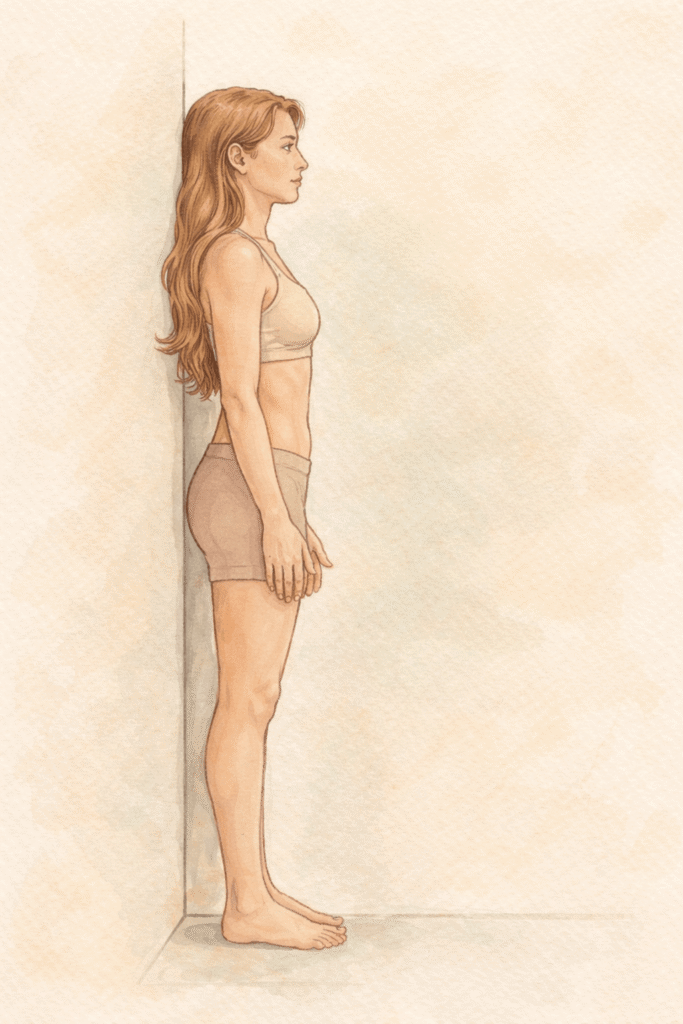
Tongue posture does not exist in isolation.
It is part of an integrated postural system that runs from your feet to the top of your skull.
Forward head posture, the chronic displacement of the head forward of the shoulders that is nearly universal in people who use phones and computers, directly affects tongue posture by altering the mechanical relationships between the skull, the cervical spine, the hyoid bone, and the tongue.
When the head sits forward of the shoulders the cervical spine extends backward to compensate.
This extension changes the resting angle of the skull relative to the jaw and creates tension in the suprahyoid muscles, which pull the hyoid bone down and forward, taking the tongue away from the palate.
You can consciously try to hold your tongue against your palate all day, but if your head is sitting three inches forward of your shoulders, your postural mechanics are working against you.
Correcting forward head posture is, therefore, a critical companion practice to tongue posture correction.
Chin tucks gently, drawing the chin straight back to stack the head over the shoulders, performed ten to fifteen times throughout the day, begin to retrain the deep cervical flexors that support proper head position.
Wall angels, where you stand with your back against a wall and raise your arms overhead while maintaining contact with the wall, open the thoracic spine and shoulders that drive forward head posture.
Reducing prolonged screen time and never looking down at a phone for extended periods address the root cause.
The relationship runs in both directions.
Correct tongue posture on the palate creates a gentle upward and forward force on the maxilla and base of skull that supports proper head position.
Good head position creates the mechanical environment in which the tongue can rest correctly without fighting against postural forces pulling it down.
They reinforce each other when both are addressed together.
Nutrition and Tongue Posture — The Foundation That Makes It All Work

Note: Best Supplement for a Natural Face
Tongue posture correction and mechanical forces create the stimulus for bone remodeling.
But bone remodeling requires the nutritional raw materials to actually build new bone.
Without adequate vitamin K2, retinol, vitamin D3, magnesium, copper, and collagen the bone remodeling stimulus from tongue posture has nothing to work with.
The mechanical signal is there but the building crew has no materials.
Vitamin K2 directs calcium into the bone matrix rather than soft tissue.
Retinol from animal sources drives bone matrix protein synthesis.
Vitamin D3 regulates calcium absorption and works synergistically with K2.
Magnesium is a cofactor for D3 activation and bone matrix quality.
Copper through the enzyme lysyl oxidase cross-links the collagen scaffold that calcium then mineralizes into hard bone.
Collagen and gelatin from bone broth provide the raw material for that scaffold.
This is exactly what Weston A Price was documenting in the populations with the best facial development.
Their diets were rich in fat-soluble vitamins from animal foods fermented cod liver oil, butter from grass-fed cows, organ meats, and bone broth.
The mechanical forces from chewing tough foods and correct tongue posture directed the remodeling.
The nutritional density provided by the materials.
Both were present simultaneously, and the results were the wide, beautiful faces Price photographed all over the world.
Tongue Posture Is the Starting Point for Everything
If there is one practice in this entire natural face protocol series that you implement before any other it should be correcting your tongue posture.
It costs nothing, requires no equipment, and once established works around the clock supporting your facial structure, your airway, your lymphatic system, and your overall health without any additional effort.
It is the foundation on which everything else in this series is built.
Gua sha and facial lymphatic drainage work better when the cervical lymphatics are decompressed by a correctly positioned tongue.
Mouth taping at night establishes tongue posture during sleep.
The nutritional protocol provides the materials for the bone remodeling that correct tongue posture stimulates.
Posture correction creates the mechanical environment in which tongue posture can be maintained effortlessly.
All of it connects.
Check your tongue position right now as you finish reading this.
If it is on the floor of your mouth, bring it up.
Place it flat against your palate, front to back, create the suction hold, close your lips, and breathe through your nose.
That is the beginning.
About Author
If something here resonated with you, I invite you to learn more about the philosophy and clinical training behind this work. Visit the About page to understand where this knowledge comes from and why it is different from anything else you will find online.POPULAR POSTS