
Body Scan Meditation: Complete Guide to Benefits, Practice & DBT Mindfulness
Body scan meditation is one of the most powerful mindfulness practices you can do, and most people have never heard of it.
Here’s what I know: your body is trying to tell you something.
Tightness in your shoulders. Tension in your jaw.
That knot in your stomach that shows up before difficult conversations.
Most of us are completely disconnected from these signals.
We live in our heads, ruminating about yesterday, worrying about tomorrow, replaying conversations, and catastrophizing about things that haven’t happened yet.
Meanwhile, our bodies are holding everything. The stress. The anxiety. The unprocessed emotions. The chronic tension we don’t even notice anymore because it’s just always there.
Body scan meditation teaches you to come back home. To pay attention. To notice what your body’s been trying to tell you all along.
And here’s what makes it different from other meditation: you don’t have to empty your mind. You don’t have to “clear your thoughts.” You just have to notice. Observe. Pay attention to what’s actually happening in your body right now.
That’s it. And that simple practice? It can be a real catalyst for positive change when it comes to consciousness expansion.
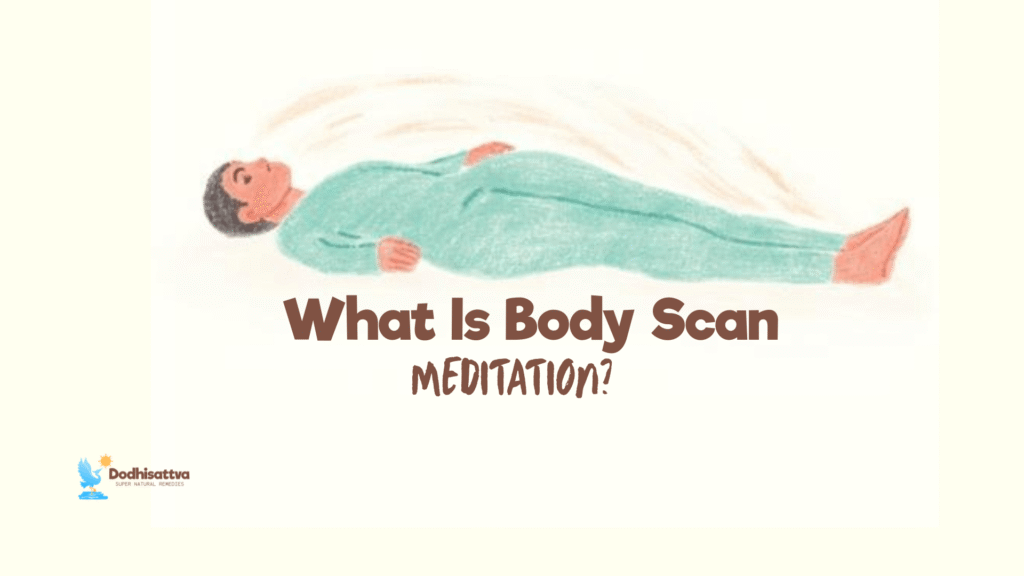
What Is Body Scan Meditation?
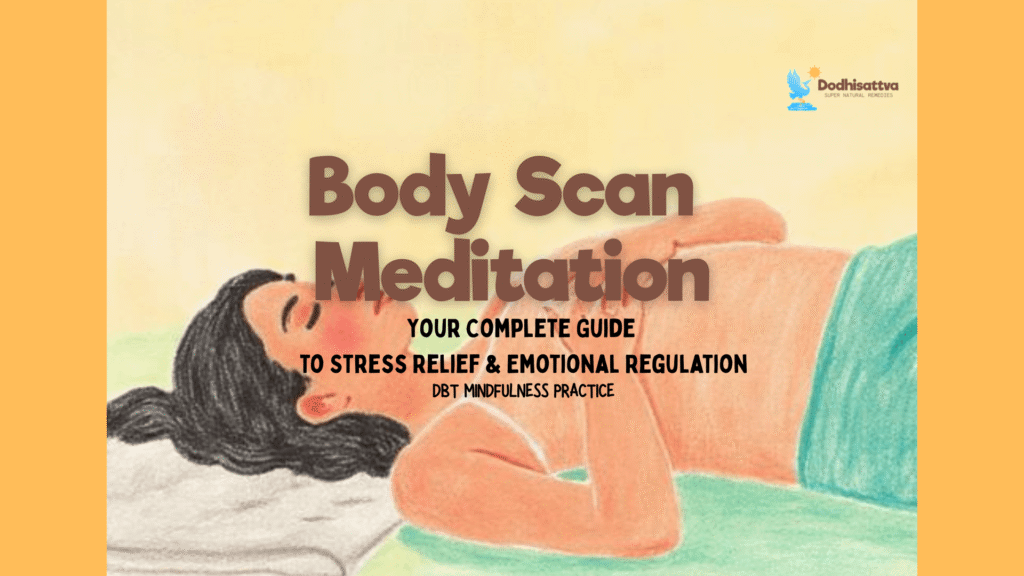
Body scan meditation is a mindfulness practice where you systematically bring attention to different parts of your body, from head to toe (or toe to head), observing sensations without trying to change them.
You’re not trying to relax (though that often happens). You’re not trying to fix anything. You’re just noticing.
When you can control your attention, you can control your mind.
What does your left foot feel like right now? Your right shoulder? Your jaw? Your belly?
Most of the time, we have no idea. We’re so disconnected from our bodies that we don’t notice tension until it becomes pain. We don’t notice shallow breathing until we’re in full panic mode. We don’t notice clenched fists until someone points it out.
Body scan meditation builds interoceptive awareness: the ability to sense what’s happening inside your body. And that awareness? That’s the foundation for everything else.
You can’t regulate emotions you don’t notice. You can’t release tension you’re not aware of. You can’t make wise decisions when you’re completely disconnected from your body’s signals.
This practice brings you back.
It’s extraordinary when you think about it. Your body is the vessel for your conscious expansion. The breath that connects you to now. The sensations that show you truth. The wisdom that emerges when you finally pay attention. Body scan meditation is coming home to all of it.
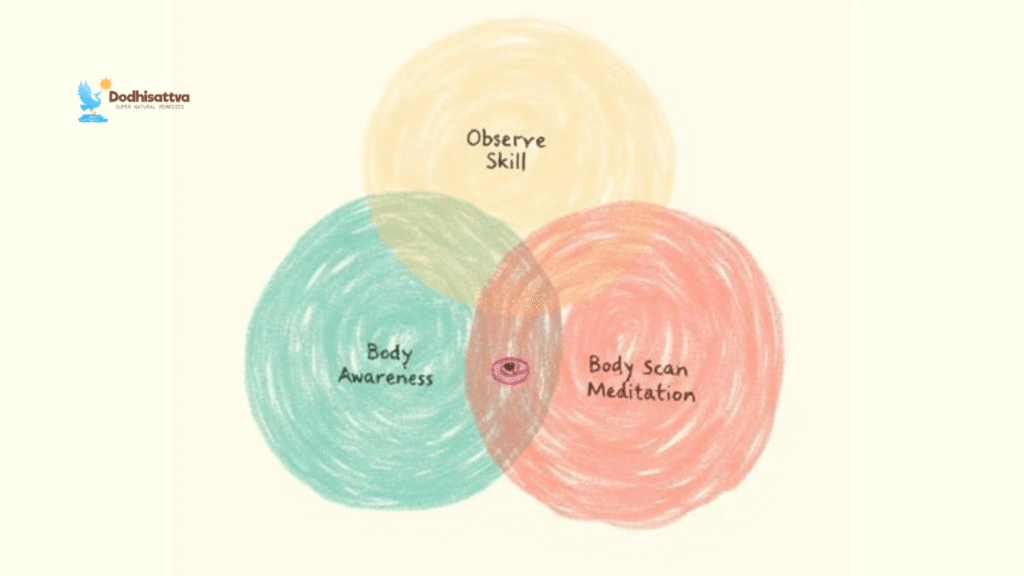
Body Scan Meditation as a DBT Skill
If you’ve been following along with DBT skills, you know that mindfulness is the foundation of everything. And body scan meditation is one of the core DBT mindfulness practices.
It teaches you the “Observe” skill: noticing without judgment, without trying to fix, without getting lost in the story your mind wants to tell about what you’re observing.
In DBT, we talk about the middle path. Accepting reality as it is AND working to change what you can.
Body scan meditation is a pure acceptance practice. Your shoulder is tight. That’s what’s true right now. You’re not judging it (“I shouldn’t be tense”). You’re not fighting it (“This needs to go away immediately”). You’re just observing: “There’s tightness in my right shoulder.”
From that place of awareness and acceptance, change becomes possible. But first, you have to notice what’s actually true.
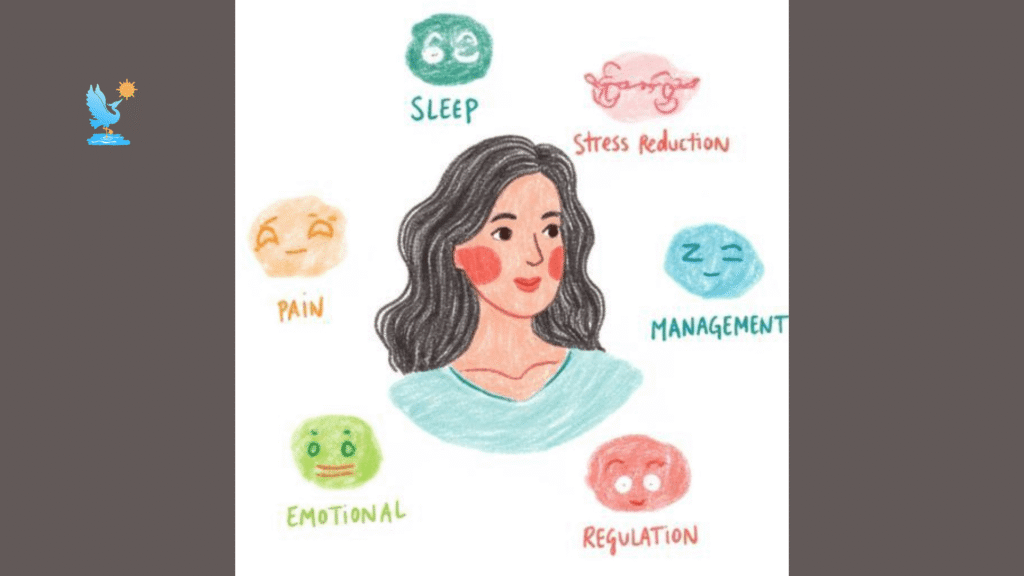
The Science-Backed Benefits of Body Scan Meditation
This isn’t just feel-good wellness talk. Body scan meditation has been extensively researched, and the benefits are measurable.
1. Significant Stress Reduction
An 8-week study on Mindfulness-Based Stress Reduction (MBSR), which includes daily body scan meditation, showed participants had measurably lower cortisol levels. Not just “I feel less stressed.” Actual biological markers of stress went down.
The practice activates your parasympathetic nervous system: your body’s “rest and digest” mode. It’s the opposite of fight-or-flight. And most of us are stuck in fight-or-flight all day, every day.
Body scan meditation gives your nervous system permission to shift gears.
2. Improved Sleep Quality
Research consistently shows that practicing body scan meditation before bed improves sleep quality.
It makes sense: you’re systematically releasing tension, slowing your breath, bringing your attention out of the racing thoughts and into the present moment.
Your body can’t sleep when it thinks it’s in danger. Body scan meditation signals safety.
3. Chronic Pain Management
Jon Kabat-Zinn, who brought body scan meditation into mainstream medicine through MBSR, specifically developed the practice for people with chronic pain.
A 2017 review of studies found that body scan meditation doesn’t necessarily reduce pain intensity, but it significantly reduces suffering around pain and improves quality of life.
The practice changes your relationship with pain.
Instead of tensing against it, fighting it, or catastrophizing about it, you observe it.
Notice where it is. What it feels like. How it changes moment to moment.
This doesn’t make pain magically disappear. But it makes it more bearable.
4. Anxiety and Emotional Regulation
Here’s something most people don’t realize: your body expresses emotions before your mind recognizes them.
You feel anxiety in your chest and stomach before you consciously think “I’m anxious.”
You clench your jaw when you’re frustrated before you acknowledge, “I’m angry.”
Body scan meditation builds the skill of noticing emotional signals early, before they escalate into full-blown reactions.
A 2011 study found that MBSR (including body scan meditation) significantly reduced anxiety symptoms in patients with generalized anxiety disorder.
When you can notice “my heart is racing, my breathing is shallow” before your mind spirals into worst-case scenarios, you have a moment of choice.
You can use other skills (like the STOP skill or TIPP) to intervene.
Learn the STOP skill for managing anxiety link coming soon.
5. Enhanced Interoceptive Awareness
Interoception is your ability to sense internal signals from your body: hunger, fullness, fatigue, tension, pain, and emotional states.
Most of us have terrible interoceptive awareness. We eat when we’re not hungry. We push through exhaustion. We ignore our body’s “I need to rest” signals until we collapse.
Body scan meditation strengthens this awareness. You start noticing: “I’m actually tired” or “My body needs to move” or “I’m holding my breath.”
Better interoceptive awareness equals better self-care decisions.
6. Improved Mind-Body Connection
We live in a culture that treats the body as a vehicle for the head.
Something to be managed, controlled, optimized, and ignored unless it’s actively malfunctioning.
Body scan meditation rebuilds the connection.
Your body is a gift for consciousness to expand from.
It’s the vessel that houses your soul, the infinite awareness that you are.
And if you want to expand consciousness, you need a vessel that’s cared for, listened to, and honored.
7. Cognitive Benefits
Studies show that regular body scan meditation practice improves:
- Attention and focus
- Cognitive flexibility
- Working memory
- Decision-making
It also creates measurable changes in brain structure, particularly in areas associated with emotional regulation and self-awareness.
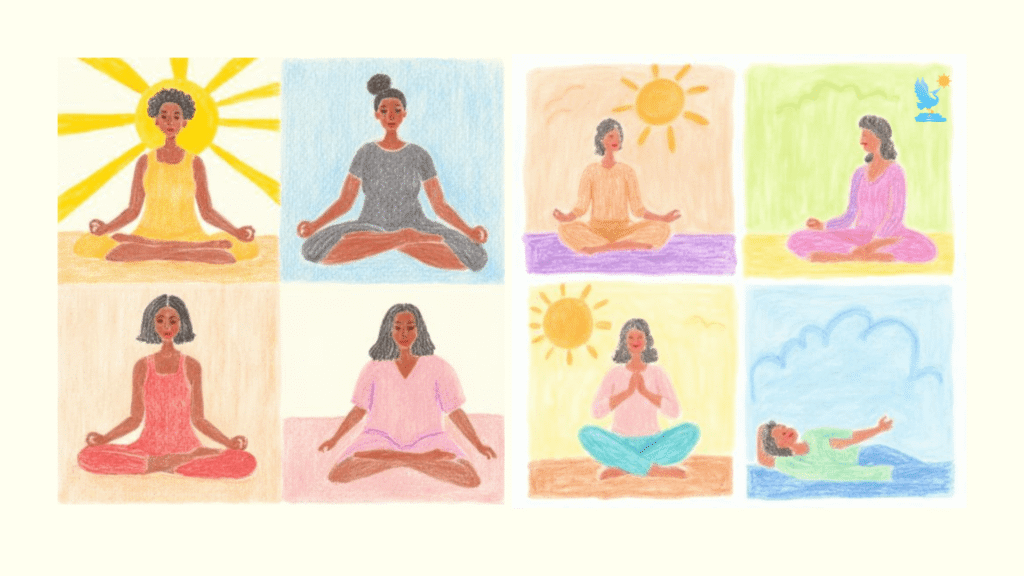
When to Practice Body Scan Meditation
The beauty of body scan meditation is that you can practice it anytime. But certain times are especially powerful.
Before Bed (Most Popular)
Practicing body scan meditation before sleep is incredibly effective. You’re releasing the day’s accumulated tension, slowing your nervous system, guiding yourself into a restful state.
Many people fall asleep during the practice, and that’s totally fine if your goal is sleep.
First Thing in the Morning
Starting your day with body scan meditation sets the tone. You check in with your body before the demands of the day take over. You notice: “I slept well” or “My neck is tight today” or “I’m carrying anxiety in my chest.”
That awareness informs how you move through your day.
When Stressed or Overwhelmed
When anxiety hits or emotions feel too big, body scan meditation brings you back to the present moment.
It interrupts the thought spiral and grounds you in physical sensation.
This is the “Observe” skill from DBT in action.
Mid-Day Reset
If you work at a desk, spend hours on screens, or just need a break, a quick 5 to 10 minute body scan meditation can reset your nervous system and release accumulated tension.
You don’t have to lie down. You can do it sitting at your desk.
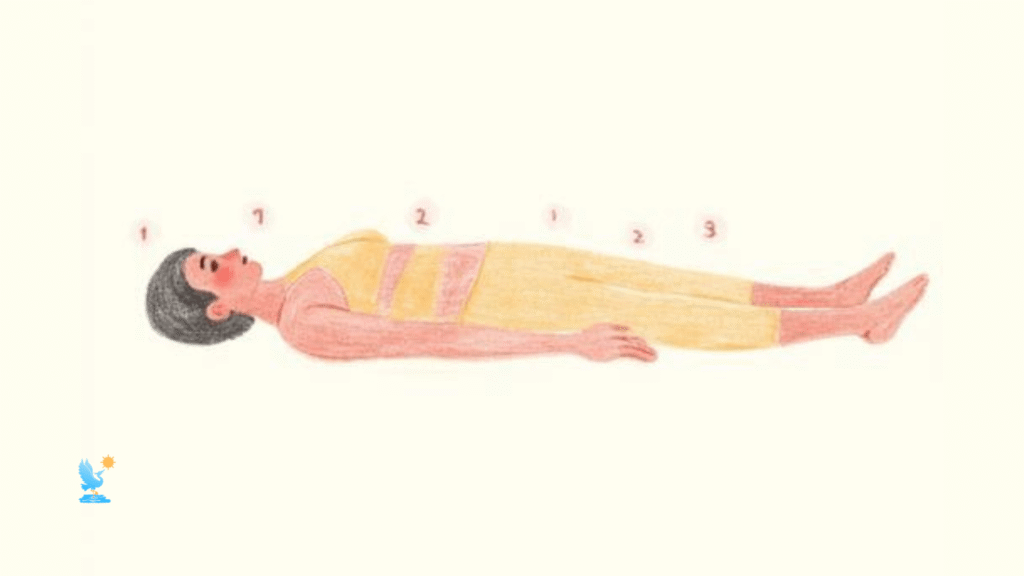
How to Do Body Scan Meditation: Step-by-Step
Here’s exactly how to practice body scan meditation. Start with 5 to 10 minutes if you’re new. Work up to 20 to 30 minutes as it becomes familiar.
Preparation
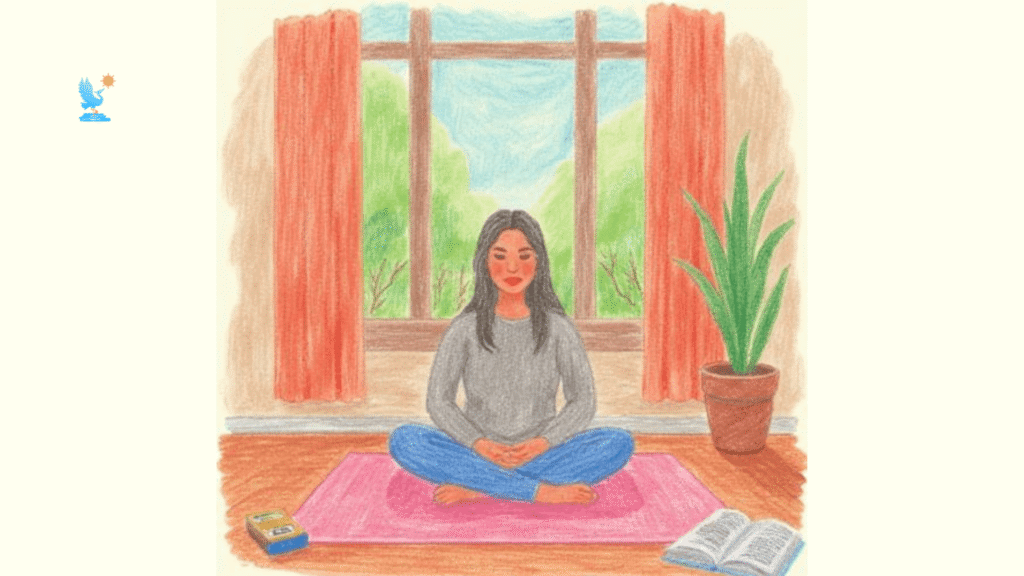
Find a comfortable position. Lying down is ideal (on your bed, yoga mat, or floor). If lying down makes you fall asleep and that’s not your goal, sit in a chair with your feet flat on the ground.
Set a timer. 5 minutes for beginners, 15 to 30 minutes for regular practice.
Close your eyes or soften your gaze.
The Practice
1. Start with Your Breath
Take 3 to 5 deep breaths. Notice the inhale. Notice the exhale. Let your breathing return to its natural rhythm.
2. Begin at the Crown of Your Head
Bring your attention to the very top of your head. Notice any sensations. Tingling, warmth, coolness, pressure, or maybe… nothing. Absence of sensation is also something to notice.
No judgment. Just observation.
3. Move Systematically Down Your Body
Move your attention slowly through:
- Face and jaw (tension here is extremely common)
- Neck and throat
- Shoulders (notice if they’re hunched, dropped forward, tense)
- Arms, elbows, forearms
- Hands and fingers
- Chest and upper back
- Abdomen and lower back
- Hips and pelvis
- Thighs, knees
- Calves, ankles
- Feet and toes
Spend 15 to 30 seconds on each area. Notice texture, temperature, pressure, tightness, ease, or nothing at all.
4. No Judgment
This is crucial. You’re not evaluating. Not fixing. Not judging yourself for having tension.
You’re just noticing: “There’s tightness here. Okay.”
5. Breathe Into Areas of Tension
If you notice tightness or discomfort, imagine your breath flowing to that area. Not forcing. Just gentle attention.
On the exhale, imagine releasing, softening.
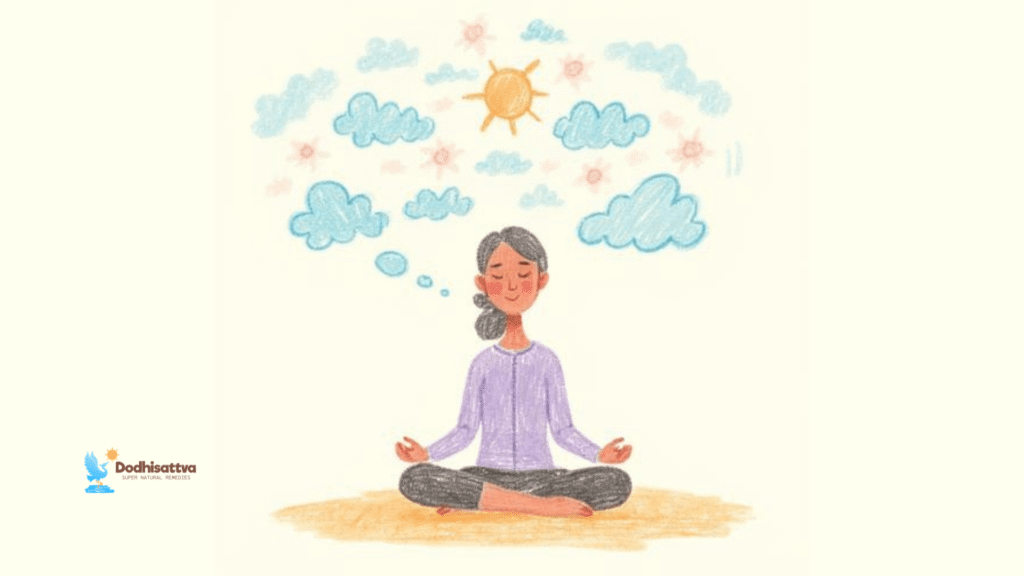
6. When Your Mind Wanders (It Will)
Your mind will wander. That’s not failure; that’s what minds do.
When you notice you’re lost in thought, gently bring your attention back to the last body part you remember. No frustration. Just: “Oh, I’m thinking. Back to the body.”
7. End with Whole-Body Awareness
After scanning each part, bring your awareness to your entire body at once. Notice how your whole body feels now.
Take a few deep breaths.
When you’re ready, open your eyes slowly.
Tips for Making Body Scan Meditation a Habit
Start Small
5 minutes counts. Don’t wait until you have 30 minutes free; that day might never come. Start with what’s doable.
Same Time, Same Place
Consistency builds the habit. Before bed. First thing in the morning. After lunch. Pick a time and stick with it.
Use Audio Guidance at First
When you’re learning, it helps to have a voice guiding you through each body part. You’re less likely to get lost in thought or forget where you are.
(When I create my guided body scan meditation, I’ll link it here!)
Don’t Aim for a Specific Feeling
You’re not trying to achieve relaxation or bliss. You’re just noticing. Some days you’ll feel calm afterward. Some days you’ll feel restless or emotional. All of it is valid.
Practice Without Expectation
The benefits accumulate over time. You might not feel dramatically different after one session. But after two weeks of daily practice? You’ll notice shifts.
Combine with Other Practices
Body scan meditation pairs beautifully with gentle stretching, yin yoga, or breathwork. Do a few stretches, then scan your body to notice the effects.
Common Challenges (And How to Work with Them)
“I Fall Asleep Every Time”
If that’s not your goal: sit up, keep your eyes slightly open, shorten the practice to 10 minutes.
If sleep IS your goal: perfect. Let it happen.
“I Can’t Feel Anything in Some Areas”
Totally normal. Numbness or absence of sensation is still something to notice. With practice, sensation often returns.
“My Mind Won’t Stop Wandering”
That’s not a problem; that’s the practice. Noticing the wandering and returning to the body IS the skill you’re building. You’re training your attention muscle.
Every time you notice and return, you’re succeeding.
“I Get Anxious Focusing on My Body”
If body awareness triggers anxiety or feels unsafe (common for trauma survivors), start very slowly. Maybe just notice your hands. Or your feet. Or your breath.
Work with a therapist if body-focused practices consistently increase distress.
“I Don’t Have Time”
5 minutes before bed. That’s it. You have 5 minutes.
If not, honestly evaluate: am I prioritizing scrolling over my wellbeing?

Body Scan Meditation and Self-Worth
Here’s something I’ve learned: body scan meditation is an act of self-worth.
You’re saying: “I’m worth paying attention to. My body deserves my awareness. My signals matter.”
Most of us spend our lives abandoning our bodies. Ignoring signals. Pushing through. Disconnecting.
Body scan meditation is the practice of coming back. Of saying: “I’m here. I’m listening. You matter.”
That practice? It changes how you see yourself.
Body Scan Meditation as Part of Your DBT Practice
If you’re working with DBT skills, body scan meditation is your foundation.
It’s the “Observe” skill in its purest form. Noticing without judgment. Being present with what is.
From this practice, all the other skills become more accessible.
You can’t use the STOP skill if you don’t notice you’re triggered.
You can’t practice Opposite Action if you don’t recognize what emotion you’re feeling.
You can’t regulate effectively if you’re disconnected from your body.
Body scan meditation builds that essential awareness.
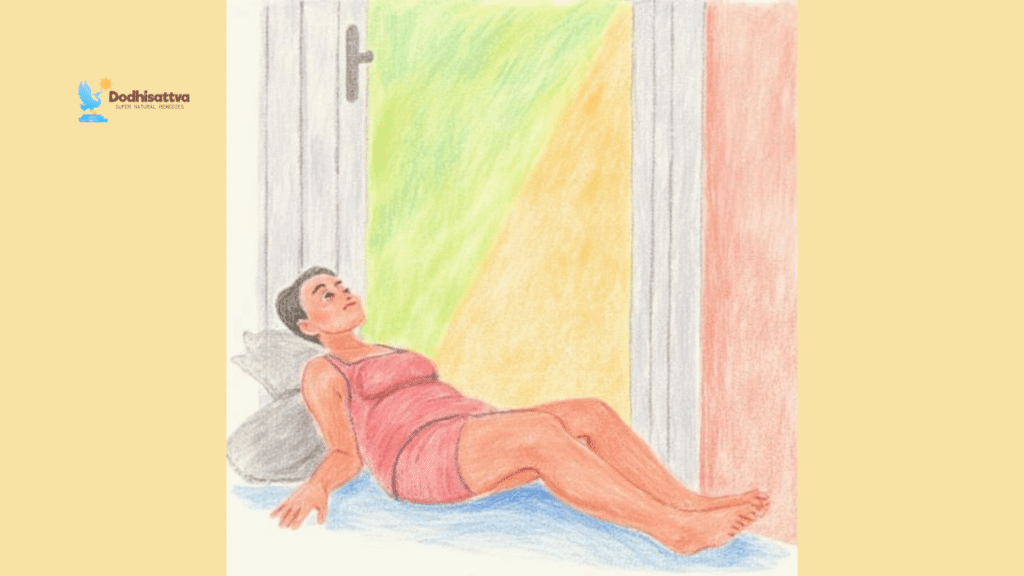
Getting Started Today
You don’t need anything special to practice body scan meditation. No app. No equipment. No perfect setting.
You just need:
- Your body
- 5 to 10 minutes
- Willingness to notice
Start tonight. Lie down before bed. Close your eyes. Bring attention to the top of your head and slowly scan down.
Notice what you notice. No judgment.
That’s it. That’s the practice.
And if you do it daily for two weeks, come back and tell me you don’t feel different. I’ll be shocked.
Body scan meditation is simple. But simple doesn’t mean insignificant.
Sometimes the simplest practices are the most profound.
Related DBT Skills:
- Complete Guide to DBT Skills: Master the Middle Path
- How to Build Self-Worth: Complete Guide
- DBT for Shame: Stop Shame Spirals
- Radical Acceptance: The DBT Skill That Changes Everything
- STOP Skill: DBT’s Emergency Brake for Overwhelming Emotions
- Wise Mind DBT: How to Access Your Inner Wisdom and Make Better Decisions
Ready to build your emotional toolkit? Start with mindfulness. Start with body scan meditation. Start here.
POPULAR POSTS